Series Overview#
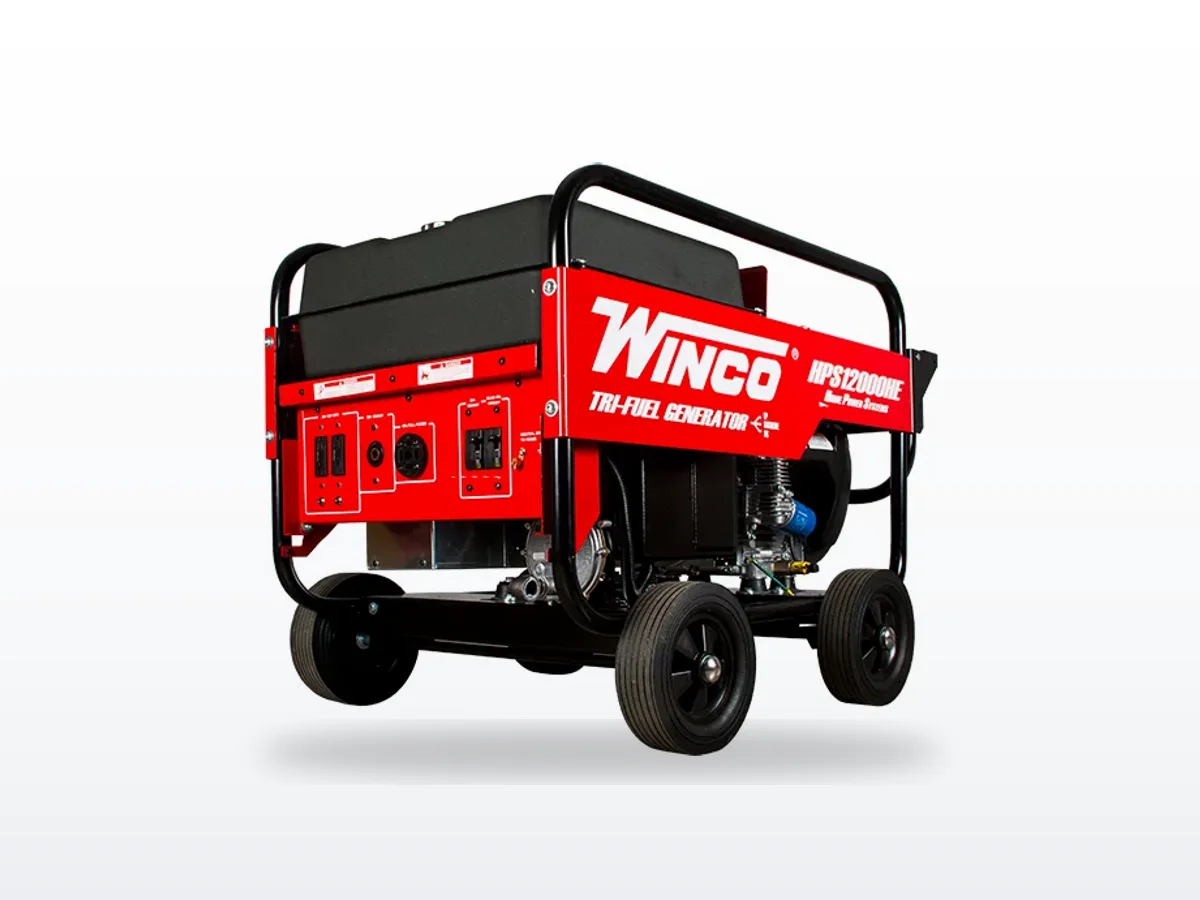
The Winco HPS Tri-Fuel Series is a single-model line: the HPS12000HE, Winco's flagship portable generator and the only tri-fuel portable generator available with a Honda engine where the Honda engine warranty is maintained across all three fuel types — gasoline, LP (propane), and natural gas. Built on a Honda GX630 688cc V-Twin engine, it delivers 12,000W surge / 10,800W running power from a portable frame that can be relocated as conditions require. Consumer Reports has verified the HPS12000HE's power output quality. Like all Winco products, it is 100% manufactured in Le Center, Minnesota.
The tri-fuel capability is the HPS Series' defining feature. Most portable generators are single-fuel or dual-fuel products with compromise in either performance or warranty coverage when used on alternative fuels. The HPS12000HE eliminates that trade-off — the Honda GX630 engine is warranted for generator use across all three fuel types, and the fuel switching hardware is integrated at the factory rather than added as an aftermarket conversion. This makes the HPS12000HE a genuine fuel-flexible tool rather than a workaround.
At 12 kW, the HPS12000HE spans a useful range of applications: residential backup for a medium-size home, construction site power for smaller crews, and temporary power for events or short-term installations where both portability and fuel flexibility matter.
How to Choose#
The HPS Tri-Fuel Series contains a single model. The selection question is whether the HPS12000HE matches the application requirements:
Choose the HPS12000HE when:
- Fuel flexibility is a priority — the ability to run on whatever fuel is available (gasoline from a gas station, propane from an existing tank, natural gas from the street) is genuinely valuable for residential emergency preparedness
- Honda engine reliability and warranty coverage are important to the buyer
- 12 kW is sufficient for the load requirement
- The generator will move between locations or be stored when not in active use
Consider alternatives when:
- The load exceeds 12 kW: the WL18000VE Big Dog provides 18 kW on gasoline
- Automatic start and transfer are required: the PSS Series handles residential whole-house standby with automatic start and transfer switch
- Three-phase output is required: neither the HPS nor WL series provides three-phase
- A permanent outdoor installation is planned: the DR Series with enclosed housing is appropriate
Common Applications#
- Residential standby: At 12 kW, the HPS12000HE can power essential circuits in most homes during an outage — refrigerator, heating/cooling, lighting, sump pump, and basic kitchen loads. The tri-fuel capability means homeowners can use existing propane or natural gas connections without hauling gasoline.
- Construction sites: Provides power tool capability at smaller construction jobs, renovation sites, and remote locations where utility service is unavailable. The Honda GX630's reliability under extended run conditions makes it suitable for sustained workday use.
- Temporary power applications: Events, outdoor markets, remote facility power, and short-term installations where both portability and fuel flexibility are requirements. The ability to connect to a natural gas line for extended duration events eliminates refueling logistics.
Service & Maintenance#
The HPS12000HE requires oil changes every 100 hours or 12 months — more frequent than diesel standby units due to the air-cooled engine design. Air filter and spark plug replacement intervals are 200 hours. The Honda GX630's commercial-grade engineering tolerates sustained operation better than most consumer-grade portable engines, but the service intervals remain non-negotiable.
The carburetor/fuel system is the primary maintenance concern during storage. Gasoline left in the carburetor for more than 30 days can varnish the bowl and jets, causing hard starting, surging, or stalling when the unit is next needed. Use non-ethanol gasoline where available, add fuel stabilizer for any storage period over 30 days, and drain the carburetor float bowl before extended storage. This issue does not apply when running on LP or natural gas.
Battery maintenance follows the same discipline as all electric-start portables: float charge during storage, annual load test, and proactive replacement at 36–48 months.
Application Guidance#
The Winco HPS Tri-Fuel Series is purpose-built for homeowners and contractors who need fuel flexibility from a single portable generator: the ability to run on whatever fuel is available — gasoline from a station, propane from an existing tank, or natural gas from the street connection. The Honda GX630 engine with warranty preserved across all three fuel types is the defining specification; it eliminates the engine-warranty-voiding compromise that most aftermarket tri-fuel conversion kits impose. At 12 kW, it covers essential circuits in a medium home (HVAC, refrigerator, lighting, sump pump) or a smaller construction site. The USA-made production origin and Consumer Reports-verified output quality support the premium over generic tri-fuel portables.
This series is not appropriate when automatic whole-house standby is required — the HPS12000HE is a manual-start portable generator without an automatic transfer switch or remote start capability. For automatic residential standby on natural gas or LP, the Winco PSS Home Standby series covers 8–17 kW with automatic start and transfer. When maximum portable output is the priority and fuel flexibility is secondary, the Winco WL Big Dog Series delivers 18 kW on gasoline with the Briggs & Stratton Vanguard V-Twin — 50% more output than the HPS12000HE at the cost of gasoline-only fuel operation. For buyers who want a permanent outdoor installation rather than a portable unit, the Winco DR Series diesel enclosed line covers commercial standby from 13 to 175 kW in a weather-protective housing.