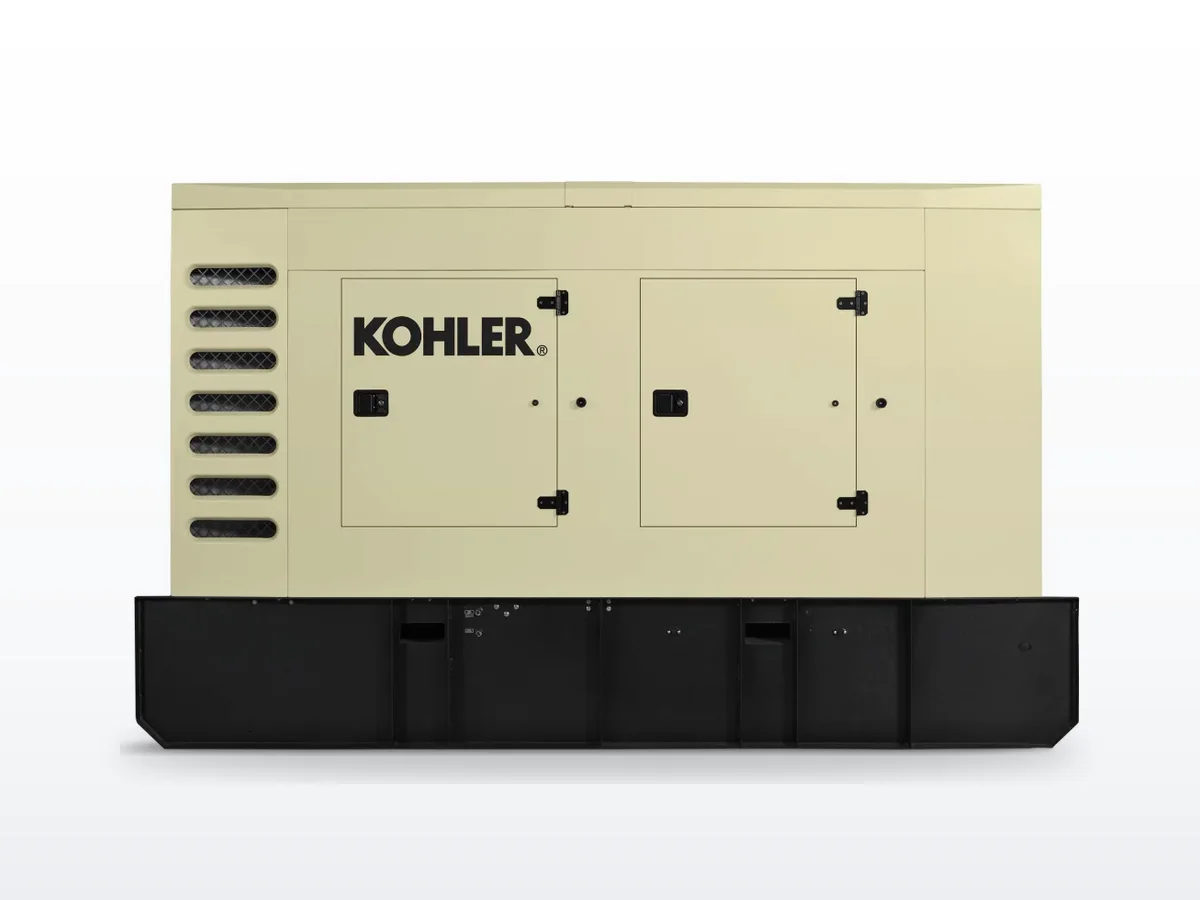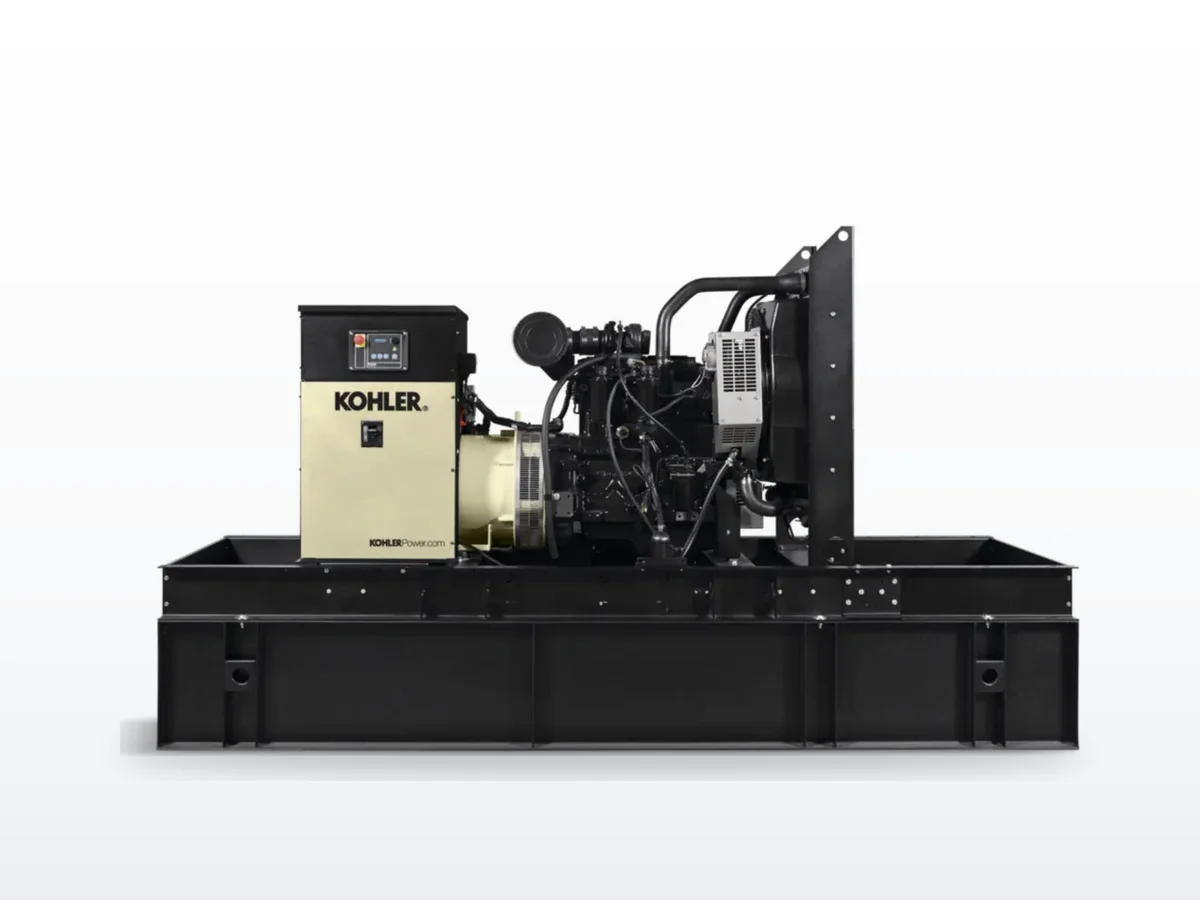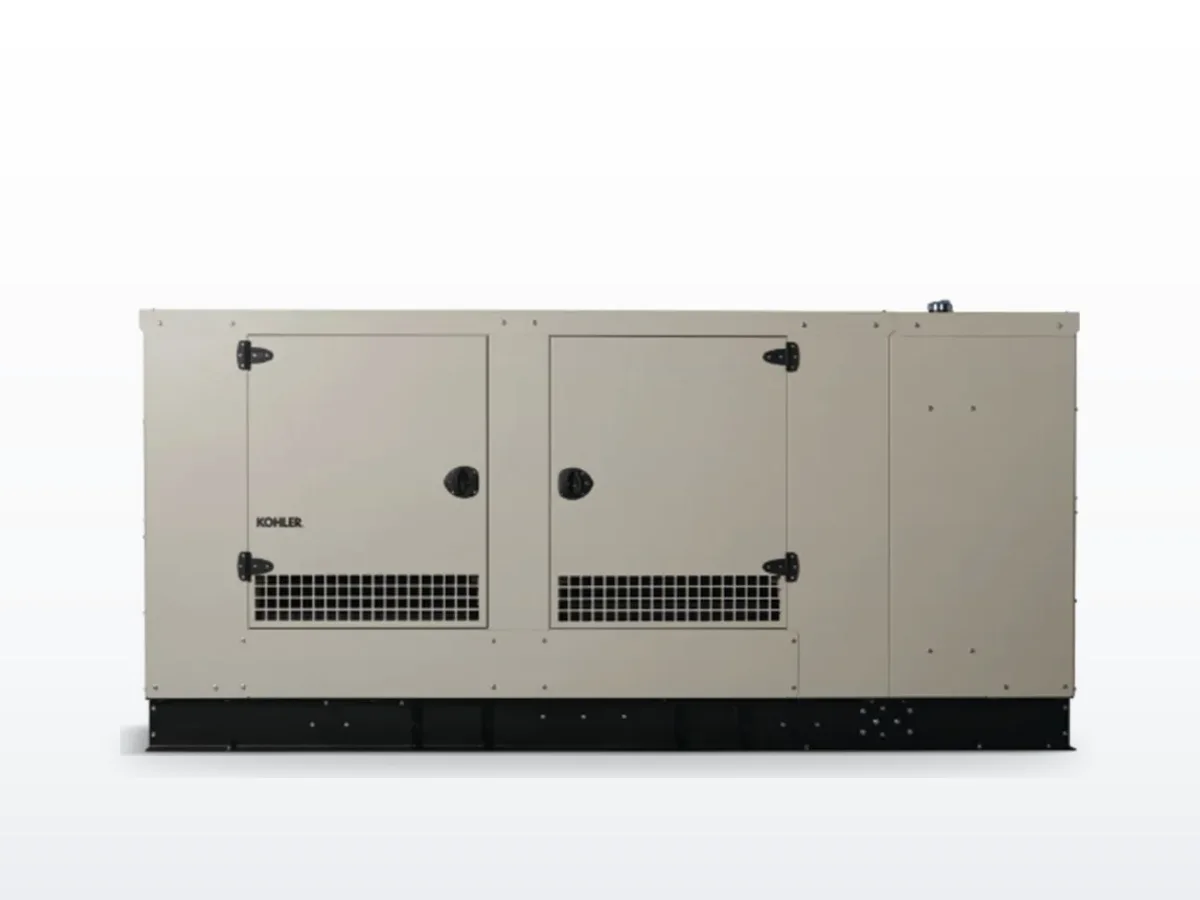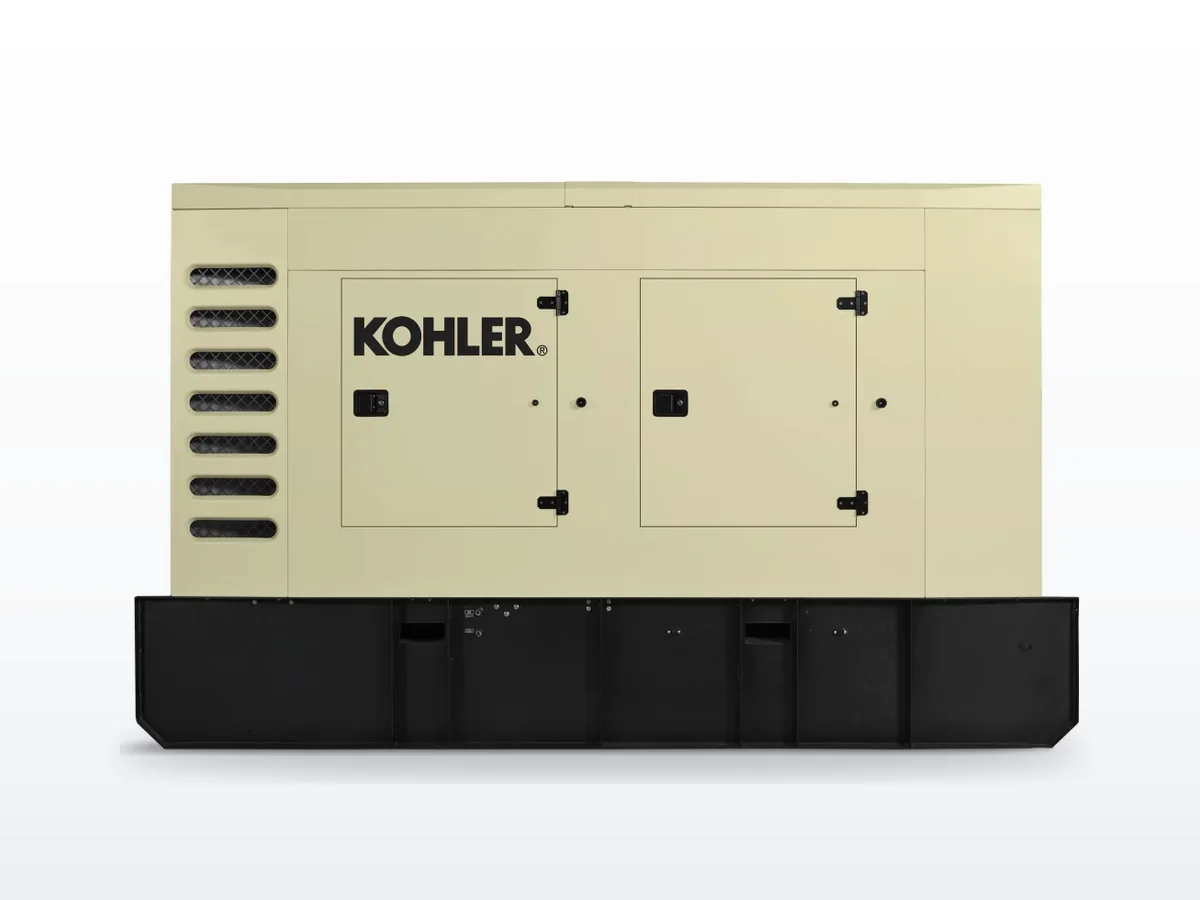
The Kohler 100REOZJF is a 100-kilowatt diesel commercial standby generator — the workhorse of mid-range commercial backup. It uses a proven John Deere 4.5L turbocharged diesel at 1800 RPM, paired with Kohler's own alternator and Decision-Maker controller platform.
This is the capacity range where diesel dominates: hospitals, schools, government buildings, large retail, and light industrial — any facility where NFPA 110 compliance, fuel storage independence from utility gas, and proven technology matter more than emissions considerations.
At this capacity, the choice between the 100REOZJF (diesel) and KG100 (gaseous) is straightforward:
100REOZJF (Diesel)
KG100 (Gaseous)
Fuel independence
Yes (on-site tank)
No (utility gas)
Fuel storage
Required (250-1000 gal typical)
None
EPA SPCC plan
Required if >1,320 gal aggregate
Not applicable
Visible emissions
Yes (some smoke)
None
NFPA 110 Level 1
Universally accepted
AHJ-dependent
Cold start
Reliable to -20°F
Dependent on gas pressure
Service complexity
Fuel system maintenance
Ignition system maintenance
Choose diesel when: NFPA 110 Level 1 is required, gas utility is unreliable, AHJ requires diesel for the occupancy, or you need fuel-independent operation.
The single biggest maintenance challenge for standby diesel generators isn't the engine — it's the fuel. Diesel fuel stored in on-site tanks degrades:
Water contamination: condensation accumulates in partially-filled tanks
Microbial growth: bacteria and algae thrive in water/fuel interfaces
Oxidation: fuel darkens and forms gums that clog injectors
Annual fuel polishing (filtering and treatment) is essential for any diesel genset that runs fewer than 100 hours per year. We include fuel sampling and analysis in our annual service program for all diesel standby units.
The 100REOZJF with John Deere engine is one of the most reliable platforms in our fleet. John Deere parts are readily available, service procedures are well-documented, and the engine platform has decades of field history. The main service differentiator vs gaseous: fuel system maintenance (polishing, filter changes, tank inspection) adds to the annual service scope. Plan for 2-3 service visits per year: one comprehensive annual, one semi-annual fuel/filter check, and one exercise-cycle verification.
Service intervals
Manufacturer-recommended intervals for the Kohler 100REOZJF under standby duty. Field intervals may differ based on load profile, ambient conditions, and fuel quality.
Oil & filter
Every 500 hours or 12 months
Coolant change
Every 6000 hours
Air filter
Every 1000 hours
Fuel filter
Every 500 hours
Major overhaul
≈ 20,000 hours
Load bank test
Every 12 months
Common failure modes
What we've seen fail on this platform. Use as a service-planning reference, not a diagnostic — actual failure modes depend heavily on duty cycle and maintenance history.
Component
Symptom
Typical hours
Severity
Fuel system (filters/injectors)
Hard starting, rough running, black smoke
3,000+
minor
Starting batteries
Slow crank, failed start
8,760+
minor
Coolant hoses / thermostat
Coolant loss, overtemp, slow warmup
8,000+
minor
Turbocharger
Reduced power, oil in intake, turbo whine
15,000+
moderate
Fuel quality (algae/water)
Clogged filters, injector fouling, no-start
4,380+
moderate
Parts cross-reference
oil Filter
Kohler GM47465
fuel Filter
Kohler GM47466
air Filter
Kohler GM47467
starting Battery
Group 31 x2 (series 24V)
Frequently Asked Questions
What engine is in the Kohler 100REOZJF?
A John Deere 4045HF285I — a 4.5L turbocharged-aftercooled inline-4 diesel at 1800 RPM. John Deere engines in this size range are known for reliability and parts availability.
Is the 100REOZJF EPA Tier 4?
The base model is Tier 3, which is permitted for emergency standby duty under EPA regulations. Tier 4 Final versions are available where required by local air district rules or for prime-power applications.
How often does diesel fuel need to be maintained?
Diesel fuel degrades over time. For standby generators that run infrequently, fuel should be polished or replaced every 12-18 months. Fuel filters should be changed every 500 hours or annually. Water separators should be drained monthly.
What ATS for 100 kW diesel?
At 480V three-phase: 200A ATS. ASCO 300 Series or Kohler KCS are standard. For NFPA 110 Level 1, bypass-isolation type is recommended.