Series Overview#
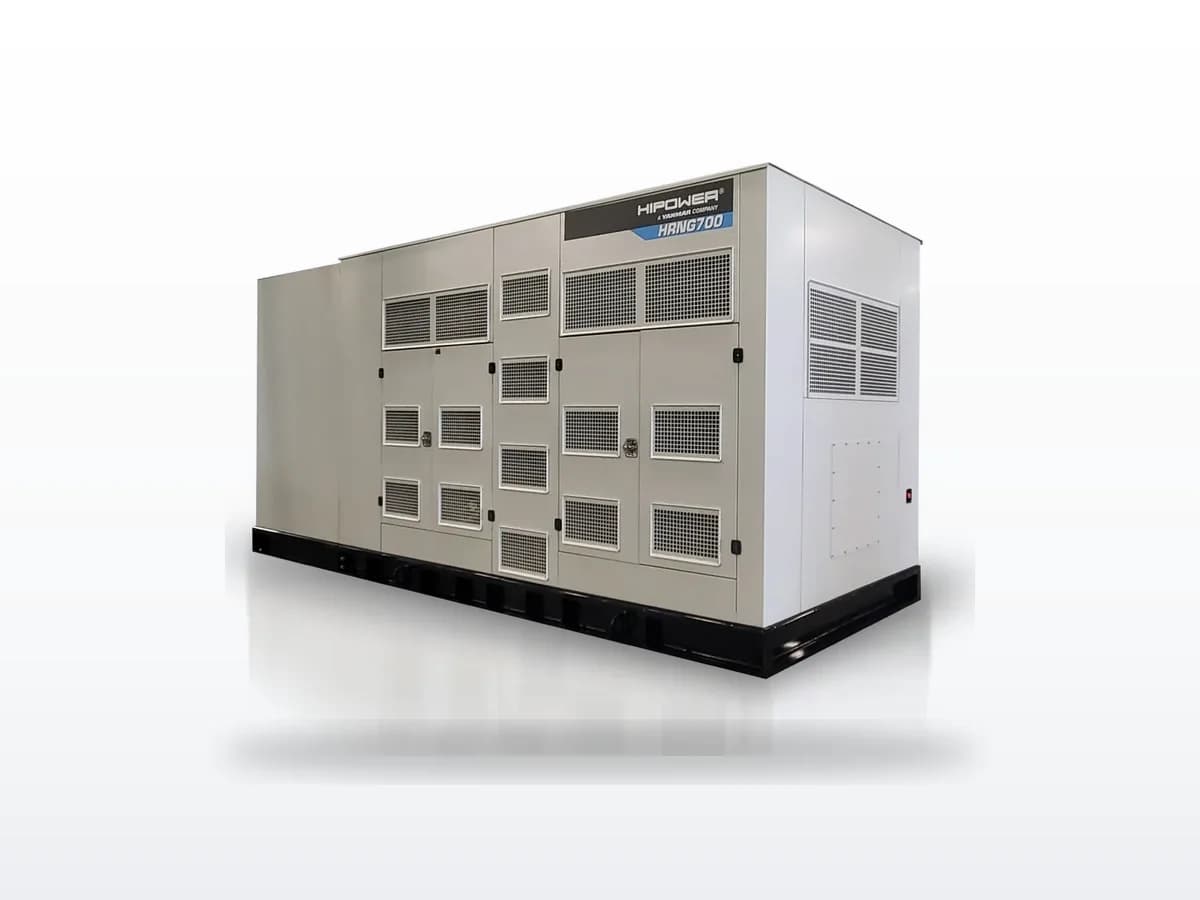
The Hipower HRNG Series is a purpose-built line of trailer-mounted natural gas generators covering 66 to 940 kW across nine models. Unlike diesel trailer generators, HRNG units connect to the deployment site's permanent natural gas supply — there is no on-board fuel tank, no diesel delivery logistics, and no SPCC compliance burden. This fundamental design difference defines the series' use case: it is a mobile platform for sites with established gas service, providing temporary or emergency power with unlimited runtime as long as gas supply is maintained.
All nine models use PSI (Power Solutions International) spark-ignited engines and carry EPA Stationary Spark Ignition and CARB certification, making the series deployable in California and regulated states without air district variance. The lineup spans from the entry-level HRNG-85 (66 kW standby) for small commercial temporary power, through the HRNG-1250 (940 kW standby) — one of the largest natural gas trailer generators manufactured, appropriate for hospital generator replacement projects, data center bypass operations, and major industrial outages.
Hipower builds the HRNG at its Olathe, Kansas facility with in-house enclosures and controls. The units operate at 120/240V and 277/480V, three-phase. Oil and spark plug service intervals are 1,000 hours, aligning with the longer maintenance cycle typical of spark-ignited gas engines. Air filter service is at 500 hours.
How to Choose#
By standby output: Select the model whose standby kW rating exceeds the maximum anticipated load at the deployment site with appropriate margin. The series spans from 66 kW (HRNG-85) to 940 kW (HRNG-1250). For deployments where the load may reach 90% of rated capacity for extended periods, the prime power rating is the correct design limit.
Gas supply sizing: As output increases, gas supply infrastructure becomes the critical limiting factor. The HRNG-85 and HRNG-165 require modest gas service; the HRNG-700, HRNG-900, and HRNG-1250 require high-capacity commercial/industrial gas service with a properly sized regulator and supply line. Verify gas supply capacity at the deployment site before committing to a unit size — undersized supply is the primary source of field derating complaints.
Voltage requirements: All HRNG units support both 120/240V and 277/480V, three-phase. Confirm the site's service voltage and required connection configuration before dispatch.
Trailer readiness: All HRNG models are trailer-mounted for highway towing. Inspect trailer road equipment — wheel bearings, brakes, lighting — before each deployment. Road light wiring damage from vibration is documented across 5 of 9 models as the most frequent minor maintenance item.
Common Applications#
- Rental fleet for temporary standby: All 9 HRNG models are rated for rental fleet deployment. Gas-powered trailer generators are the preferred choice for rental applications at sites with gas infrastructure — they eliminate the fuel-delivery coordination, SPCC plan requirements, and diesel stabilization concerns of comparable diesel trailers.
- Construction sites with gas service: Active construction projects with high-capacity natural gas service use the HRNG to power temporary facilities, equipment, and office buildings during site buildout — particularly in California where diesel trailers face air district scrutiny.
- Emergency temporary power: The HRNG's CARB certification and unlimited runtime make it the appropriate emergency power source for facilities with gas service that need temporary standby while permanent equipment is replaced or repaired.
- Hospital bypass power: Large HRNG models (HRNG-700, HRNG-900, HRNG-1250) are used for hospital generator replacement projects where the facility requires continuous power coverage during a planned generator swap. Gas supply avoids the fuel delivery scheduling and storage limitations of large diesel deployments.
- Data center maintenance windows: A single HRNG-1250 provides 940 kW of temporary gas-powered standby — sufficient to back a mid-size data center during switchgear replacement or planned outages.
Service & Maintenance#
All nine HRNG models share the same maintenance cadence: oil change at 1,000 hours or 12 months; air filter at 500 hours; spark plug replacement at 1,000 hours. The 1,000-hour oil interval is a key advantage over diesel units in the same output class, reducing the frequency of service calls during long-duration deployments.
Three failure modes recur across the HRNG fleet. Spark plug erosion from natural gas combustion is universal — replace all plugs on the 1,000-hour schedule without exception. At larger models (560 kW and above), operating on worn plugs causes substantial power derating; at 940 kW, deferred plug replacement is documented as causing critical derating. Gas pressure regulators drift under utility supply fluctuations — test regulator output before every deployment and at each service event. For large-output models, pressure drop at full load is documented as a moderate failure risk, not just a nuisance: verify both regulator capacity and upstream supply line sizing before committing the unit to a deployment site. Trailer road light wiring is vulnerable to vibration damage during highway transit — inspect all electrical connections at each deployment before putting the unit into service.
Application Guidance#
The Hipower HRNG Series is purpose-built for temporary power deployments at sites with established natural gas infrastructure — rental and construction applications where diesel fuel delivery, SPCC compliance, and on-board tank management are eliminated by connecting to the site's permanent gas supply. Spanning 66 to 940 kW across nine PSI-powered models with CARB certification, the HRNG is particularly well-matched to California emergency and temporary power work where diesel trailer generators face air district scrutiny, and to hospital generator replacement projects and data center maintenance windows where the large upper models (HRNG-700 through HRNG-1250) provide MW-class gas-fueled bypass power with unlimited runtime. The 1,000-hour oil interval is a meaningful advantage during long-duration deployments compared to diesel trailers requiring 250-hour changes.
The HRNG is not the right tool for sites without natural gas service — it is not fuel-independent. For those sites, the Hipower HRJW Series (John Deere diesel, 60–286 kW) or Hipower HRVW Mobile Series (Volvo Penta diesel, 544–1,210 kW) provide trailer diesel power without gas infrastructure dependency. For stationary natural gas standby (not trailer-mounted), the Hipower HNI Series (30–1,000 kW) and Hipower HNG Series (159–400 kW) are the fixed-installation counterparts. For competing mobile natural gas generators, the Blue Star PSI Large Gaseous and Blue Star PSI Industrial Gaseous series are the primary alternatives at comparable output classes.