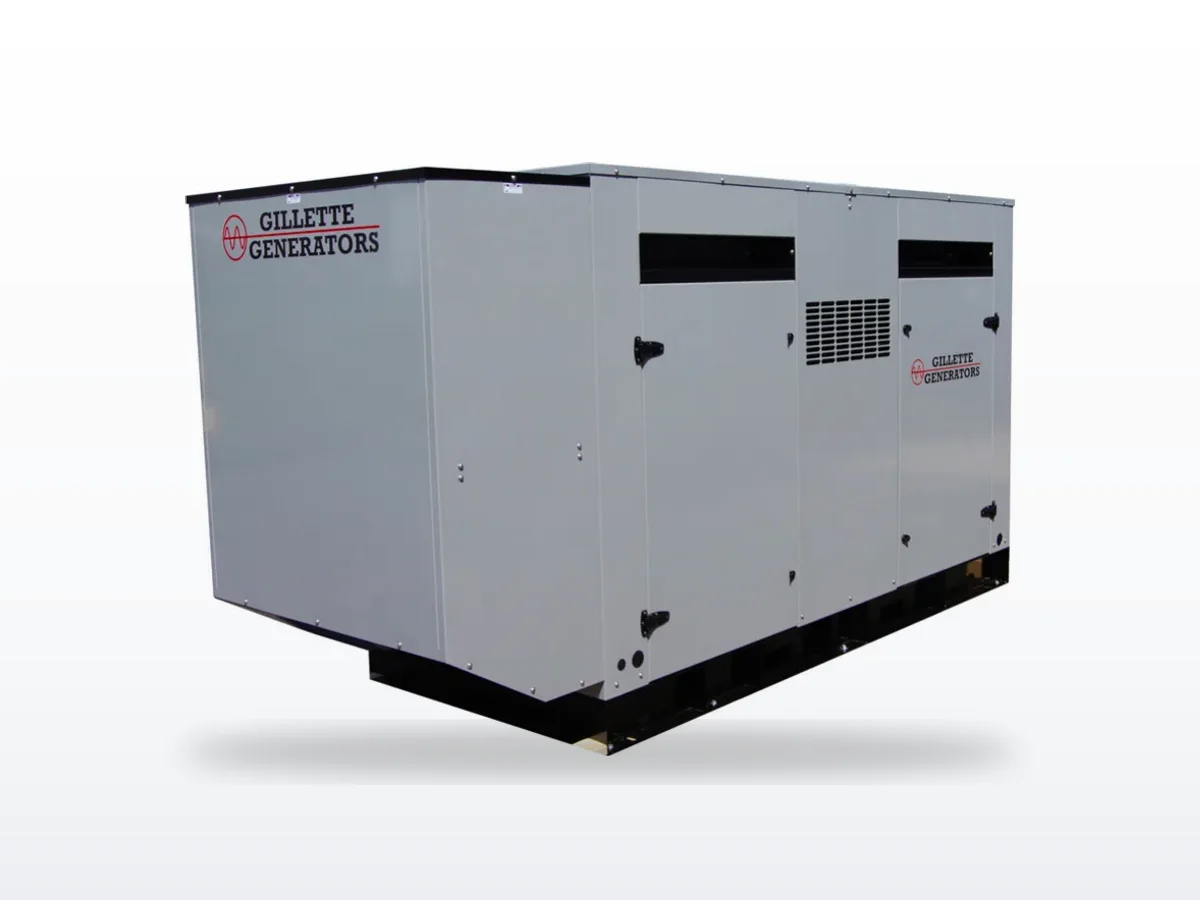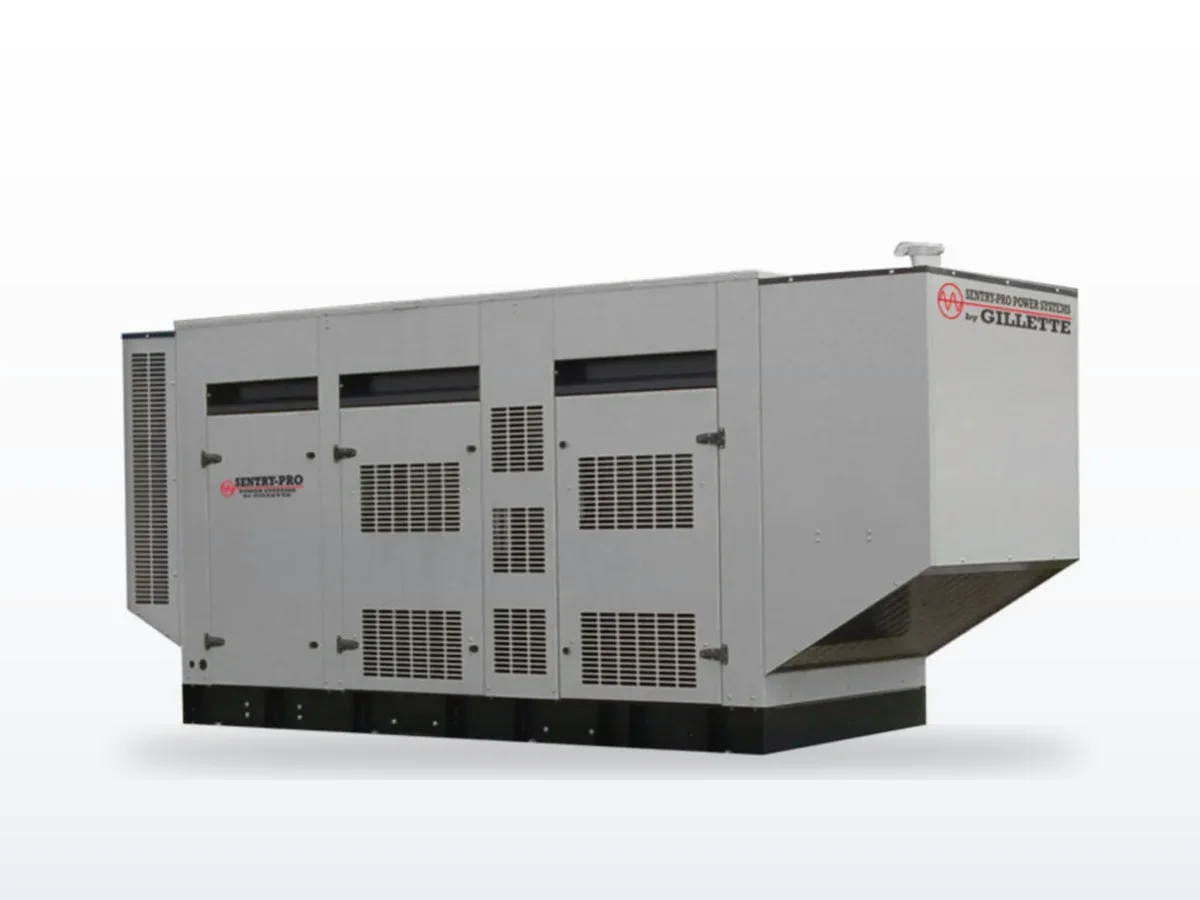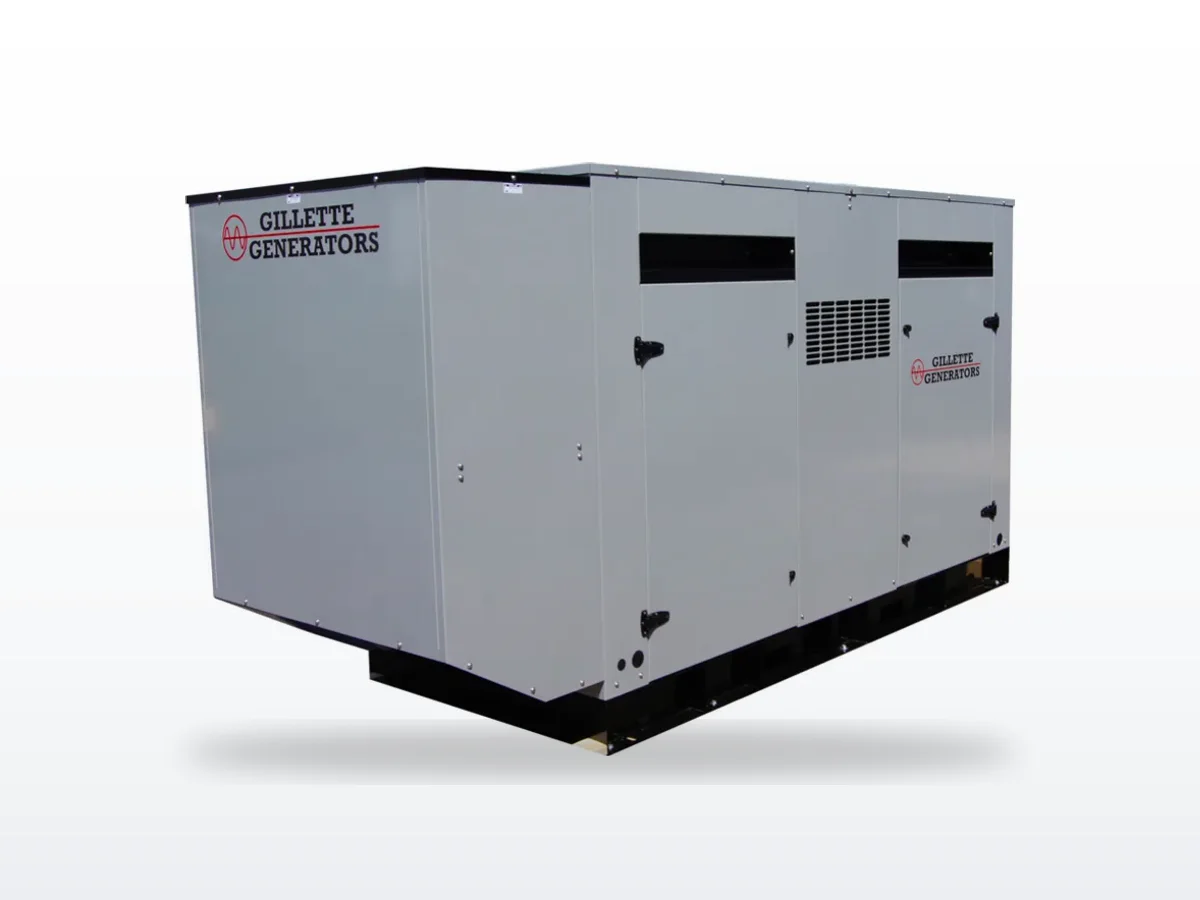
The Gillette SPD-1500 is a 150-kilowatt stationary diesel standby generator — the step from Perkins' 4-cylinder 1104D platform to the 6-cylinder 1106D. At 7.01L displacement across 6 cylinders, the 1106D is Perkins' primary industrial platform for the 125-200 kW diesel generator market. Stamford UCI274G alternator, DSE 7420 MKII controller.
At 150 kW diesel, this serves larger commercial and institutional buildings: hospitals, hotels, larger municipal facilities, and light-industrial plants where diesel is mandated or preferred over natural gas.
The step from 1104D (4-cylinder) to 1106D (6-cylinder) at 150 kW brings several practical changes:
Inline-6 architecture — smoother power delivery, lower vibration harmonics. This matters for sensitive electrical loads in hospitals and data centers
7.01L displacement — 60% more displacement than the 4.4L 1104D, but still a compact engine for the 150 kW class
Stanadyne rotary fuel injection — different fuel system from the common rail 1104D. Rotary injection is mechanically simpler and more tolerant of fuel quality variations
16.8:1 compression ratio — high compression for reliable cold starting and efficient combustion
281 bhp at standby — well within the engine's continuous duty limits
The 1106D shares the same enclosure footprint as the SPD-2000 (200 kW variant using the TAG5 version of this engine), allowing for future capacity upgrades without foundation changes.
Perkins vs. John Deere at 150 kW — choosing between the SPD-1500 and SPJD-1550#
At this output level, Gillette offers both engine brands in near-identical packages. The choice comes down to:
Parts and service network: John Deere has deeper dealer penetration in Northern California agricultural and construction territories. Perkins has broader global reach.
Fuel system preference: The 1106D uses Stanadyne rotary injection; the John Deere 6068 uses the same. Neither has an advantage here.
Output: SPJD-1550 delivers 155 kW vs. 150 kW — a marginal 5 kW difference that rarely matters in practice.
The Perkins 1106D is a well-proven platform we service across multiple brands. At 150 kW, the turbocharger operates at higher boost pressures than the 100 kW 1104D — turbo inspection at each service interval is important. The Stanadyne rotary injection is straightforward to service compared to common rail systems. Fuel quality management remains the #1 priority: annual fuel testing and polishing for standby installations that may not run frequently.
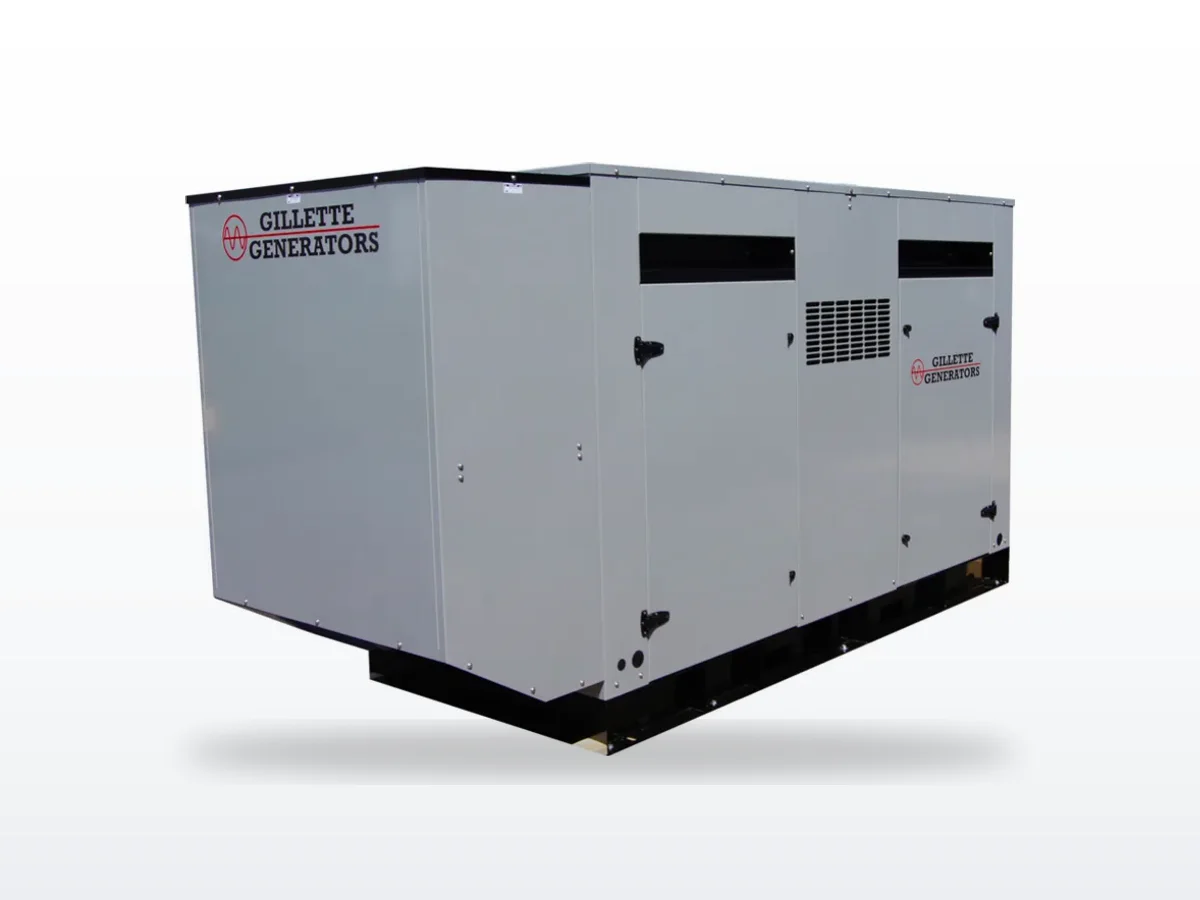
Tell us about the application — kW, voltage, application, install timeline — and we'll respond within one business day with budgetary pricing, lead time, and any sizing notes.
Adjust load percent and tank size to estimate runtime. Pre-filled with this model's spec where available.
Estimate runtime on this tank
Estimated runtime
18.8 hours(0.8 days)
Fuel consumption ≈ 10.65 GPH at 75% load. Estimate based on industry-typical 1800 RPM standby curves (≈0.07 GPH/kW at full load). Actual consumption varies by engine, ambient temperature, fuel quality, and tuning.
Service intervals
Manufacturer-recommended intervals for the Gillette SPD-1500 under standby duty. Field intervals may differ based on load profile, ambient conditions, and fuel quality.
Oil & filter
Every 500 hours or 12 months
Coolant change
Every 6000 hours
Air filter
Every 1000 hours
Fuel filter
Every 500 hours
Major overhaul
≈ 20,000 hours
Load bank test
Every 12 months
Common failure modes
What we've seen fail on this platform. Use as a service-planning reference, not a diagnostic — actual failure modes depend heavily on duty cycle and maintenance history.
Component
Symptom
Typical hours
Severity
Fuel quality / degradation
Hard starting, filter clogging, injector fouling
4,380+
moderate
Turbocharger
Power loss, excessive smoke under load
12,000+
moderate
Battery
Failed to start, slow crank
8,760+
minor
Frequently Asked Questions
What engine step-up occurs at 150 kW?
The SPD-1500 moves from Perkins' 1104D 4-cylinder (used at 60 and 100 kW) to the 1106D 6-cylinder (7.01L). This is a larger-displacement inline-6 with Stanadyne rotary injection (not common rail like the 1104D). The 6-cylinder produces 281 bhp mechanical output at standby — a significant step from the 161 bhp of the 4-cylinder 100 kW unit.
How does the SPD-1500 compare to the SPJD-1550?
The SPD-1500 uses a Perkins 1106D 7.0L I6 at 150 kW. The SPJD-1550 uses a John Deere 6068HF285 6.8L I6 at 155 kW. Similar displacement, same cylinder count, near-identical output. The John Deere has 5 kW more standby rating. Both share the same enclosure dimensions (110 x 48 x 55 in open, 134 x 48 x 72.5 in Level 2).
What fuel injection system does the 1106D use?
Stanadyne rotary fuel injection — different from the common rail system on the smaller 1104D models. Rotary injection is more tolerant of marginal fuel quality but less precise at low loads. For standby applications where fuel quality management is less rigorous, the Stanadyne system can be an advantage.
What fuel consumption at full load?
13.8 gal/hr at full load (150 kW). At 75%: 10.4 gal/hr. At 50%: 6.9 gal/hr. A 300-gallon sub-base tank at 75% load provides approximately 29 hours of runtime.