Overview#
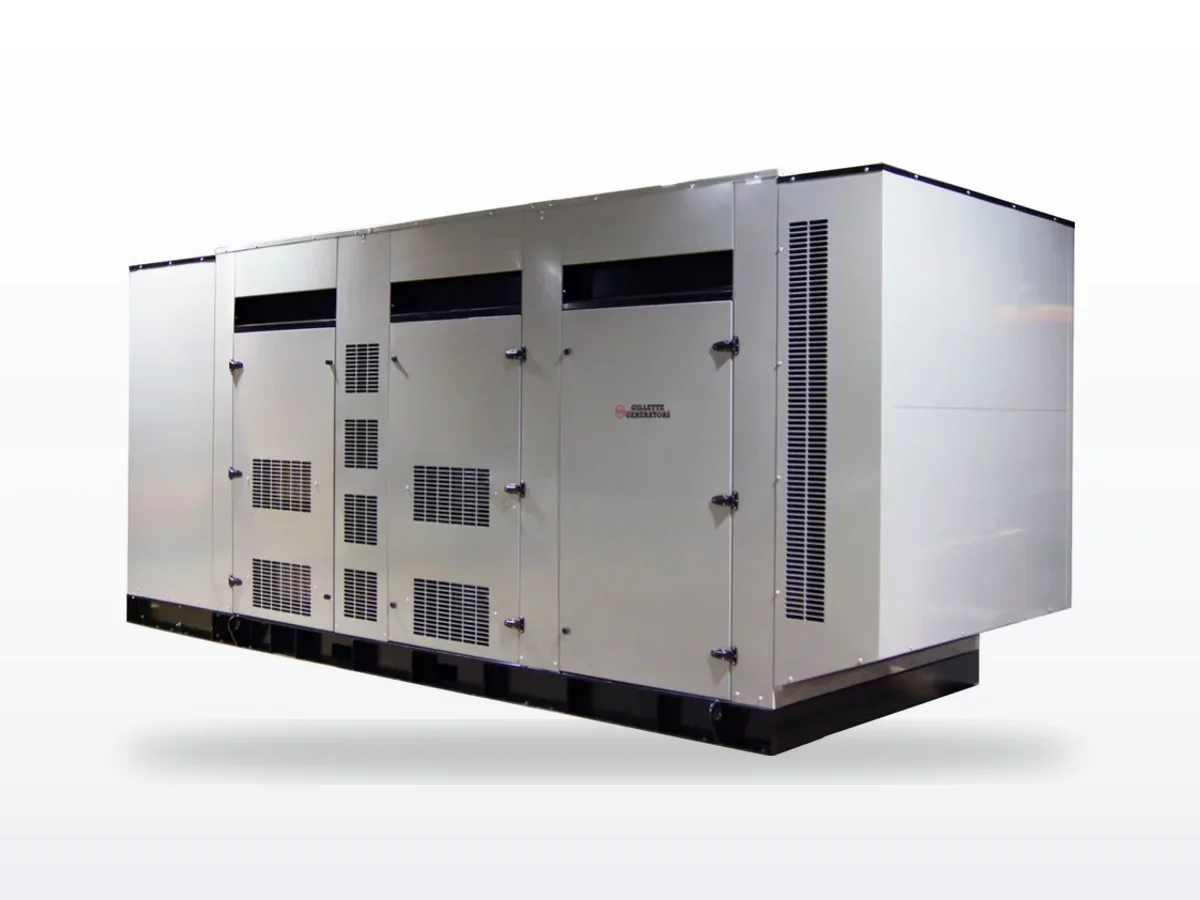
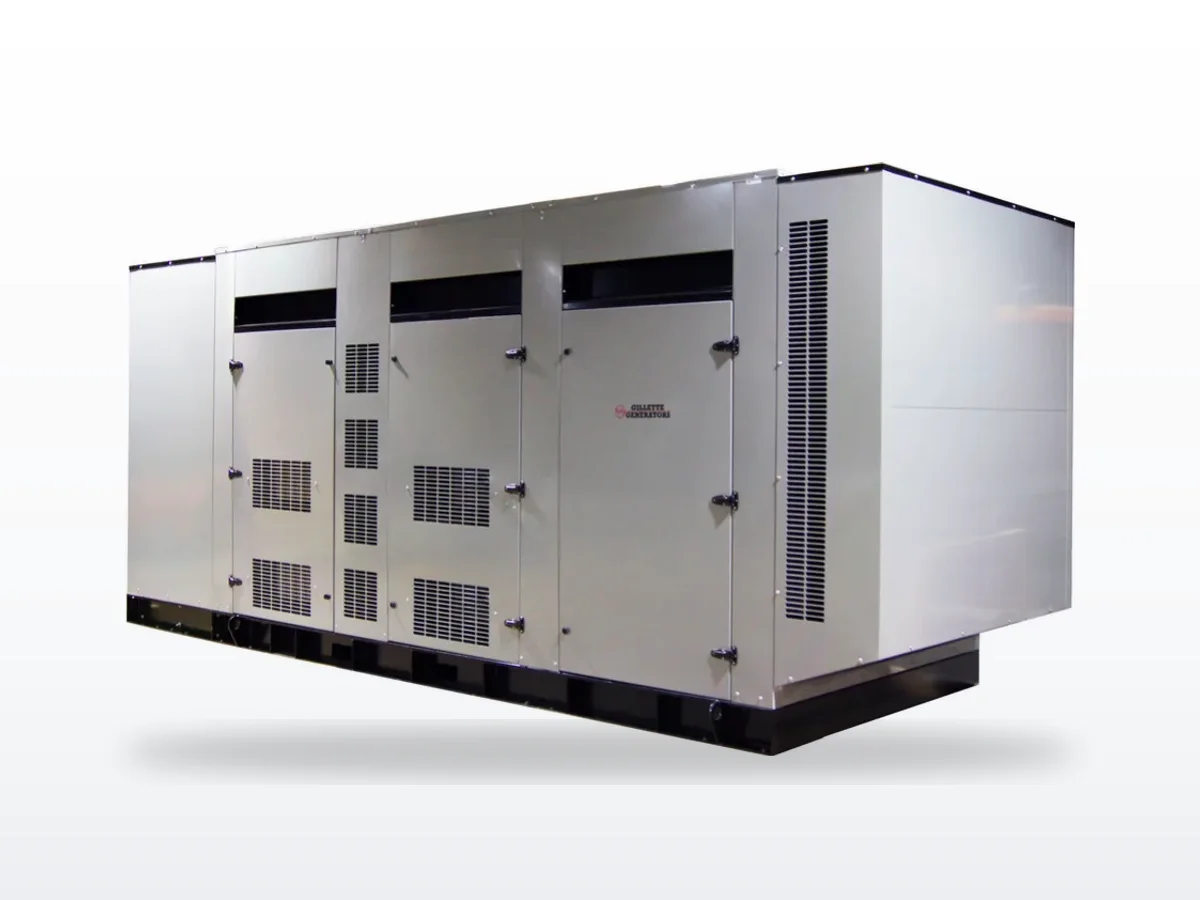
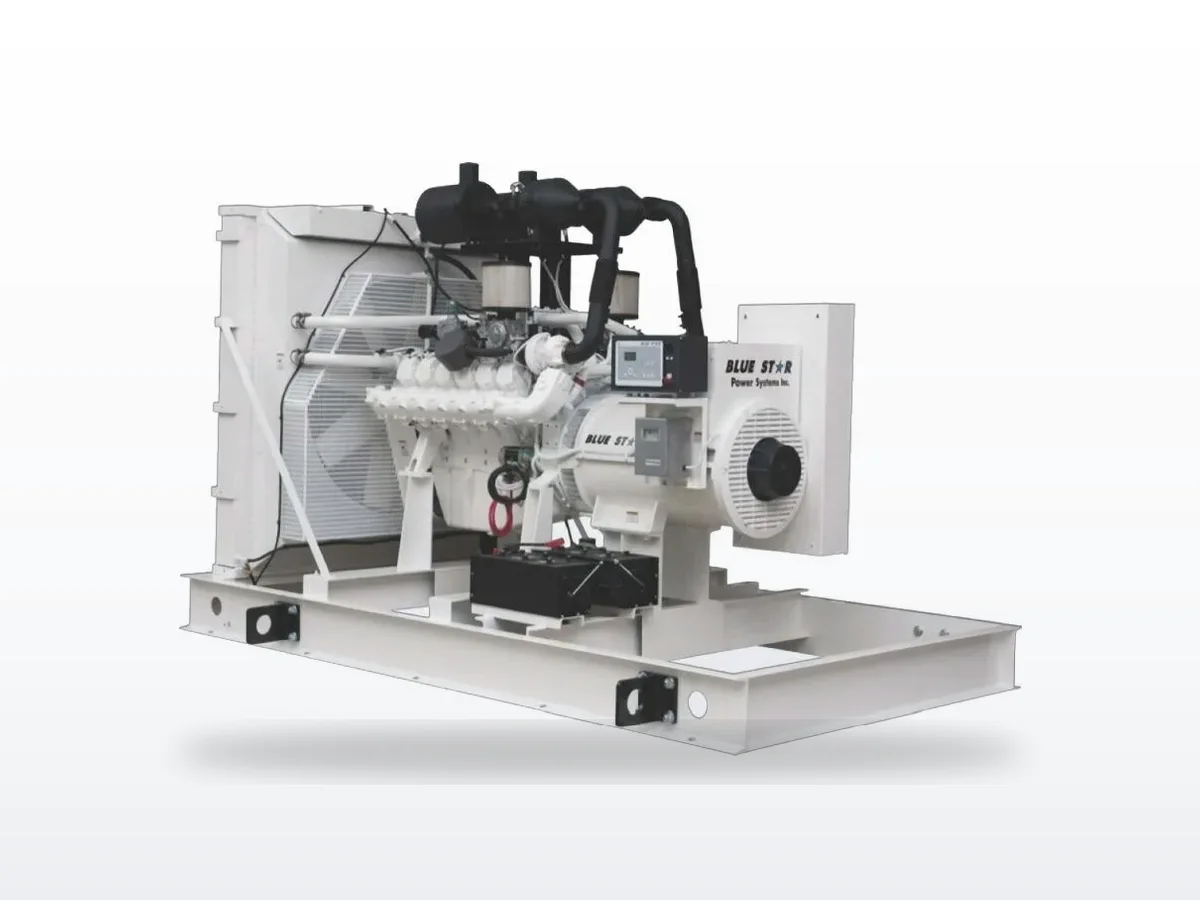
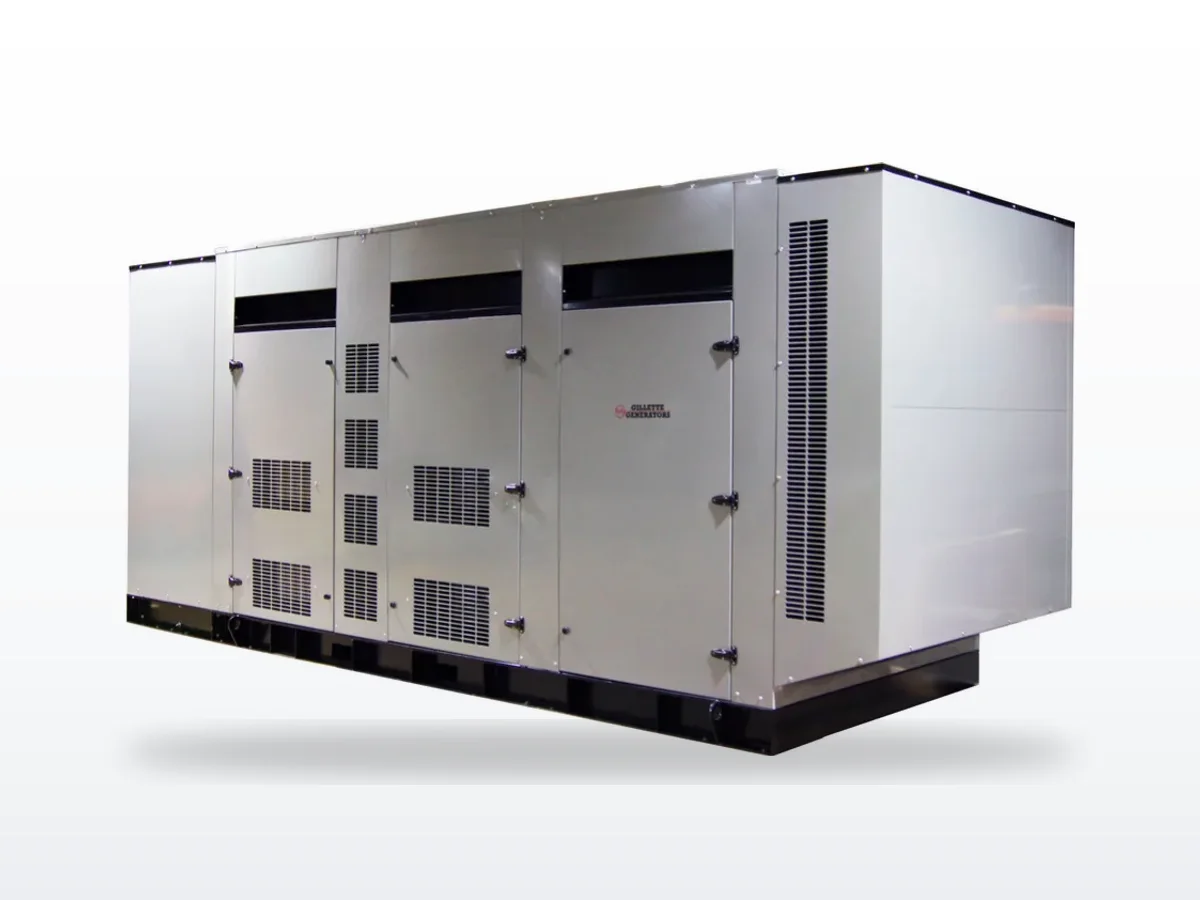
The Gillette SP-1M is a 1,050-kilowatt (1.05 MW) natural gas stationary standby generator — the largest in the SP series and Gillette's natural gas standby flagship. PSI's 52.3L V16 turbocharged engine, Stamford AVK S6D series alternator with PMG excitation, DSE 7420 MKII with UL 6200. Natural gas only, three-phase, 25,225 lbs open.
At over 1 MW, this is a utility-grade standby generator for large data centers, hospitals, major campus distributions, and industrial facilities where a single generator must carry a building's full critical load.
The PSI 52.3L V16 — Gillette's largest engine#
The SP-1M uses PSI's only V16 configuration — 16 cylinders sharing the long-stroke geometry (5.91" × 7.28") of the SP-8000's V12, extended to 4 additional cylinders:
| Engine | Cylinders | Displacement | Standby bhp (NG) |
|---|---|---|---|
| SP-6500 | V12 | 31.8L | 966 bhp |
| SP-8000 | V12 | 39.2L | 1,234 bhp |
| SP-1M | V16 | 52.3L | 1,589 bhp |
The V16 adds cylinder count rather than further stroke extension, providing the additional displacement through a wider engine rather than a longer one. At 208 inches (17.3 feet) open length, the SP-1M is one of the longest single-engine generator sets in Gillette's catalog.
PMG excitation — a meaningful differentiator#
All SP models below the SP-1M use shunt excitation in their Stamford alternators. The SP-1M steps to Permanent Magnet Generator (PMG) excitation in the Stamford AVK S6D series. Practical differences:
- Voltage stability under large transients: PMG excitation responds faster to sudden load changes — important for data center UPS transfers and large motor starts
- Fault current capacity: PMG excitation maintains excitation energy during three-phase fault conditions, allowing protective relays to operate reliably
- One-step 100% load acceptance: The SP-1M specification explicitly rates it for single-step transfer of 1,050 kW — not all 1 MW generators are rated this way
For mission-critical applications where generator transient response is a design criterion, the PMG excitation is a legitimate technical differentiator.
Gas infrastructure at 1 MW#
12,626,000 BTU/hr (12.6 MMBTU/hr) at full load requires a dedicated gas utility engagement. For context, 12.6 MMBTU/hr is approximately the annual heating load of a large commercial building — delivered continuously at standby peak. Utilities typically require a formal capacity request and interconnection review for installations of this scale. Plan for 12-18 months of gas utility coordination in the project schedule.
Our service experience#
The SP-1M is a project-level installation — not a drop-and-run generator. We approach SP-1M commissioning with a formal project plan: structural engineering for the pad, utility coordination for gas service, crane logistics, and a multi-day commissioning sequence including full-load testing and paralleling verification. Annual service is a 2-technician, multi-day event covering the 16-cylinder ignition system, 6-filter oil change, turbocharger inspection, and PMG alternator testing. For clients at this power level, we recommend a 24/7 remote monitoring agreement.