Overview#
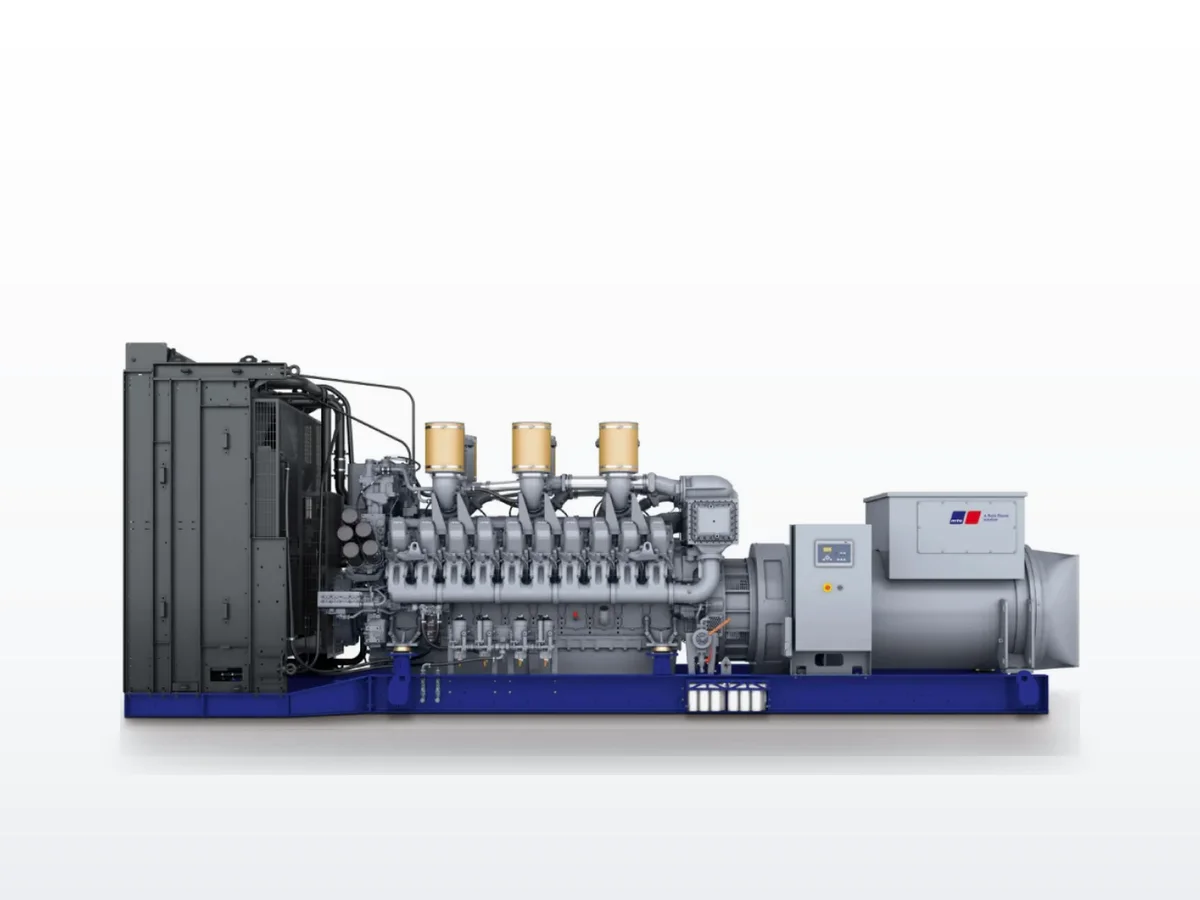
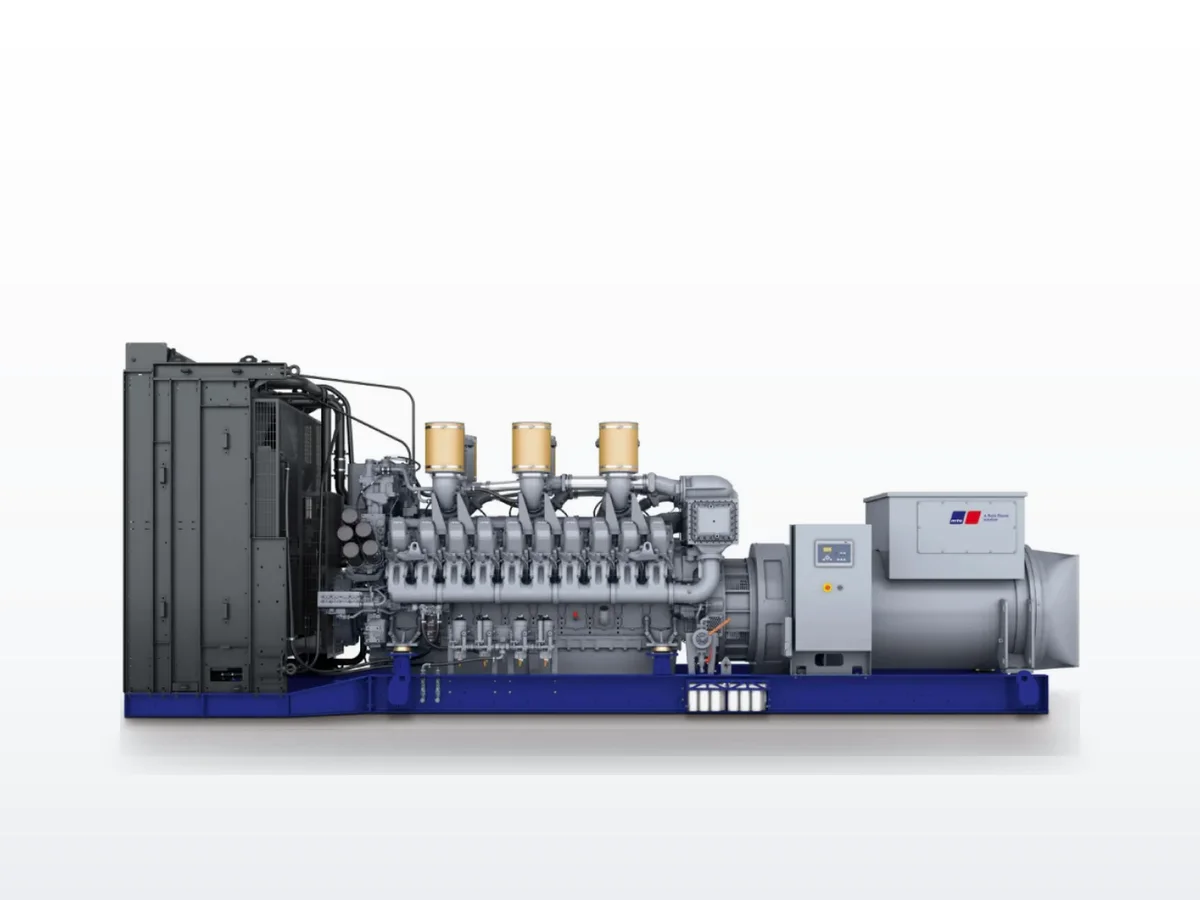
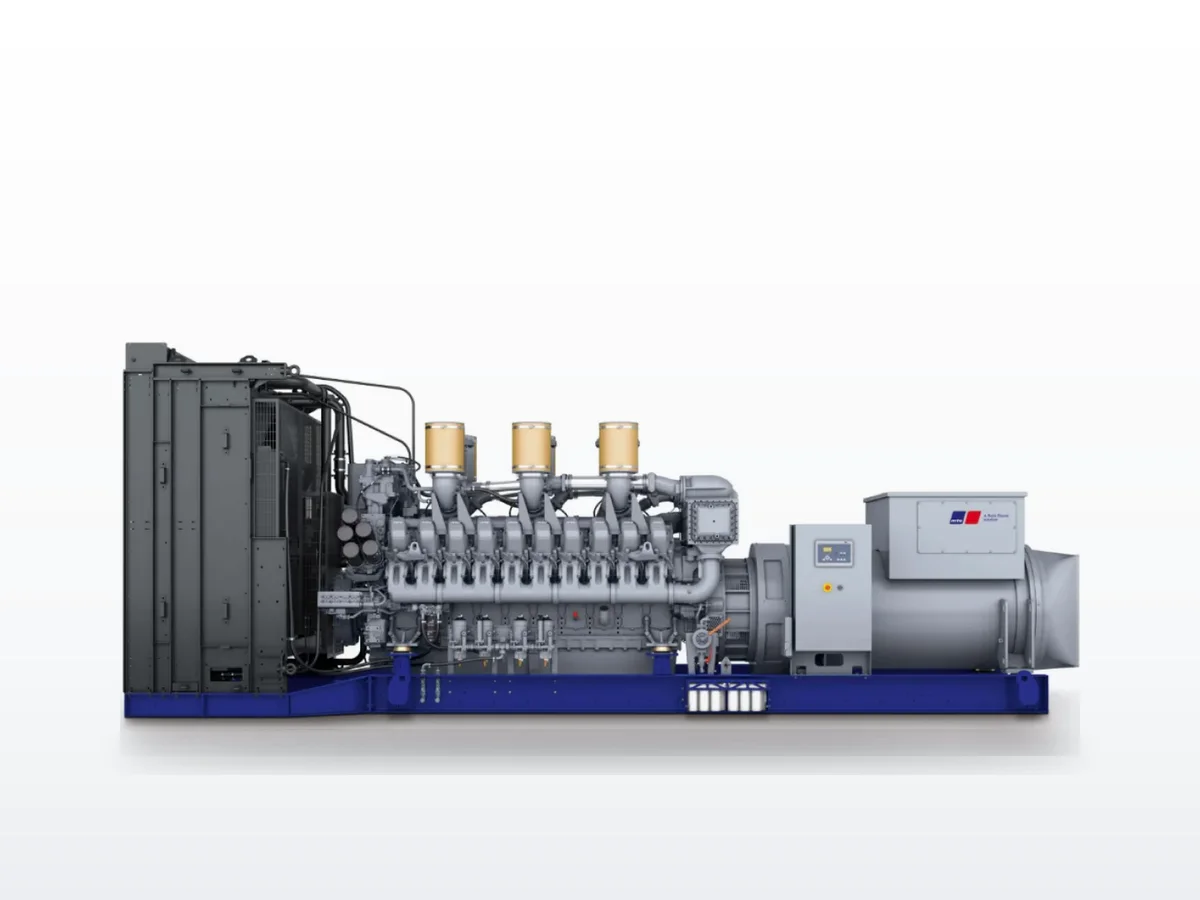
The MTU 16V4000 DS2250 occupies the middle of the 16-cylinder Series 4000 diesel lineup from Rolls-Royce Power Systems. At 2,250 kWe standby and 2,045 kWe prime/DCCP, it delivers a true 2 MW continuous rating from the proven 76.3-liter V16 platform — positioned between the DS2000 (2,000 kW standby) and DS2500 (2,500 kW standby) for facilities that need more than 2 MW but don't require the full output of the top-of-line model.
The 16V4000G84S engine shares the same 76.3L block architecture as the DS2000's G74S variant, rated at a higher output while maintaining EPA Tier 2 + SCAQMD compliance. The shared bore (170mm), stroke (210mm), and component architecture mean that facilities operating mixed DS2000/DS2250/DS2500 installations benefit from consolidated parts inventory and consistent maintenance procedures across the fleet.
The 2,045 kWe DCCP rating makes the DS2250 particularly attractive for hyperscale data centers designed around 2 MW IT load per bus. A single DS2250 provides 2,045 kW continuous with 10% overload reserve — enough headroom for a 1.8 MW IT load plus cooling and distribution overhead without requiring a larger, heavier genset.
The 2.25 MW sweet spot#
Data center designs increasingly target power densities that land between 2 and 2.5 MW per electrical bus. The DS2250's 2,045 kW DCCP rating serves this range without the weight and cost premium of the DS2500. For a facility with 1.8 MW of IT load per bus, the DS2250 provides 13.6% margin above critical load — exceeding the 10% minimum required by most Uptime Institute Tier III designs.
In 2N redundancy configurations, a pair of DS2250 units provides 2,045 kW per bus with full N+1 protection. At N+2 with three units, the array delivers 4,090 kW continuous — serving a 3.5 MW critical load with margin. The electronic isochronous governor supports seamless paralleling with frequency regulation within +/-0.25%.
For facilities growing from 1.5 MW to 2.5 MW per bus, the DS2250 offers a single-genset solution that avoids the complexity of paralleling multiple smaller units during the initial deployment phase, while still supporting future parallel expansion.
Competitive landscape at 2,250 kW#
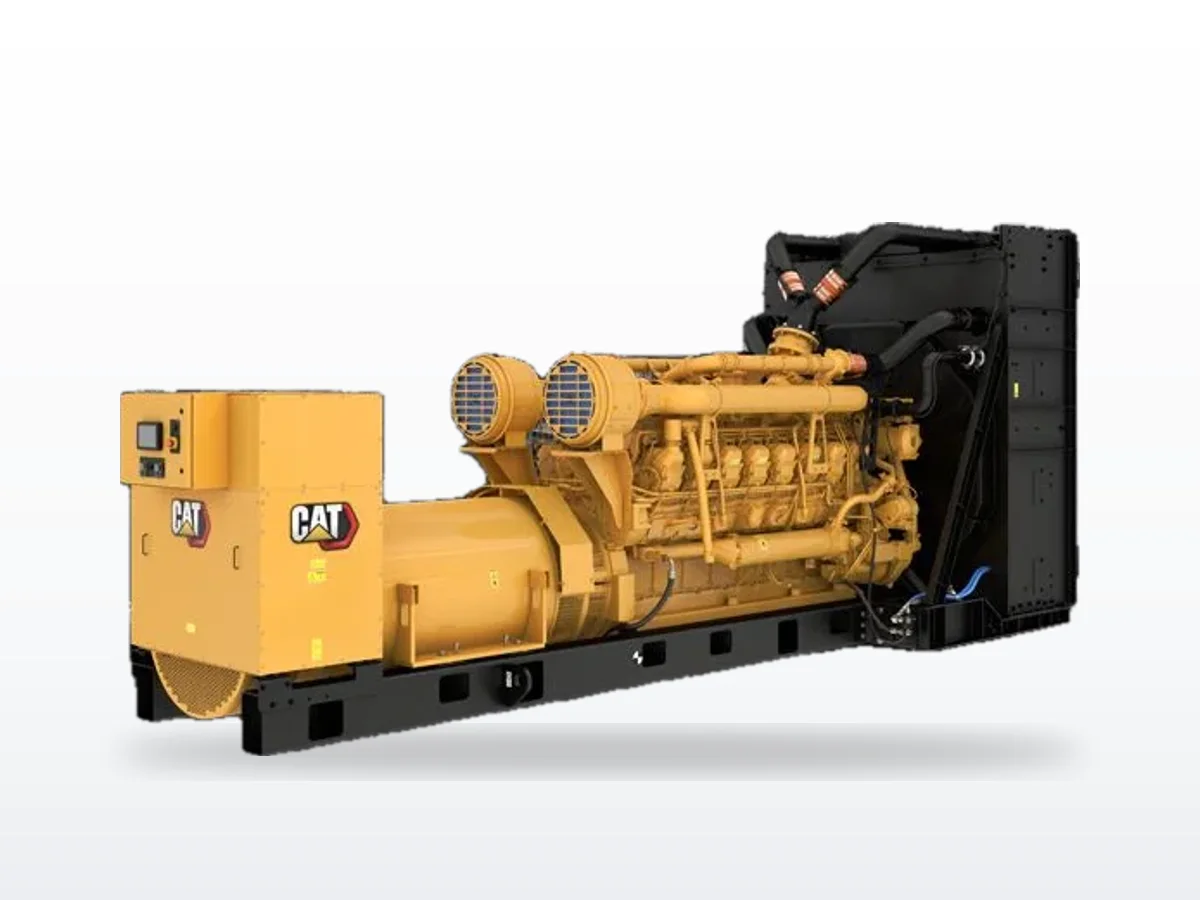
At 2.25 MW, the DS2250 competes with the Caterpillar 3516C in its higher-output configurations (2,250 kW standby with the 78.6L V16), the Cummins QSK60 at mid-range tuning, and Kohler's 2000REOZMB-series at the top of its range. The MTU's distinction is the three-model range on one platform: DS2000, DS2250, and DS2500 share parts, procedures, and physical dimensions, giving facility planners flexibility to right-size without re-engineering the installation.
The SCAQMD-compliant S-suffix engine meets California's strictest stationary diesel emission requirements at Tier 2 without exhaust aftertreatment — no DPF, no SCR, no urea tank. This eliminates both capital cost and ongoing maintenance burden that Tier 4 Final engines require.
Our service experience#
The DS2250 runs the 16V4000G84S engine at a higher specific output per cylinder than the DS2000's G74S variant, which shows up in thermal management. Charge air temperatures and exhaust gas temperatures are elevated relative to the de-rated DS2000 configuration, demanding closer attention to intercooler performance and exhaust system integrity.
In our Northern California installations, we've found that the DS2250's cooling system must be validated for the specific ambient rating ordered (40C or 50C). Units rated for 50C ambient have oversized radiator cores and higher fan power consumption. Specifying 50C when your site never exceeds 40C wastes fan parasitic power; specifying 40C in a location that occasionally reaches 45C risks thermal shutdown. Match the ambient rating to your site's actual 1% design temperature.
The same maintenance philosophy applies as across the 16V4000 family: stagger injector replacements in banks of 4, monitor turbocharger boost balance between banks, and perform thermal imaging during annual load-bank testing. The shared platform means technicians trained on any DS-series unit can service the DS2250 without model-specific recertification.