Overview#
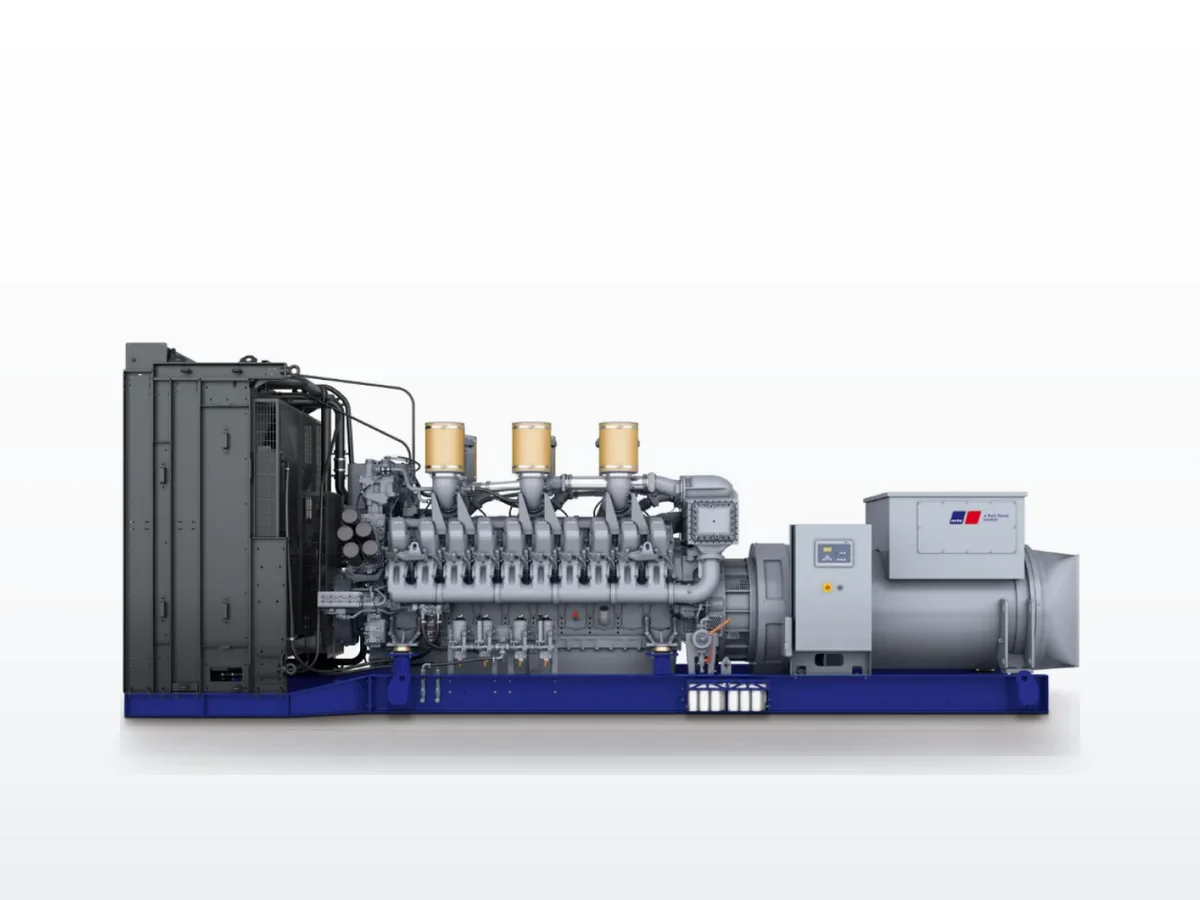
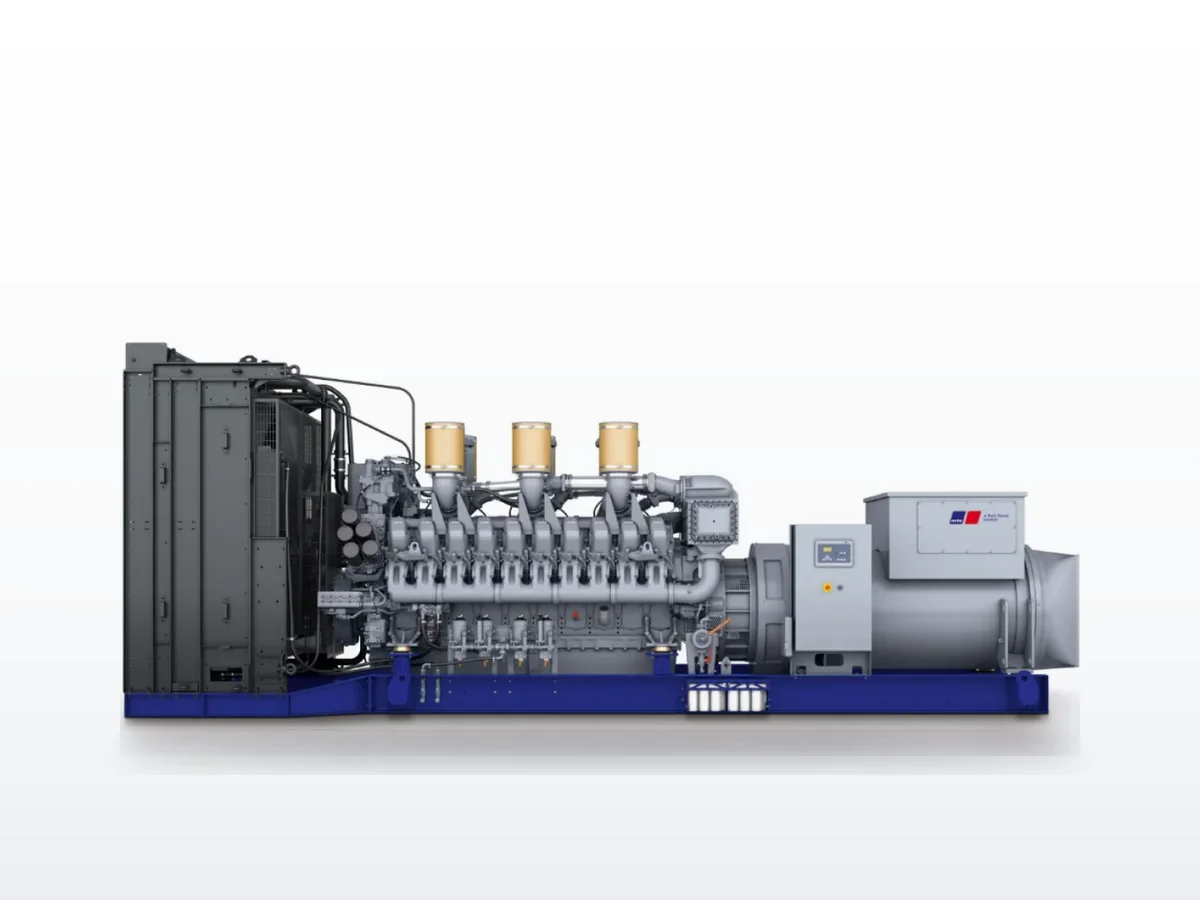
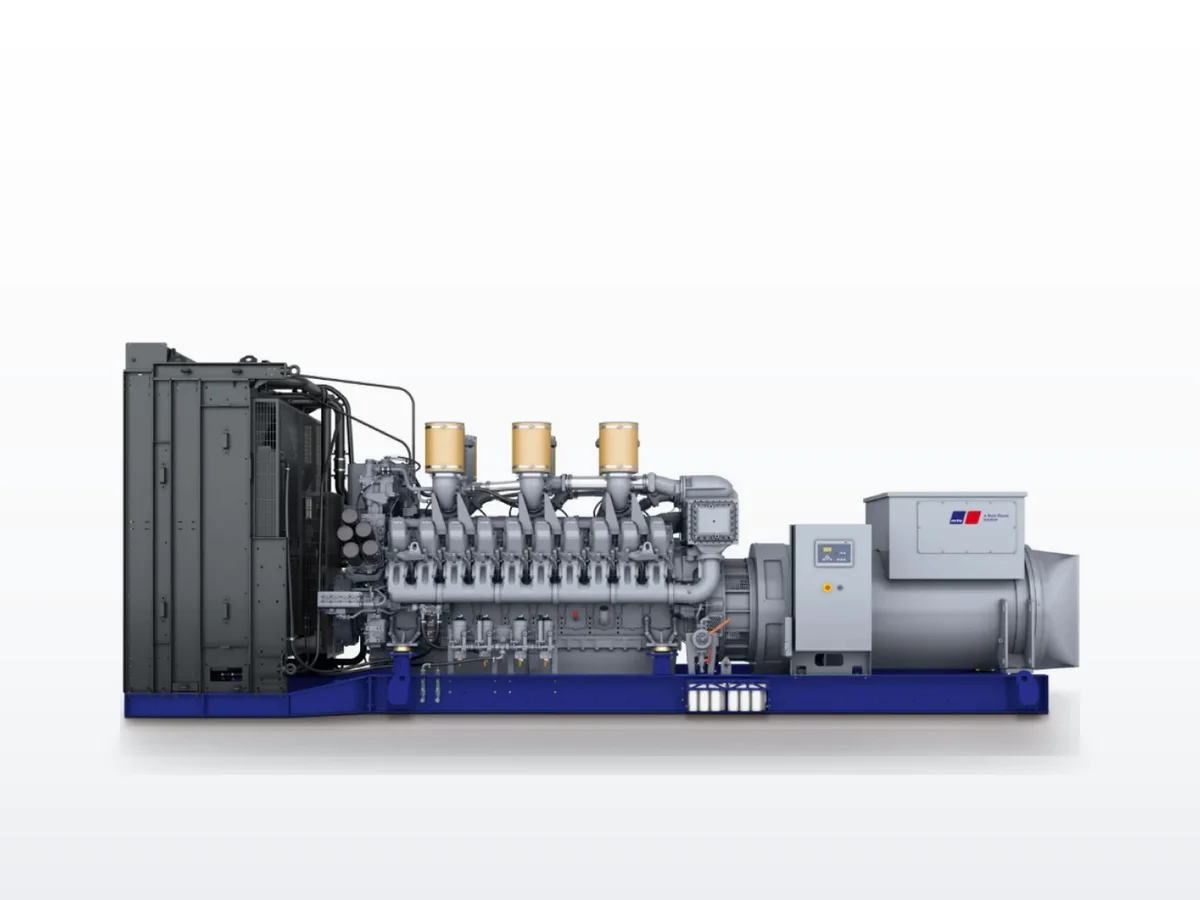
The MTU 12V4000 DS1750 is the flagship of the 12-cylinder Series 4000 diesel generator lineup from Rolls-Royce Power Systems. With a Data Center Continuous Power (DCCP) rating of approximately 1,588 kWe at 480V and a reference standby rating of 1,750 kWe, it extracts the maximum output from the proven 57.2-liter V12 platform. For facilities needing more than 1,250 kW of continuous power from a single genset without stepping up to a 16-cylinder frame, the DS1750 is the answer.
The 12V4000G24S engine shares the same bore, stroke, and displacement as the DS1250 and DS1500, but its tune pushes the platform to 1,736 kWm (2,328 bhp) while maintaining EPA Tier 2 and SCAQMD emissions compliance. The DCCP rating allows unlimited runtime at 100% load factor with 10% overload capacity — meeting Uptime Institute Tier III and IV data center requirements. It accepts rated load in one step per NFPA 110, making it equally suitable for life-safety applications.
Medium-voltage capability up to 13,800V, optional IBC seismic certification, and HCAI pre-approval position the DS1750 for the most demanding installations: hyperscale data centers, large hospital campuses, and critical infrastructure facilities. At 37,303 lbs, it's only 1,100 lbs heavier than the DS1250 despite delivering 41% more continuous power.
Sizing considerations at the 1.5-2 MW class#
The DS1750 occupies a critical decision point in generator sizing. At 1,588 kW DCCP, a single unit can serve facilities that would otherwise require paralleled smaller generators. For data centers, the math is straightforward: a 2N redundancy scheme with DS1750 units provides 1,588 kW per bus — enough for a 1.4 MW IT load with comfortable margin.
When specifying at this power level, pay attention to the voltage-dependent kW variation. The DS1750's DCCP output ranges from 1,572 kWe at 13,800V to 1,590 kWe at 440V — a spread of 18 kW that matters for load calculations at the margin. The alternator selection also varies by voltage: 641-S55 at 380V and 480V, 641-M60 at 416V, 440V, and 600V, and 641-VL75 at 4,160V. Ensure your specification aligns with the alternator model for your voltage class.
For facilities where the DS1750's output falls short, the next step in the Series 4000 lineup moves to the 16V4000 platform, which extends the range beyond 2 MW with a 16-cylinder engine.
Competitive landscape at 1,750 kW#
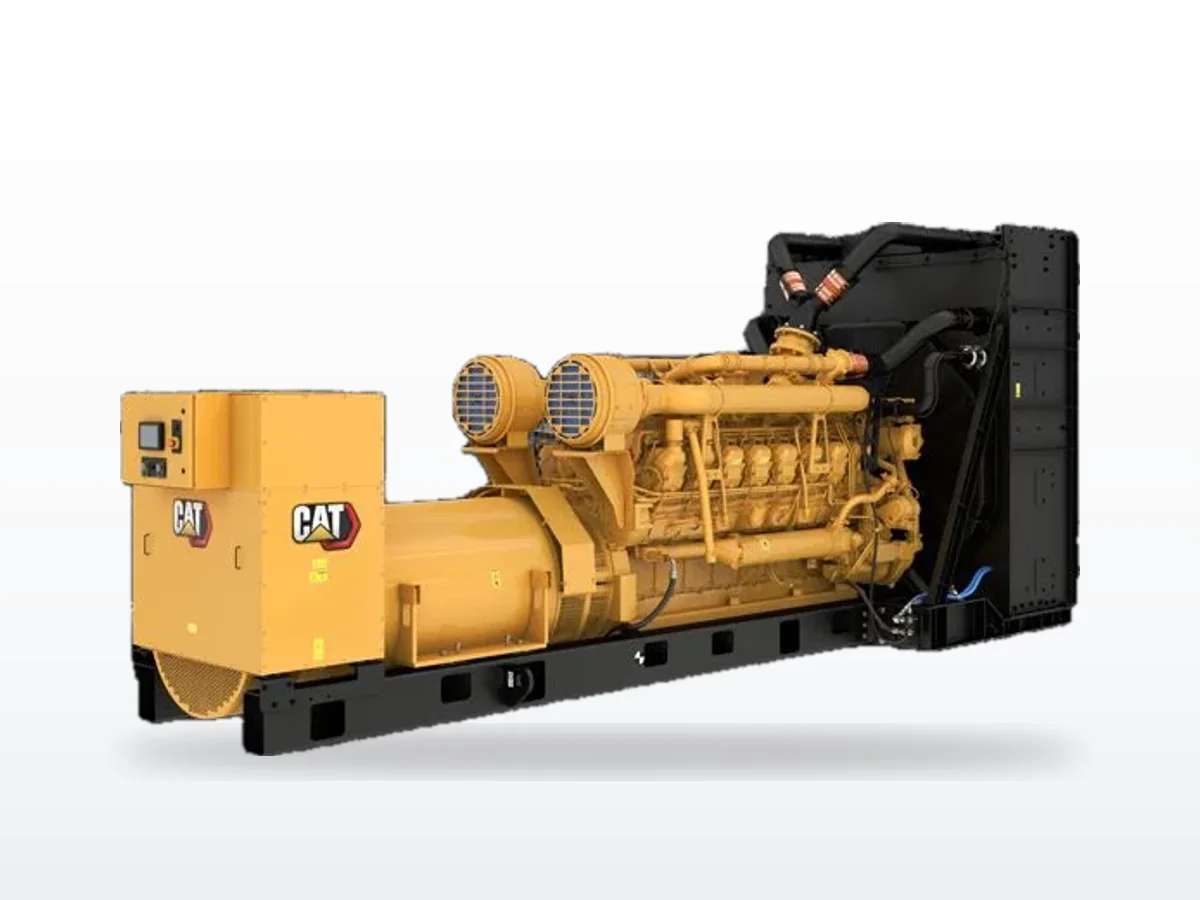
At the top of the 12-cylinder class, the DS1750 competes with the Kohler 1750REOZMD (1,780 kW standby) and the Kohler KD2000 (1,620 kW standby). The Cummins QSK60 (2,000 kW standby) is the next step up for facilities that need more headroom, but it's a significantly larger and heavier unit.
The MTU's advantage at this power level is the DCCP certification with Uptime Institute compliance — Kohler's REOZMD line offers similar standby kW but without the data center continuous power rating that hyperscale operators require. The nine-voltage range extending to 13,800V also positions the DS1750 for medium-voltage campus distribution schemes where Kohler's options are more limited.
For pure standby applications where DCCP isn't needed, the Kohler 1750REOZMD is the natural comparison at nearly identical power (1,780 vs 1,750 kW standby), and its broader North American dealer network may offer faster parts and service response in some markets.
Our service experience#
The DS1750 pushes the 12V4000 platform harder than its siblings, which shows up in thermal management. Aftercooler heat rejection (a separate circuit from the jacket water) jumps to 440 kW (25,022 BTU/min) compared to 333 kW (18,937 BTU/min) on the DS1250, and exhaust temperatures run 815°F versus 752°F. In our Northern California installations, this means closer attention to ventilation sizing for indoor installations and more frequent inspection of the exhaust flex connectors.
Fan power consumption is also higher at 102 hp versus 49 hp on the DS1250 — a parasitic load worth accounting for in fuel budgets for extended-run facilities. We recommend thermal imaging of the radiator and intercooler circuits during annual load-bank testing to catch coolant flow imbalances before they become failures.
The 37,303 lb operating weight means structural engineering review is essential for rooftop and elevated installations. The footprint is identical to the DS1250 (231.4 x 91.1 in), so pad dimensions don't change, but the load-bearing calculation does.