Overview#
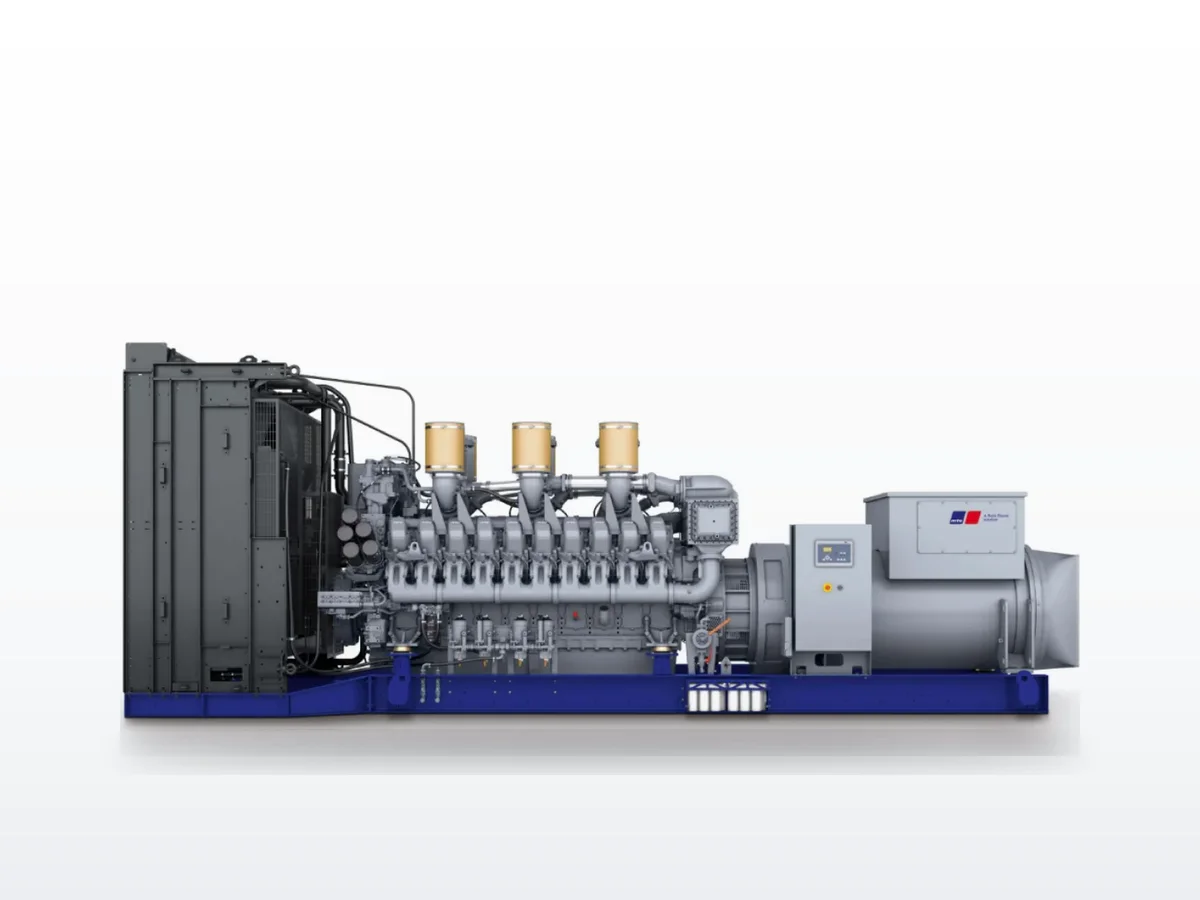
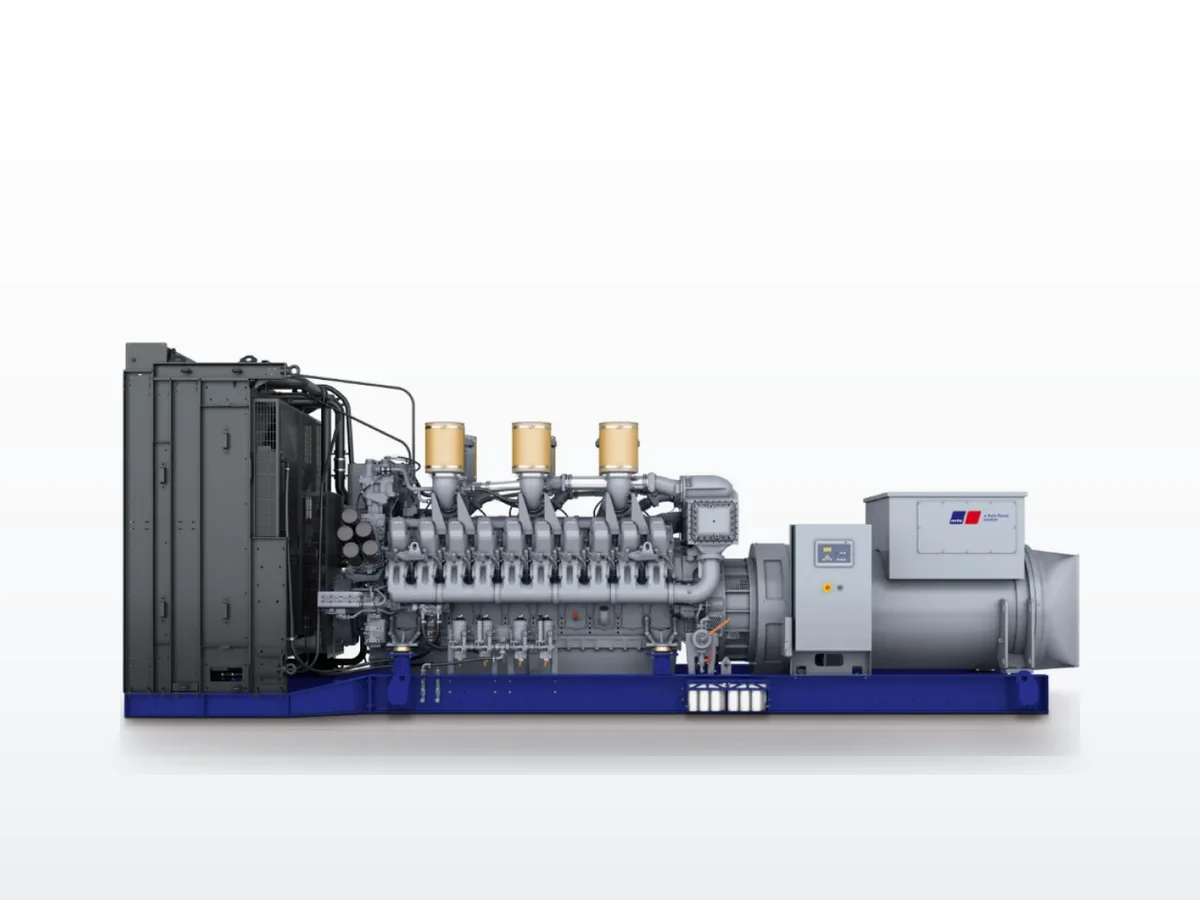
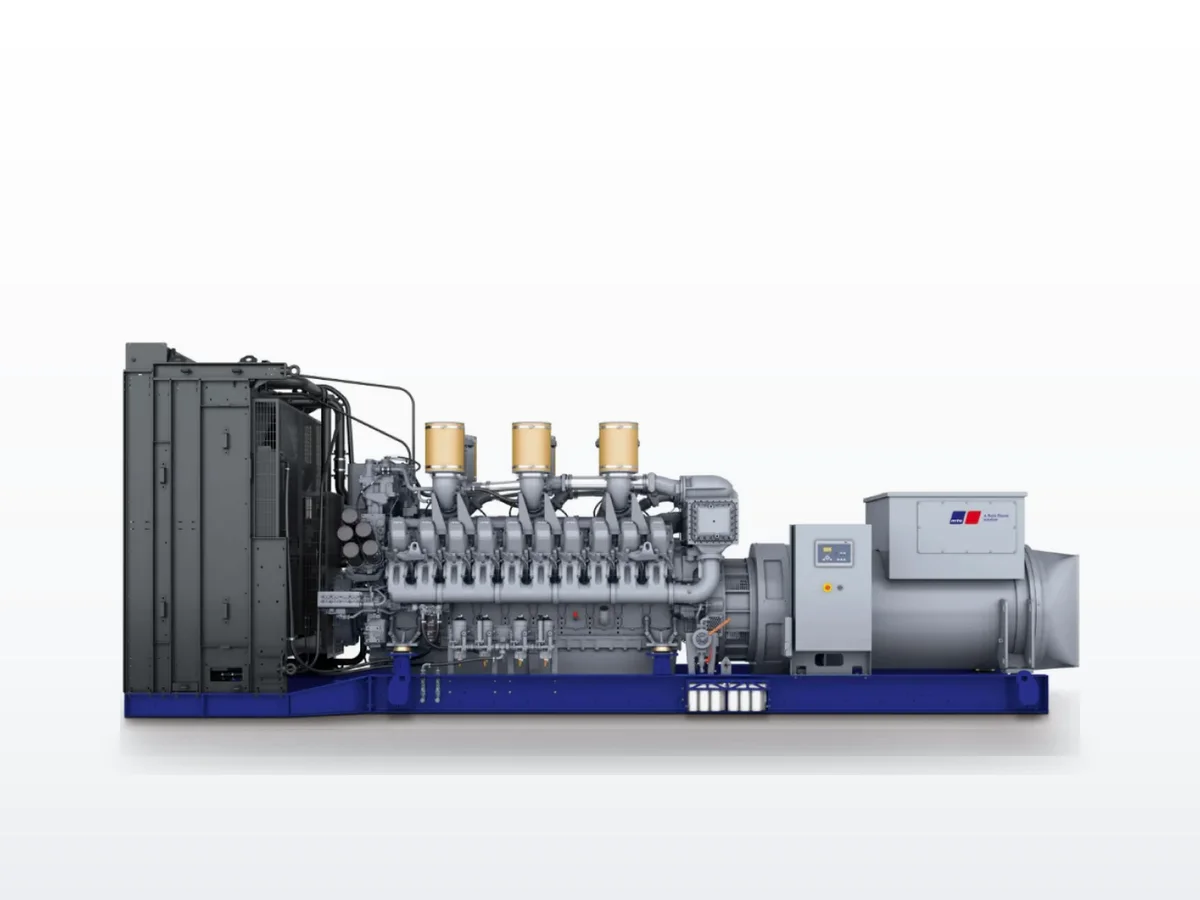
The MTU 12V4000 DS1500 is the standby-optimized variant in the Series 4000 lineup from Rolls-Royce Power Systems. Rated at 1,500 kWe standby with a Fuel Consumption Optimized (FCO) engine calibration, it delivers the highest standby power from the 12V4000 platform while minimizing fuel burn during the intermittent duty cycles typical of emergency standby applications.
Built on the same 57.2-liter V12 as its siblings (the DS1250 and DS1750), the DS1500 uses the 12V4000G74S engine tune — producing 1,736 kWm (2,328 bhp) at 1,800 RPM. The FCO designation means this unit trades emissions certification tier for fuel efficiency: where the DS1250 and DS1750 carry EPA Tier 2 and SCAQMD ratings, the DS1500 optimizes for lower fuel consumption during the limited-runtime scenarios that define standby service. It accepts rated load in one step per NFPA 110 and operates at up to 85% average load factor.
Voltage options span 380V through 13,800V across nine configurations, with UL 2200 and CSA certifications available on low-voltage models. Optional IBC seismic certification and HCAI pre-approval make it suitable for California hospital and essential-facility installations. Like all Series 4000 units, it supports HVO and GtL renewable fuels per EN15940.
When to spec the DS1500 vs DS1250 or DS1750#
The three 12V4000 generator sets share the same footprint and engine platform, so the decision comes down to rating philosophy:
- DS1250 (1,135 kW DCCP / 1,250 kW standby ref): Choose for data centers requiring unlimited continuous runtime at 100% load factor. EPA Tier 2 + SCAQMD certified.
- DS1500 (1,500 kW standby FCO): Choose for emergency standby where runtime is limited, the 85% average load factor is acceptable, and fuel cost during outage events matters. Highest standby kW from the 12-cylinder platform.
- DS1750 (1,600 kW DCCP / 1,750 kW standby ref): Choose for the maximum continuous output from a 12-cylinder MTU. EPA Tier 2 + SCAQMD certified.
For facilities that run monthly load-bank tests but rarely see extended outages, the DS1500's FCO tune provides meaningful fuel savings over the Tier 2 variants without sacrificing power availability.
Competitive landscape at 1,500 kW standby#
At 1,500 kW standby, the DS1500 faces the Kohler 1600REOZMD (1,600 kW standby) and the Kohler KD1500 (1,300 kW standby). The MTU's FCO designation is its primary differentiator — purpose-built for fuel efficiency during intermittent standby operation. The Kohler 1600REOZMD offers slightly more headroom at 1,600 kW but with a conventional standby tune rather than fuel optimization.
For facilities evaluating total cost of ownership over a 20-year lifecycle, the fuel savings from the FCO calibration compound significantly during extended outage events, particularly in regions with expensive diesel supply chains. However, the lack of EPA Tier 2 certification on the DS1500 may be a factor in jurisdictions with strict air quality requirements — in those cases, consider the DS1250 (Tier 2, 1,250 kW) or DS1750 (Tier 2, 1,750 kW) instead.
Our service experience#
The DS1500 shares the same maintenance profile as the rest of the 12V4000 family — same oil system capacity (68.7 gal), same coolant volume (154 gal system), same 24VDC starting system with four Group 8D batteries. In our Northern California territory, we see these primarily in commercial high-rises and campus installations where the standby rating fits the utility-backed power architecture.
The FCO engine tune runs cooler exhaust temperatures under partial load, which can extend exhaust flex connector and silencer life compared to the Tier 2 variants. We recommend the same 500-hour oil change intervals as the rest of the Series 4000 family, with particular attention to the common rail fuel injection system — fuel quality and filtration are critical at this power level. Water separators should be inspected monthly in standby installations where fuel sits for extended periods.