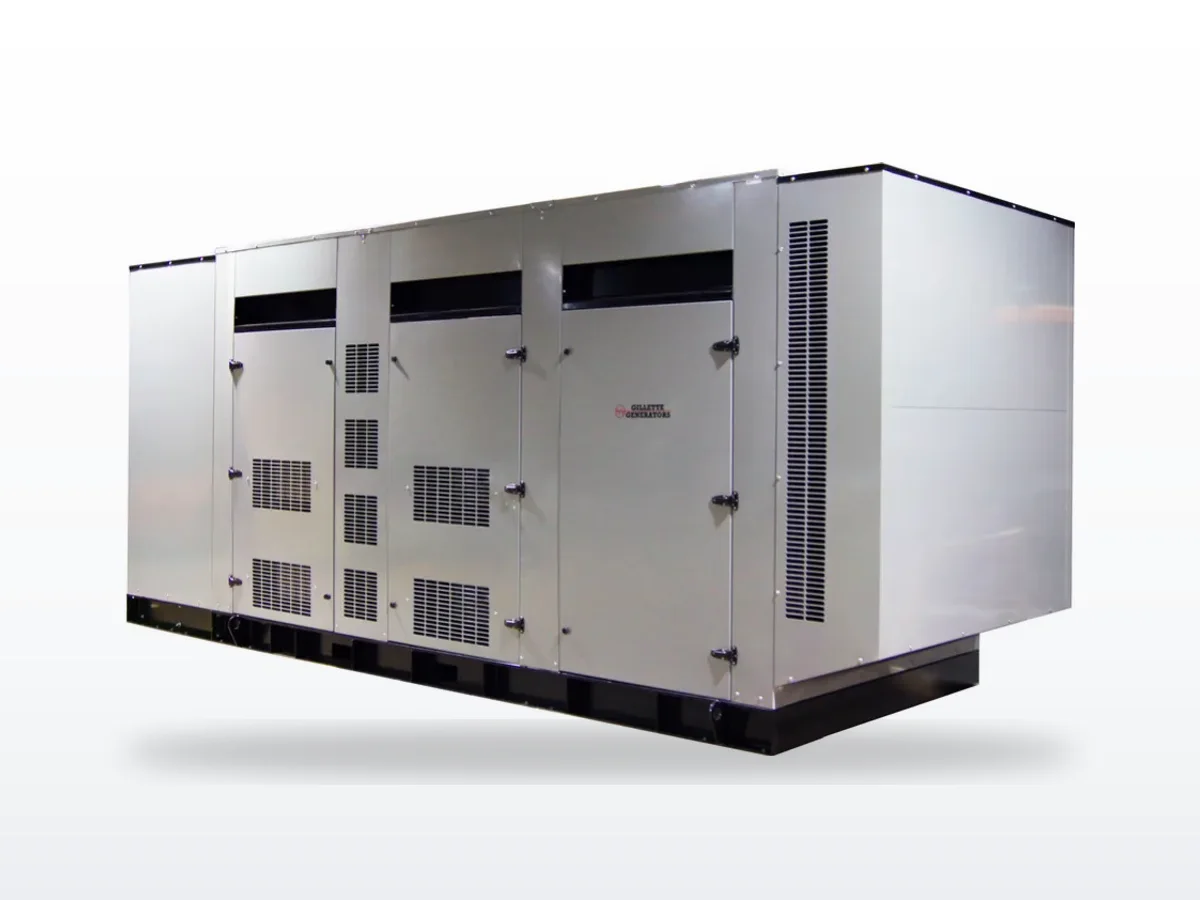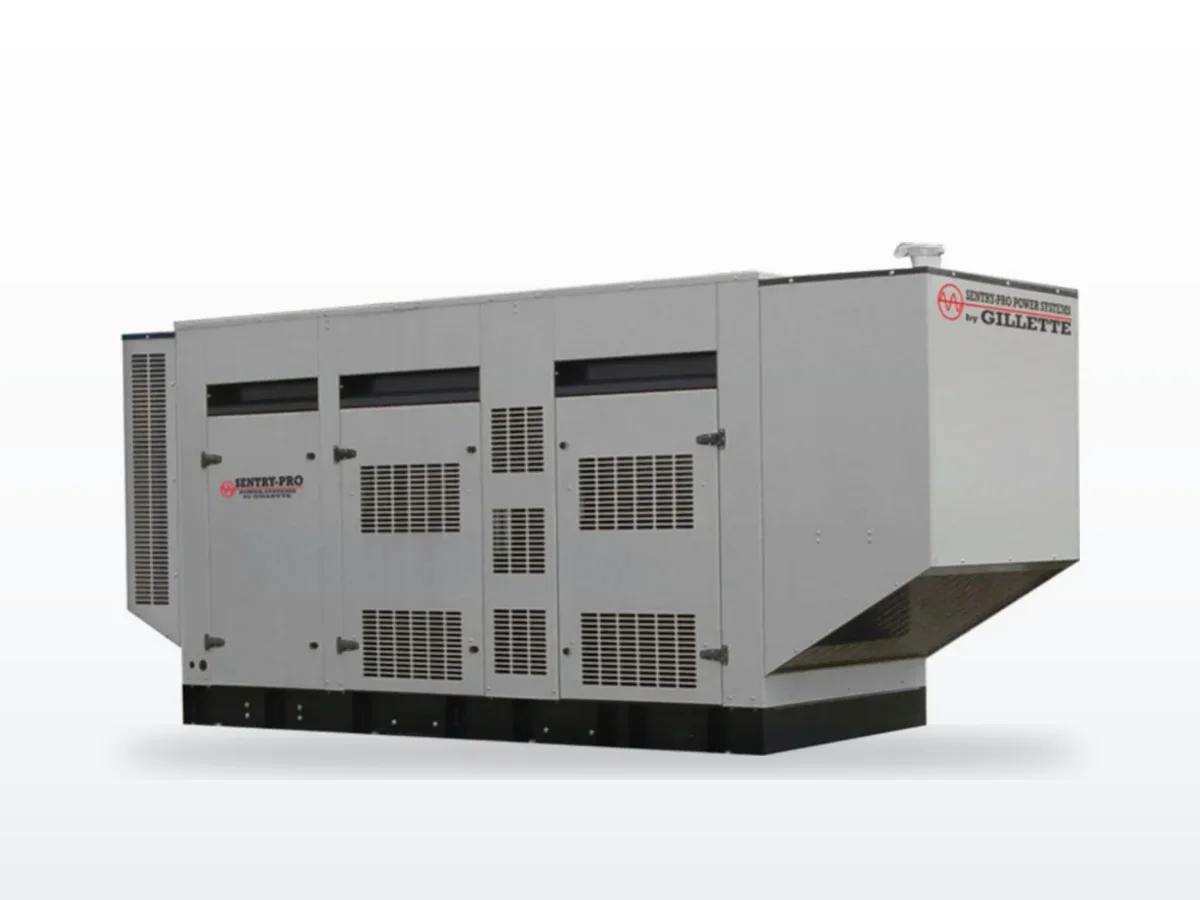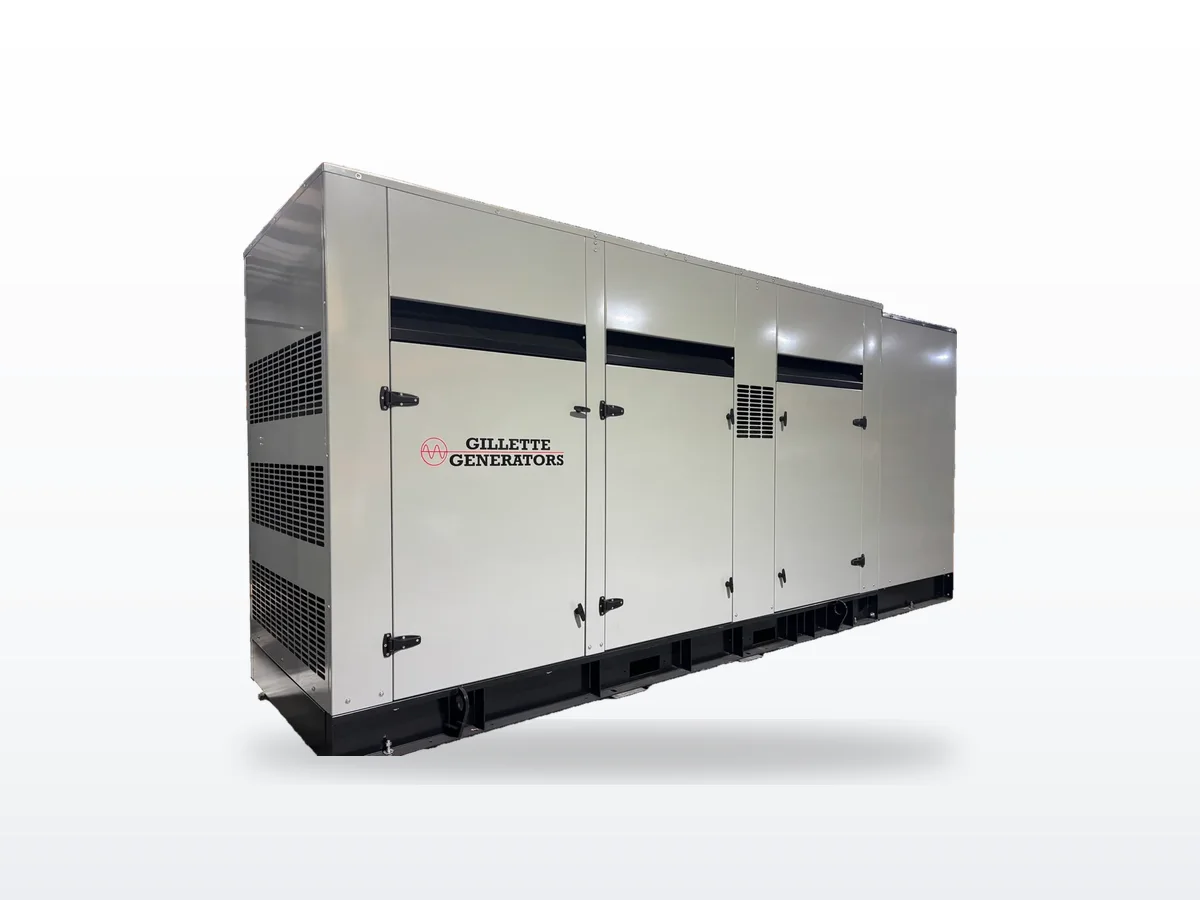
The Gillette SP-3000P is a 300-kilowatt natural gas / 165-kilowatt LPG stationary standby generator — the high-output variant of PSI's 13L inline-6 platform sharing the exact same enclosure footprint as the SP-2500P. It delivers 300 kW NG from 12.54L displacement through high-output (HO) calibration: 469 bhp mechanical at standby vs. 402 bhp on the SP-2500P. Three-phase only.
At 300 kW, this unit is at the upper edge of the PSI 13L platform's output range before Gillette steps to the 14.6L V8 in the SP-3500. It serves large commercial, institutional, and light-industrial facilities where natural gas backup power is preferred.
The SP-3000P and SP-2500P are a compelling comparison — two models from the same assembly line with 50 kW difference in NG output at no footprint cost:
Spec
SP-2500P
SP-3000P
NG standby kW
250
300
LPG standby kW
165
165
Engine variant
13L I6 TCAC
13L I6 TCAC HO
Mechanical output (NG)
402 bhp
469 bhp
Open dimensions
152 x 72 x 80 in
152 x 72 x 80 in
Open weight
8,175 lbs
8,175 lbs
If the installation will ever need more than 250 kW NG — even for load growth — specifying the SP-3000P on the same foundation costs little incremental and provides headroom.
The SP-3000P's 3,979,000 BTU/hr full-load NG demand is significant. The cooling system is rated for 140°F (60°C) ambient on this model — notably higher than most units in the lineup, suggesting it handles hot-climate installations particularly well.
Exhaust outlet is a 5" diameter connection with maximum back pressure of 4.4 in.hg — ensure exhaust runs are appropriately sized for the installation distance.
The PSI 13L inline-6 at the 300 kW output level is among the more demanding gas engine service schedules we manage — the HO calibration runs at elevated thermal loads. We prioritize charge air cooler inspection and turbocharger oil supply line condition at each service. The inline-6 layout gives excellent access to spark plugs on both banks from the top of the engine. DSE 7420 controller makes fault diagnosis efficient — the 250-event log is invaluable for tracing intermittent starts during power events.
Tell us about the application — kW, voltage, application, install timeline — and we'll respond within one business day with budgetary pricing, lead time, and any sizing notes.
Adjust load percent and tank size to estimate runtime. Pre-filled with this model's spec where available.
Estimate runtime on this tank
Fuel demand at 75% load
3,150,000 BTU/hr≈ 3150.0 cf/min @ 1,000 BTU/cf
On utility natural gas the runtime is generally unlimited provided the supply line and meter can deliver this BTU/hr at the engine's required inlet pressure (typically 5–14" WC residential, up to 5 psi commercial). Confirm against the OEM's published fuel-pressure spec.
Service intervals
Manufacturer-recommended intervals for the Gillette SP-3000P under standby duty. Field intervals may differ based on load profile, ambient conditions, and fuel quality.
Oil & filter
Every 250 hours or 12 months
Coolant change
Every 4000 hours
Air filter
Every 1000 hours
Spark plugs
Every 1500 hours
Major overhaul
≈ 15,000 hours
Load bank test
Every 12 months
Common failure modes
What we've seen fail on this platform. Use as a service-planning reference, not a diagnostic — actual failure modes depend heavily on duty cycle and maintenance history.
Component
Symptom
Typical hours
Severity
Turbocharger
Loss of power, black smoke under load
12,000+
moderate
Charge air cooler
Reduced output, elevated intake temperatures
10,000+
moderate
Spark plugs / ignition
Misfire, rough running under load
1,500+
minor
Battery bank (24V)
Slow cranking or failed start
8,760+
minor
Frequently Asked Questions
What is the difference between the SP-3000P and SP-2500P?
Both use PSI's 13L inline-6 engine block in the same enclosure. The SP-3000P is the high-output (HO) variant: 300 kW NG vs. 250 kW NG from the same 12.54L displacement. Mechanical output is 469 bhp (SP-3000P) vs. 402 bhp (SP-2500P). The LPG rating is identical at 165 kW for both — the HO calibration's gains are NG-specific.
Why is the LPG output the same as the SP-2500P?
The high-output tuning of the 13L inline-6 is calibrated for natural gas at elevated boost pressures. The LPG fuel delivery and vapor withdrawal systems have a BTU ceiling that limits LPG output at this displacement regardless of NG calibration. Both the 2500P and 3000P deliver 165 kW on LPG — the difference is only in NG performance.
What is the full-load fuel consumption on natural gas?
3,979,000 BTU/hr (3,979 ft³/hr) at 300 kW full load. At 75% load: 3,111,000 BTU/hr. At 50%: 2,079,000 BTU/hr. This requires a 2" NPTF dedicated gas connection and a high-capacity utility meter.
How does the SP-3000P compare to Kohler or Caterpillar at 300 kW gas?
At 300 kW gas standby, alternatives include Caterpillar's G3306 and Kohler's larger KG series. The SP-3000P competes on price and open-architecture componentry: PSI engine serviceable by any industrial gas technician, Stamford alternator, DSE controller — no proprietary dealer dependency. Kohler and Cat have stronger local service networks in Northern California.
Is the enclosure size the same as the SP-2500P?
Yes — the SP-3000P and SP-2500P share identical physical dimensions and weight (open: 152 x 72 x 80 in, 8,175 lbs; Level 2: 200 x 72 x 94 in, 10,675 lbs). Same foundation pad can serve either model.
200 kW natural gas stationary standby generator. Made-in-USA commercial unit with PSI 8.8L high-output turbocharged V8, Stamford alternator, and DSE 7420 MKII controller. NG only.