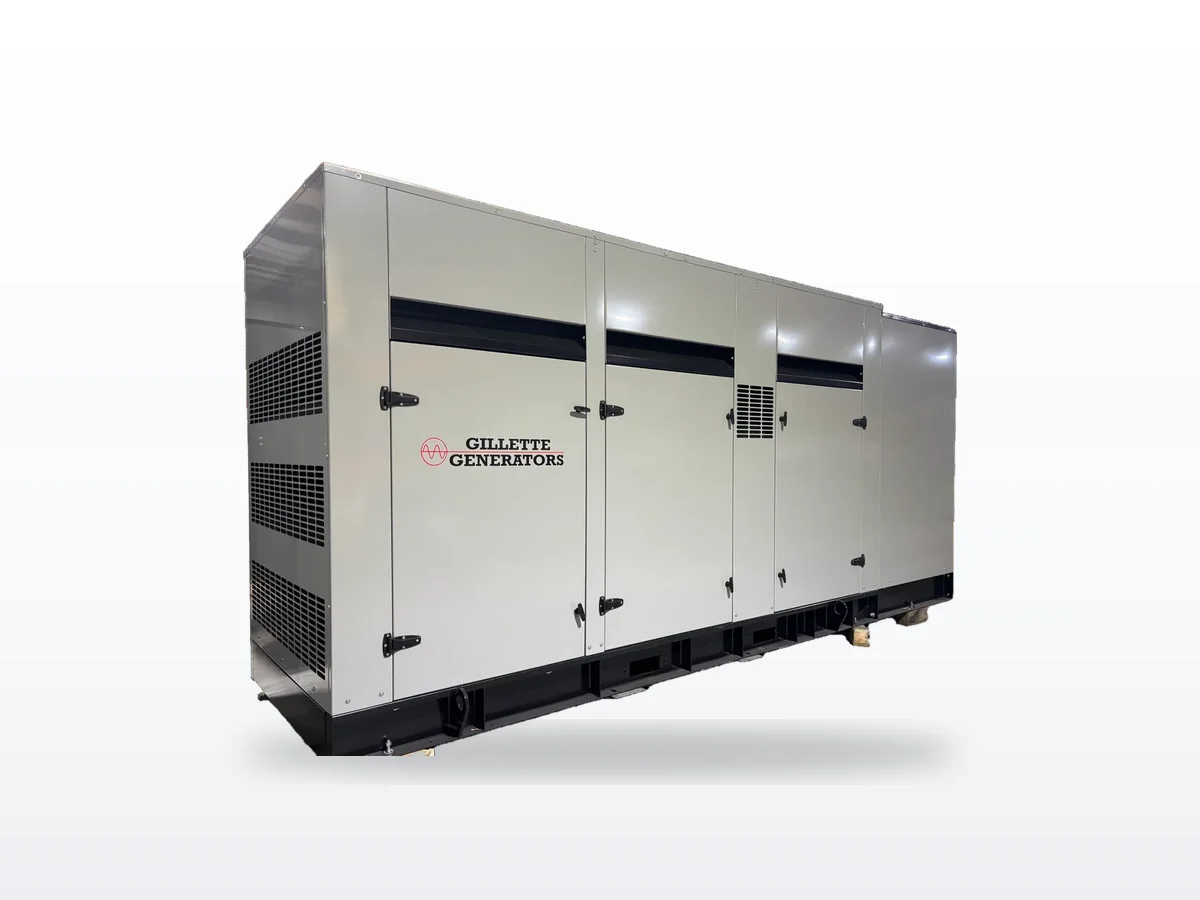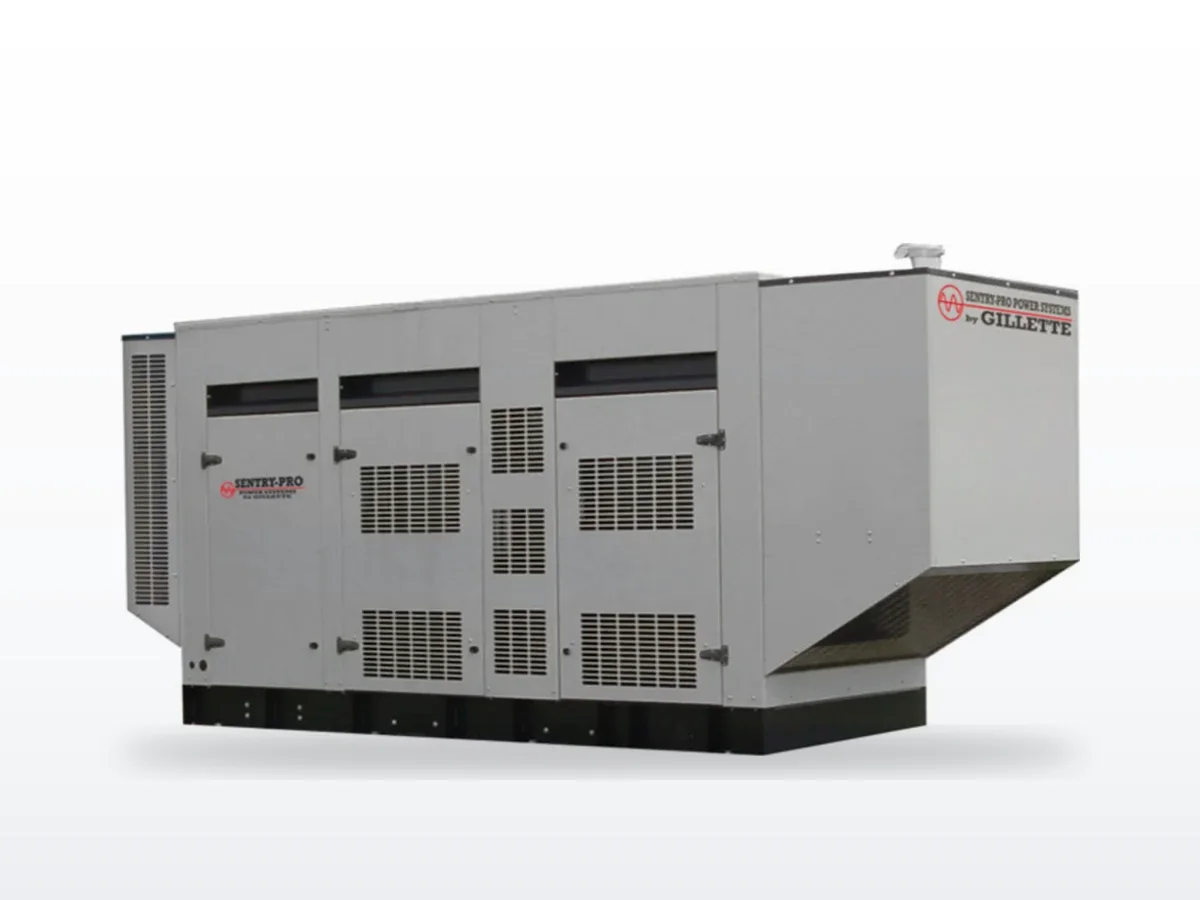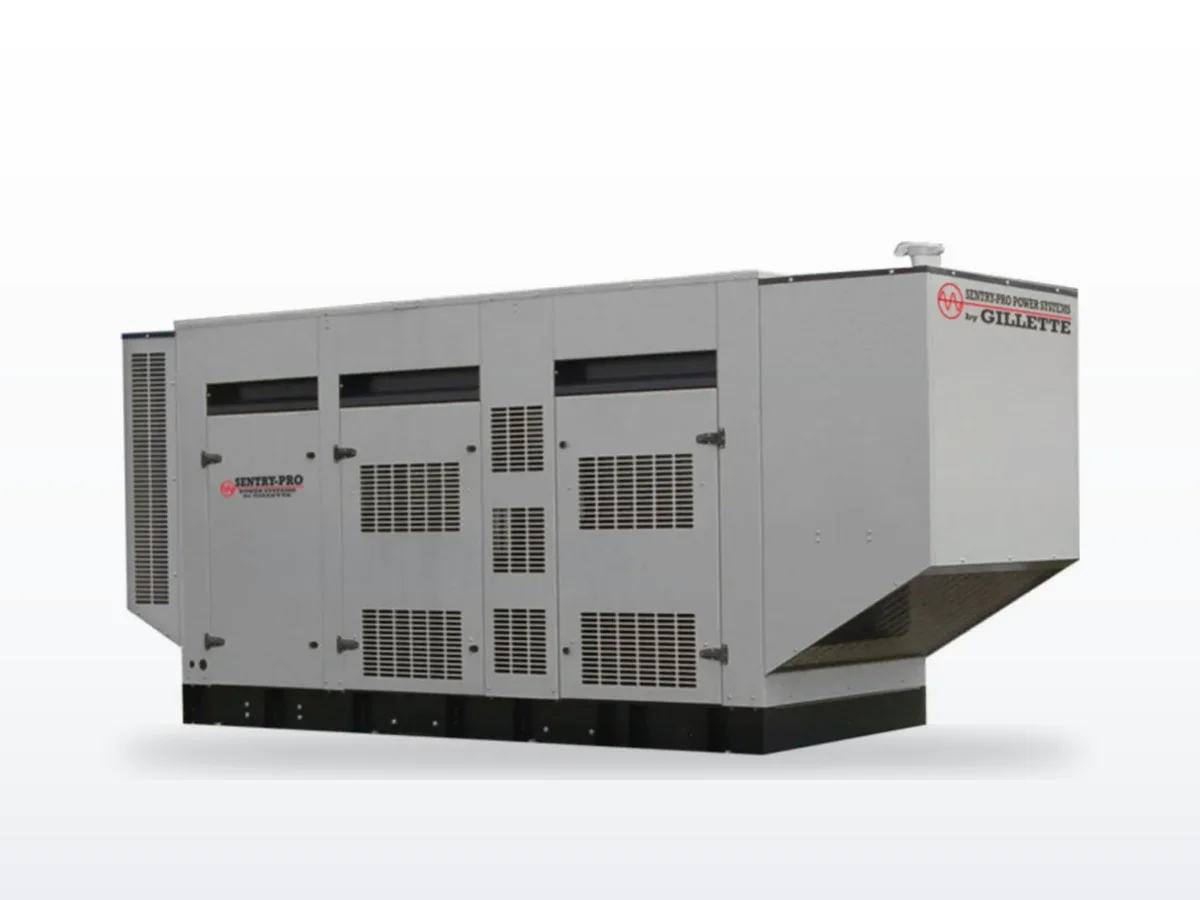
200 kW natural gas stationary standby generator. Made-in-USA commercial unit with PSI 8.8L high-output turbocharged V8, Stamford alternator, and DSE 7420 MKII controller. NG only.
The Gillette SP-2000P is a 200-kilowatt natural gas standby generator — the highest output the PSI 8.8L platform achieves. It uses a high-output (HO) variant of PSI's turbocharged and charge air cooled V8 with a forged steel crankshaft, seven main bearings, and calibration specifically for natural gas (no LPG option). Stamford UCID274J alternator, DSE 7420 MKII controller, three-phase only.
This is a step below Gillette's 13L inline-6 platform (SP-2500P at 250 kW NG) — the SP-2000P extracts maximum output from the 8.8L displacement rather than stepping to a larger engine. The result is a more compact footprint than the 13L units at 200 kW.
The PSI 8.8L HO: maximum output from a familiar platform#
The SP-2000P, SP-1500, and SP-960 all share the PSI 8.8L V8 — each at progressively higher output through different configurations:
Model
Engine Variant
Standby kW (NG)
Crankshaft
Main Bearings
SP-960
8.8L naturally aspirated
96 kW
Nodular iron
5
SP-1500
8.8L TCAC
150 kW
Nodular iron
5
SP-2000P
8.8L TCAC HO
200 kW
Forged steel
7
The HO variant's forged steel crankshaft and additional main bearings are designed to handle the higher peak cylinder pressures at 316 bhp mechanical output. The 8.5:1 compression ratio is lower than the SP-1500's 10.1:1 — a deliberate calibration to manage combustion temperatures at high output on natural gas.
At 200 kW, natural gas vapor-withdrawal LPG delivery is not practical for sustained operation. The SP-2000P is calibrated exclusively for natural gas. If your site requires LP capability at this power class, the SP-2500P delivers 165 kW LPG (with 250 kW NG) on a larger engine platform.
Gas service sizing: 2,431,000 BTU/hr at full load requires coordination with your utility — typically a 2" dedicated high-pressure service with pressure regulator.
The PSI 8.8L turbocharged platform is the engine we see most on mid-size Gillette commercial installations in our territory. The HO variant's forged crankshaft is more robust than the standard block — we've seen fewer crankshaft-related failures on these units. Service intervals are identical to the standard TCAC version: 250-hour oil changes, 1500-hour spark plugs. The larger fuel inlet (2" NPTF) means fuel delivery issues are less common at this power level than on units with undersized connections.
Tell us about the application — kW, voltage, application, install timeline — and we'll respond within one business day with budgetary pricing, lead time, and any sizing notes.
Adjust load percent and tank size to estimate runtime. Pre-filled with this model's spec where available.
Estimate runtime on this tank
Fuel demand at 75% load
2,100,000 BTU/hr≈ 2100.0 cf/min @ 1,000 BTU/cf
On utility natural gas the runtime is generally unlimited provided the supply line and meter can deliver this BTU/hr at the engine's required inlet pressure (typically 5–14" WC residential, up to 5 psi commercial). Confirm against the OEM's published fuel-pressure spec.
Service intervals
Manufacturer-recommended intervals for the Gillette SP-2000P under standby duty. Field intervals may differ based on load profile, ambient conditions, and fuel quality.
Oil & filter
Every 250 hours or 12 months
Coolant change
Every 4000 hours
Air filter
Every 1000 hours
Spark plugs
Every 1500 hours
Major overhaul
≈ 15,000 hours
Load bank test
Every 12 months
Common failure modes
What we've seen fail on this platform. Use as a service-planning reference, not a diagnostic — actual failure modes depend heavily on duty cycle and maintenance history.
Component
Symptom
Typical hours
Severity
Turbocharger
Power loss, excessive crankcase pressure
12,000+
moderate
Charge air cooler
Reduced power, elevated intake temperature
10,000+
moderate
Spark plugs / ignition
Misfire, rough running under load
1,500+
minor
Battery
Failed to start during outage
8,760+
minor
Frequently Asked Questions
Why is the SP-2000P natural gas only — no LPG option?
The SP-2000P uses a high-output calibration of the PSI 8.8L engine pushing 316 bhp at standby. At this power level, the LPG fuel system cannot deliver sufficient BTU/hr through a practical vapor-withdrawal connection to sustain output. LPG at this scale requires a liquid withdrawal vaporizer system, which Gillette does not configure for this model. For 200 kW with LPG capability, consider the SP-2500P (165 kW LPG / 250 kW NG).
What makes the SP-2000P's engine different from the SP-1500?
Both use the PSI 8.8L V8 block, but the SP-2000P uses the heavy-duty high-output (HO) variant: forged steel crankshaft (vs. nodular iron), 7 main bearings (vs. 5), 8.5:1 compression ratio (vs. 10.1:1 on SP-1500), and a larger 2" NPTF fuel inlet. The SP-2000P produces 316 bhp mechanical vs. 259 bhp on the SP-1500 from the same displacement.
The SP-2000P is three-phase only — is there a single-phase option?
No — the SP-2000P is configured three-phase only. At 200 kW single-phase, current draws exceed practical service conductor sizing. Single-phase loads at this scale are typically handled by separating loads across phases of a three-phase unit.
What is the fuel consumption at full load?
2,431,000 BTU/hr (natural gas) at full load (200 kW). At 75% load: 1,945,000 BTU/hr. Fuel inlet: 2" NPTF at 11-14" water column. A dedicated high-capacity gas service is required — verify with your gas utility before specifying.
How large is the SP-2000P physically?
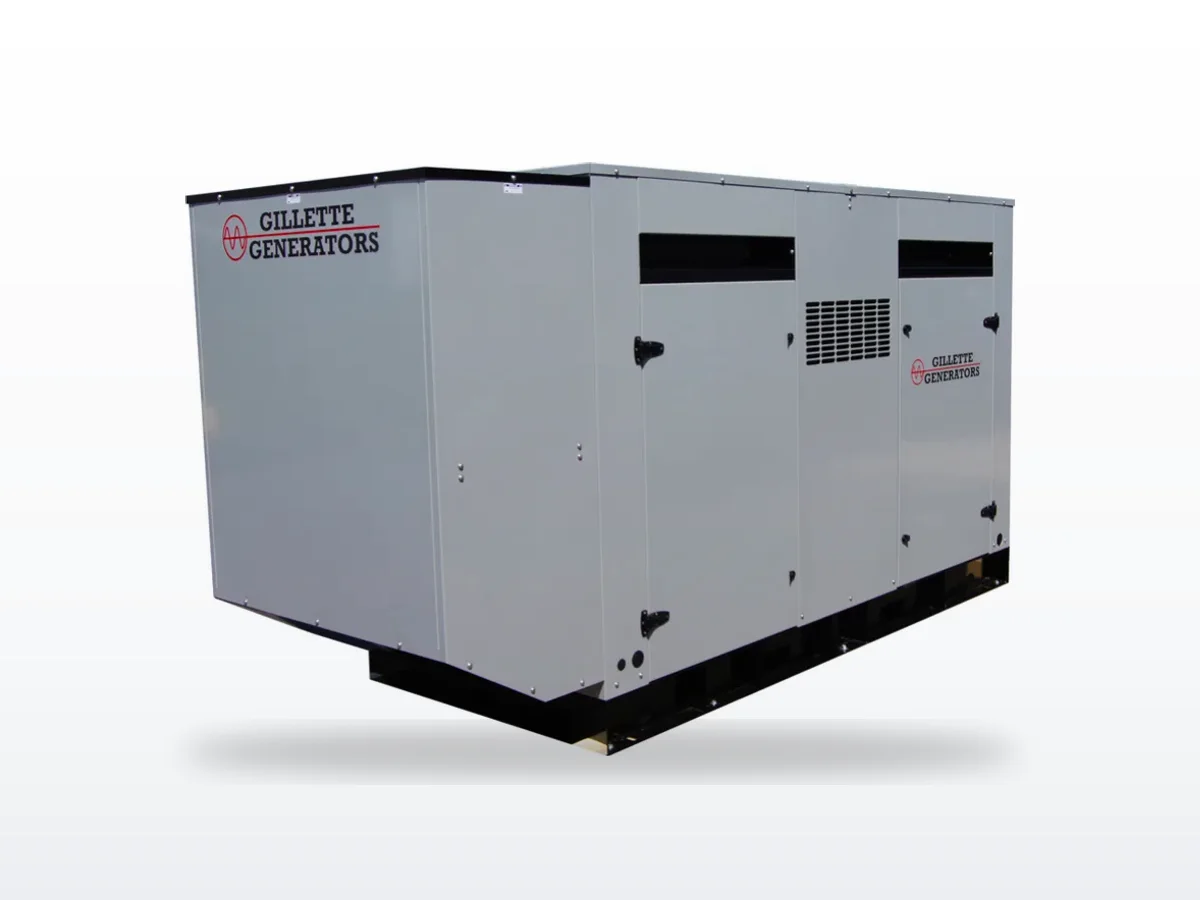
Open skid: 132 x 52 x 58.3 inches, 4,530 lbs. Level 2 enclosure: 162 x 52 x 80 inches, 7,047 lbs. This is a significantly larger footprint than the SP-1500 — verify clearances and structural capacity before placement.