Overview#
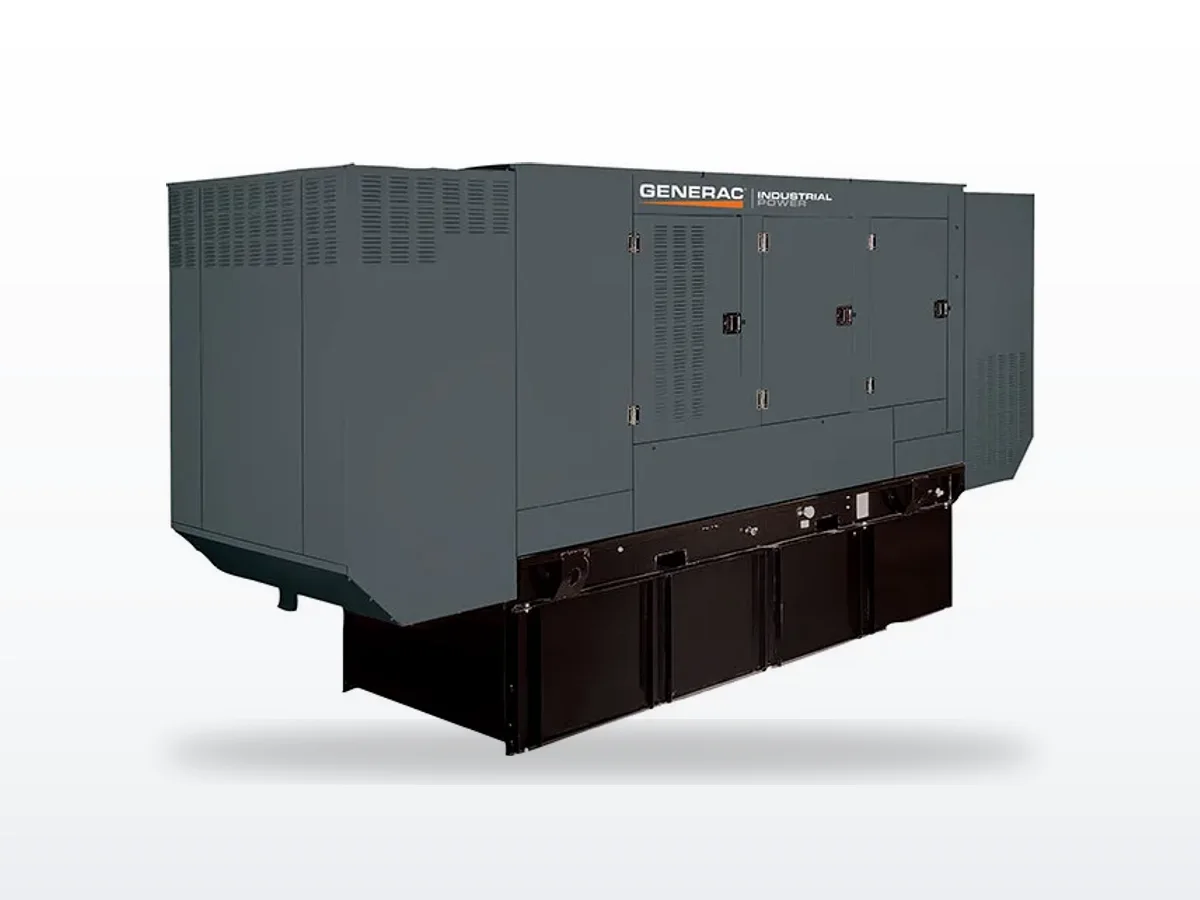
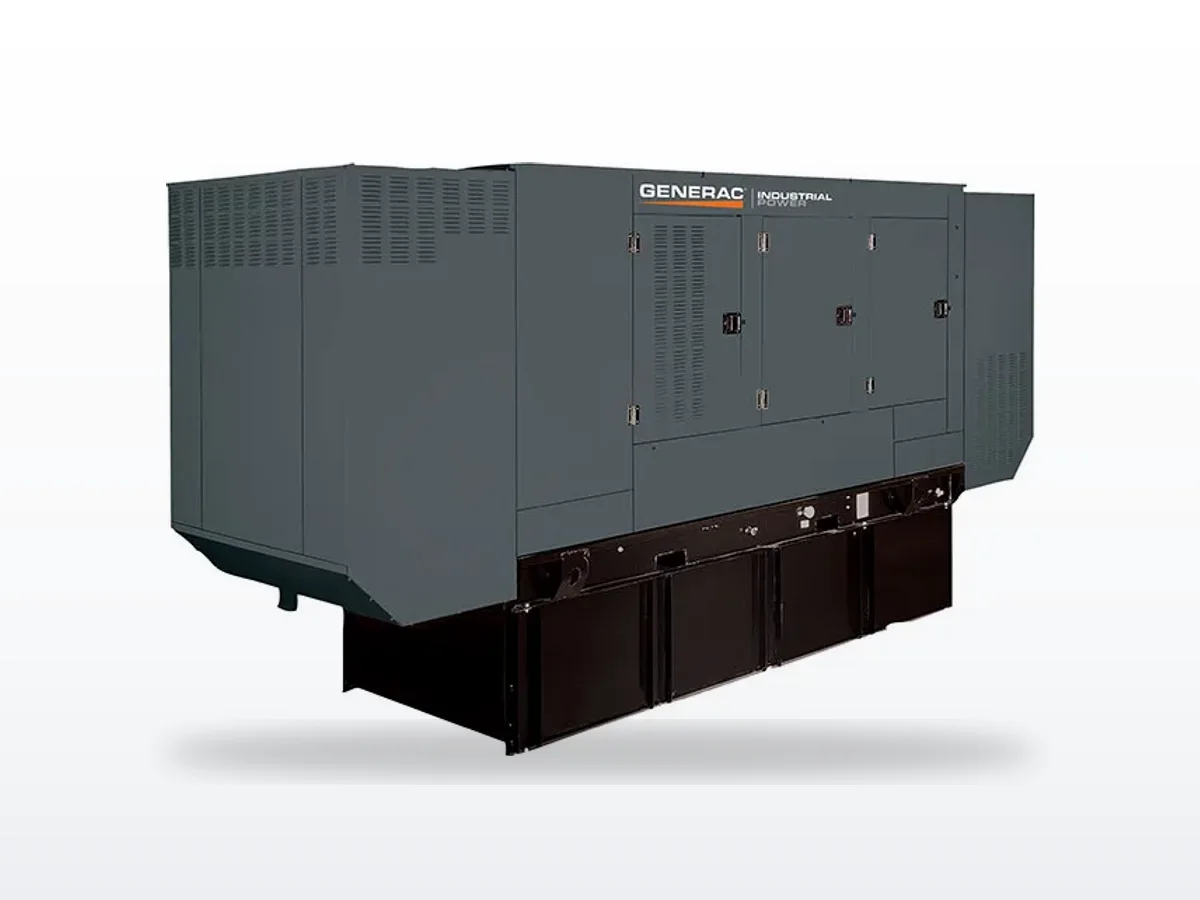
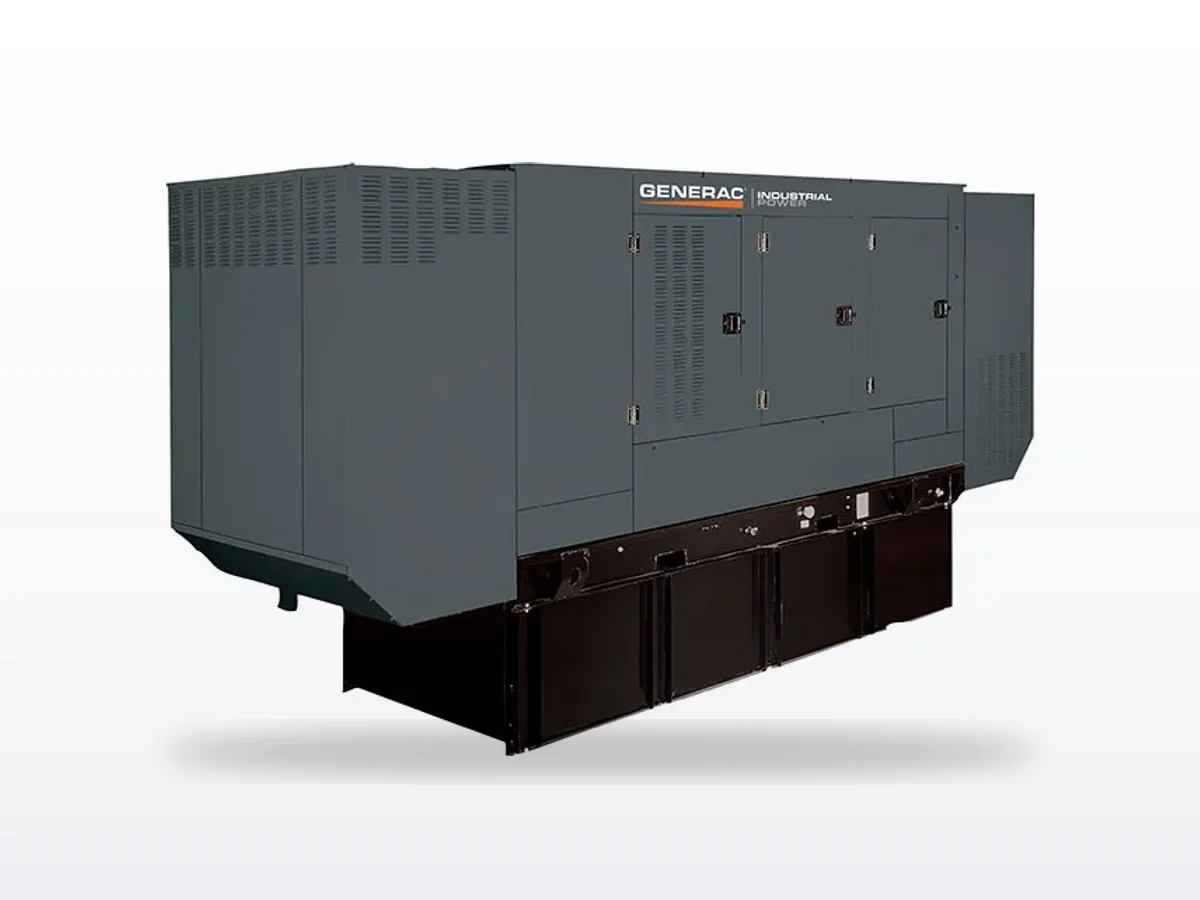
The Generac SD130 is a 130-kilowatt industrial diesel standby generator powered by an Iveco/FPT 6.7-liter turbocharged and aftercooled inline-six engine. Rated at 130 kW standby and 117 kW prime (163/146 kVA), the SD130 marks the transition from the 4.5L four-cylinder platform to the 6.7L six-cylinder family. BMEP is 213 psi at the 130 kW standby rating, and exhaust temperature is 960°F (516°C). The generator is EPA Certified for Stationary Emergency applications.
Generac pairs the Iveco 6.7L with their 390 mm alternator frame featuring Class H insulation, synchronous brushless excitation, and THD less than 3%. The Digital H control panel provides NFPA 110 Level I and II programmable operation, Modbus communications, and a 7-day programmable exerciser. The 1500W engine block heater (120/240V) and closed coolant recovery system are standard equipment.
At 130 kW, this unit serves larger commercial and industrial standby applications: multi-story office buildings, large retail centers, light manufacturing facilities with process equipment, medium-size data centers, and multi-building campus standby systems. The 195-amp 277/480V three-phase configuration covers most larger commercial distribution panels, and the 156-amp 346/600V configuration covers Canadian distribution systems.
Technical Specifications#
| Parameter | Value |
|---|---|
| Standby Rating | 130 kW / 163 kVA |
| Prime Rating | 117 kW / 146 kVA |
| Engine Make | Iveco/FPT |
| Displacement | 6.7 L (406.9 in³) |
| Cylinders | 6, In-Line |
| Bore x Stroke | 4.09 x 5.2 in (104 x 128 mm) |
| Compression Ratio | 16.5:1 |
| Aspiration | Turbocharged/Aftercooled |
| Engine Speed | 1,800 RPM |
| Alternator Model | Generac 390 mm |
| Insulation Class | H |
| Fuel Type | Ultra Low Sulfur Diesel #2 |
| Fuel Consumption (100%) | 9.6 gph |
| Fuel Consumption (75%) | 7.7 gph |
| Fuel Consumption (50%) | 5.4 gph |
| Fuel Consumption (25%) | 2.9 gph |
| Exhaust Flow | 910 cfm at rated output |
| Exhaust Temperature | 960°F (516°C) |
| Heat Rejection to Coolant | 353,900 BTU/hr |
| Combustion Air | 390 cfm |
| Ventilation Air | 7,900 cfm |
| Open Set (no tank) L x W x H | 110 x 40 x 65 in |
| Open Set Weight (no tank) | 3,104 lbs |
| Max Radiator Air Temperature | 122°F (50°C) |
| Max Ambient Temperature (Before Derate) | 104°F (40°C) |
Our Service Experience#
The Iveco/FPT 6.7L inline-6 is a robust mid-size diesel platform widely used in construction, agricultural, and industrial equipment. The belt-driven water pump continues in this engine family -- belt inspection is a standard item at every service interval. The 17-quart crankcase (larger than the 13.6-qt 4.5L) extends effective oil quality intervals but still requires annual changes per Generac's schedule.
At 9.6 gph full load, a 350-gallon sub-base tank provides approximately 36 hours of runtime. For facilities requiring 72+ hours (NFPA 110 Class 72), the 693-gallon tank option provides approximately 72 hours at full standby load. The 960°F exhaust temperature is higher than the 4.5L models -- specify and inspect exhaust flex connectors rated for this temperature range at every service visit.
Frequently Asked Questions#
Is the SD130 available with IBC seismic certification? Yes. IBC seismic certification is an engineered option for the SD130, required for standby generator installations in California essential facilities, hospitals, and other occupancies subject to CBC/IBC seismic requirements.
What alternator upsizing options are available for the SD130? With Upsize 1 (150 kW alternator) at 480 VAC and a 30% voltage dip, motor starting capability increases from 348 sKVA to 398 sKVA. With Upsize 2 (200 kW alternator), the capability reaches 560 sKVA at 480 VAC and 30% voltage dip. This covers large HVAC chiller starting and multi-motor applications in larger commercial facilities.
How does the SD130 fit in the SD Series lineup relative to the SD100 and SD150? The SD100, SD130, and SD150 all use the Iveco/FPT 6.7L inline-6 engine at progressively higher output calibrations. The SD130 is positioned between these two, using the same base engine with different turbocharger and fuel injection calibration. All three share the same enclosure line and have overlapping sub-base tank options.