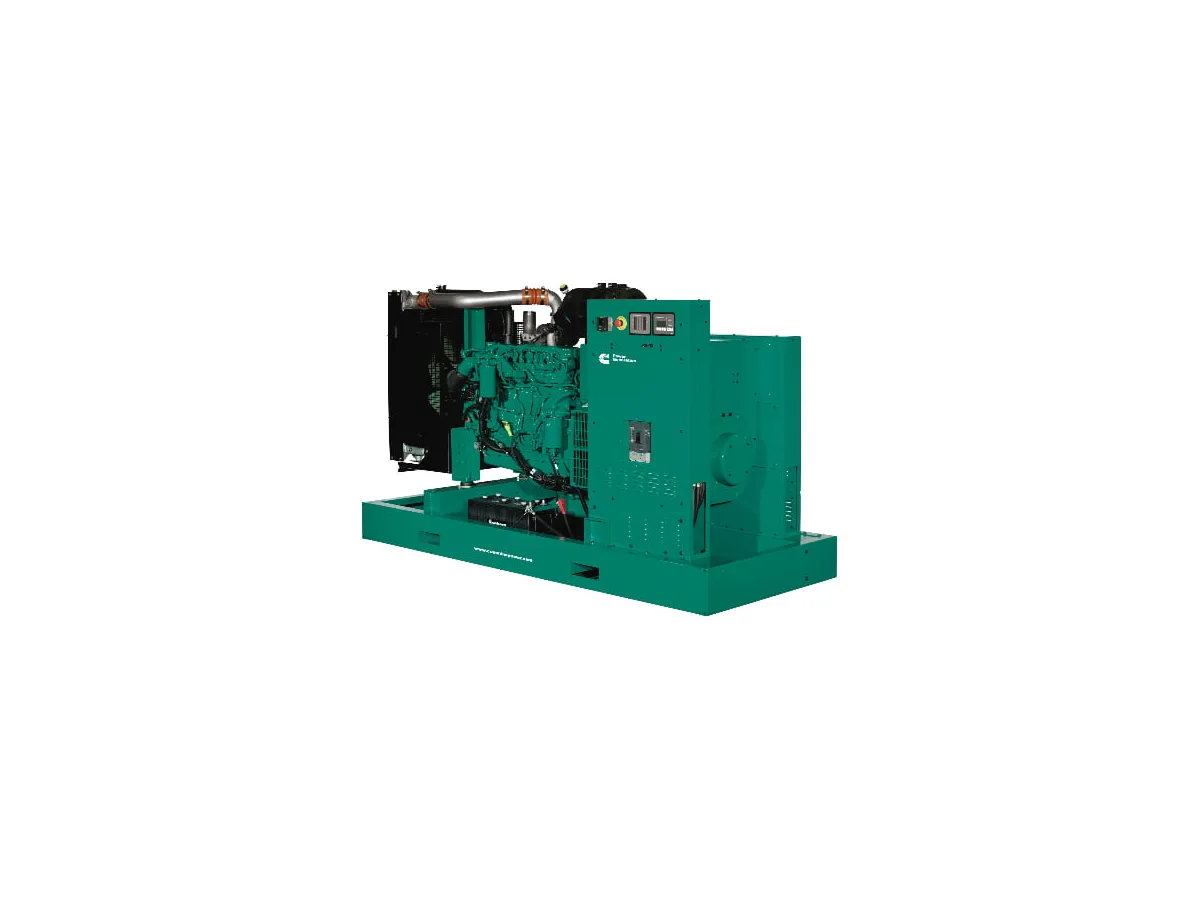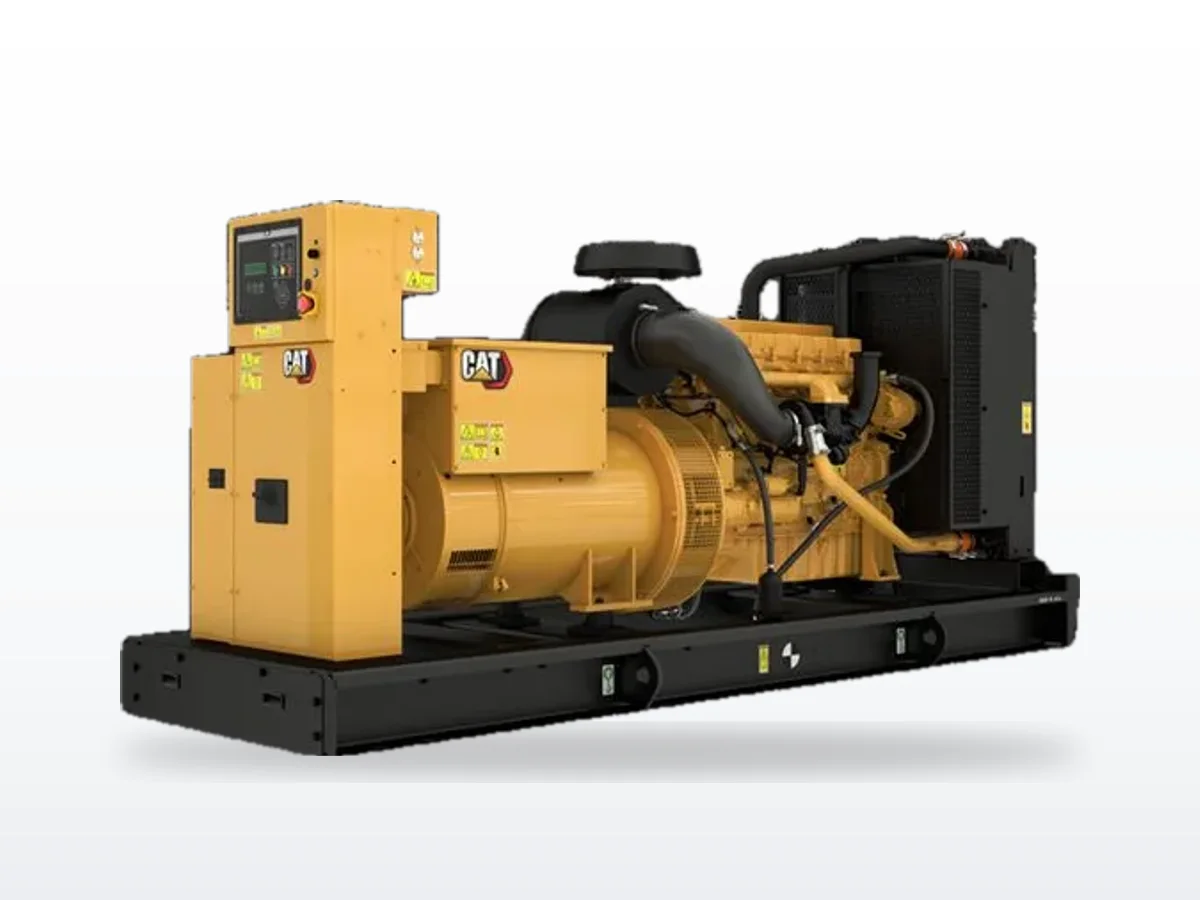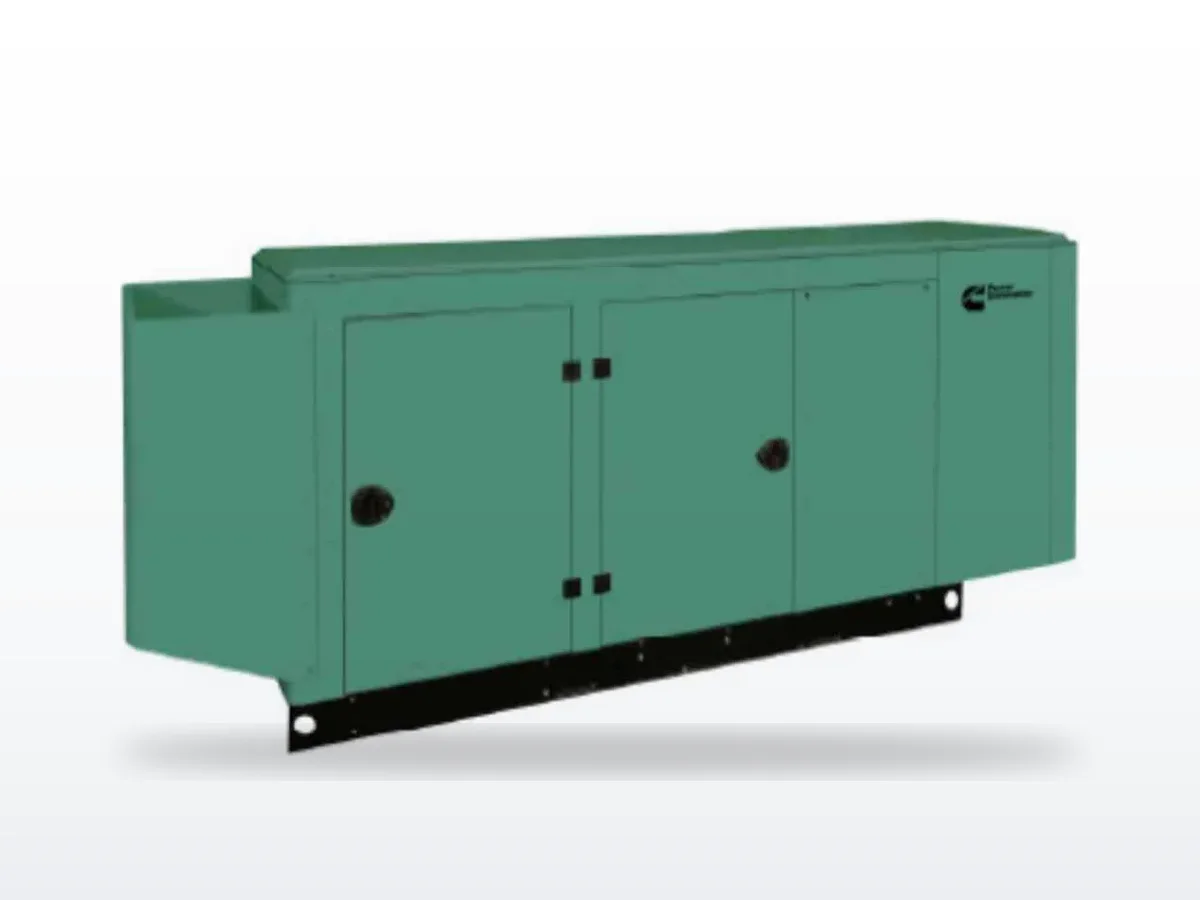
The Cummins QSB7 (marketed as C200 D6 in generator configuration) is a 200-kilowatt diesel commercial standby generator built on one of the most widely deployed mid-range diesel platforms in the world. The 6.7L inline-6 powers hundreds of thousands of applications globally — providing an unmatched parts ecosystem and institutional service knowledge.
The QSB7 is to Cummins what the 6068 is to John Deere — the workhorse mid-range diesel that appears everywhere:
Generator sets (100-200 kW)
Construction equipment (excavators, loaders)
Marine propulsion
Agricultural equipment
Transit buses
This ubiquity means: any Cummins-certified technician worldwide has worked on this engine family. Parts are always available. Service procedures are thoroughly documented.
The QSB7-G9 variant is remarkable: it achieves Tier 4 Final emissions compliance through advanced combustion design and EGR (Exhaust Gas Recirculation) — without DPF or SCR. This means:
No DEF tank to fill
No DPF regeneration cycles to manage
No SCR catalyst to replace
No aftertreatment fault codes
Same maintenance simplicity as Tier 3
For jurisdictions (like BAAQMD in the Bay Area) that require Tier 4 Final for new installations, the QSB7-G9 provides compliance without the aftertreatment complexity that plagues other T4F platforms.
The QSB7 is our most commonly serviced Cummins diesel platform. It shares engine architecture with Cummins' automotive and construction applications — parts flow freely through the supply chain. The Bosch high-pressure common rail fuel system is sophisticated but well-proven. Our primary service focus: fuel quality management for standby units (annual polishing, quarterly sampling) and 24V battery health monitoring for reliable 10-second starts.
Request a quote
Get pricing & lead time on the Cummins QSB7 (C200 D6)
Tell us about the application — kW, voltage, application, install timeline — and we'll respond within one business day with budgetary pricing, lead time, and any sizing notes.
Adjust load percent and tank size to estimate runtime. Pre-filled with this model's spec where available.
Estimate runtime on this tank
Estimated runtime
18.5 hours(0.8 days)
Fuel consumption ≈ 10.80 GPH at 75% load. Estimate based on industry-typical 1800 RPM standby curves (≈0.07 GPH/kW at full load). Actual consumption varies by engine, ambient temperature, fuel quality, and tuning.
Service intervals
Manufacturer-recommended intervals for the Cummins QSB7 (C200 D6) under standby duty. Field intervals may differ based on load profile, ambient conditions, and fuel quality.
Oil & filter
Every 500 hours or 12 months
Coolant change
Every 6000 hours
Air filter
Every 1000 hours
Fuel filter
Every 500 hours
Major overhaul
≈ 20,000 hours
Load bank test
Every 12 months
Common failure modes
What we've seen fail on this platform. Use as a service-planning reference, not a diagnostic — actual failure modes depend heavily on duty cycle and maintenance history.
Component
Symptom
Typical hours
Severity
Fuel quality (standby degradation)
Filter clogging, injector fouling, hard starting
4,380+
moderate
Battery (24V)
Slow crank, failed to meet 10-second requirement
8,760+
minor
Turbocharger
Reduced power, oil in intake, turbo whine
15,000+
moderate
Block heater
Cold start issues, slow warm-up
10,000+
minor
Frequently Asked Questions
What is the QSB7?
The Cummins QSB7 is a 6.7-liter turbocharged-aftercooled inline-6 diesel engine — one of the most widely deployed mid-range diesel platforms in the world. It powers everything from construction equipment to marine vessels to generators in the 100-200 kW range.
How does the QSB7 compare to Kohler's John Deere 6068?
Both are 6.7-6.8L inline-6 turbo diesels at 1800 RPM. The QSB7 is Cummins-manufactured (single-source warranty); the 6068 in Kohler REOZ is John Deere (two-party support). Both are proven platforms with massive parts ecosystems. The QSB7 has a slight edge in noise characteristics.
Is there a Tier 4 Final version?
Yes — the QSB7-G9 variant achieves Tier 4 Final without a DPF (through combustion optimization and EGR). This is unique — most competitors at Tier 4 require DPF/SCR aftertreatment. The G9 variant is available for jurisdictions requiring T4F.
What's special about 'Tier 4 without DPF'?
The QSB7-G9 achieves Tier 4 Final emissions through in-cylinder combustion technology rather than aftertreatment. This means: no DEF requirement, no DPF regeneration cycles, no SCR catalyst — significantly simpler maintenance vs. competing T4F platforms that require aftertreatment systems.