Overview#
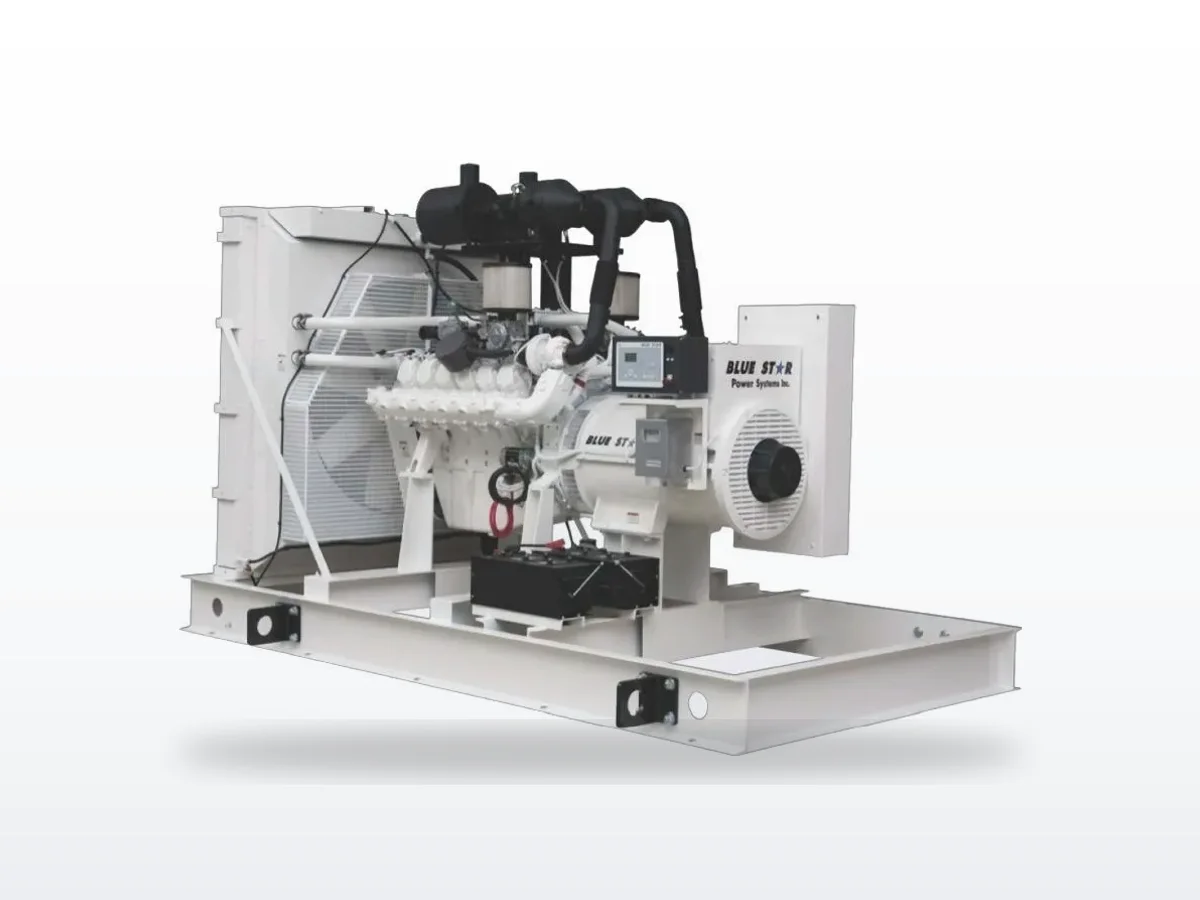
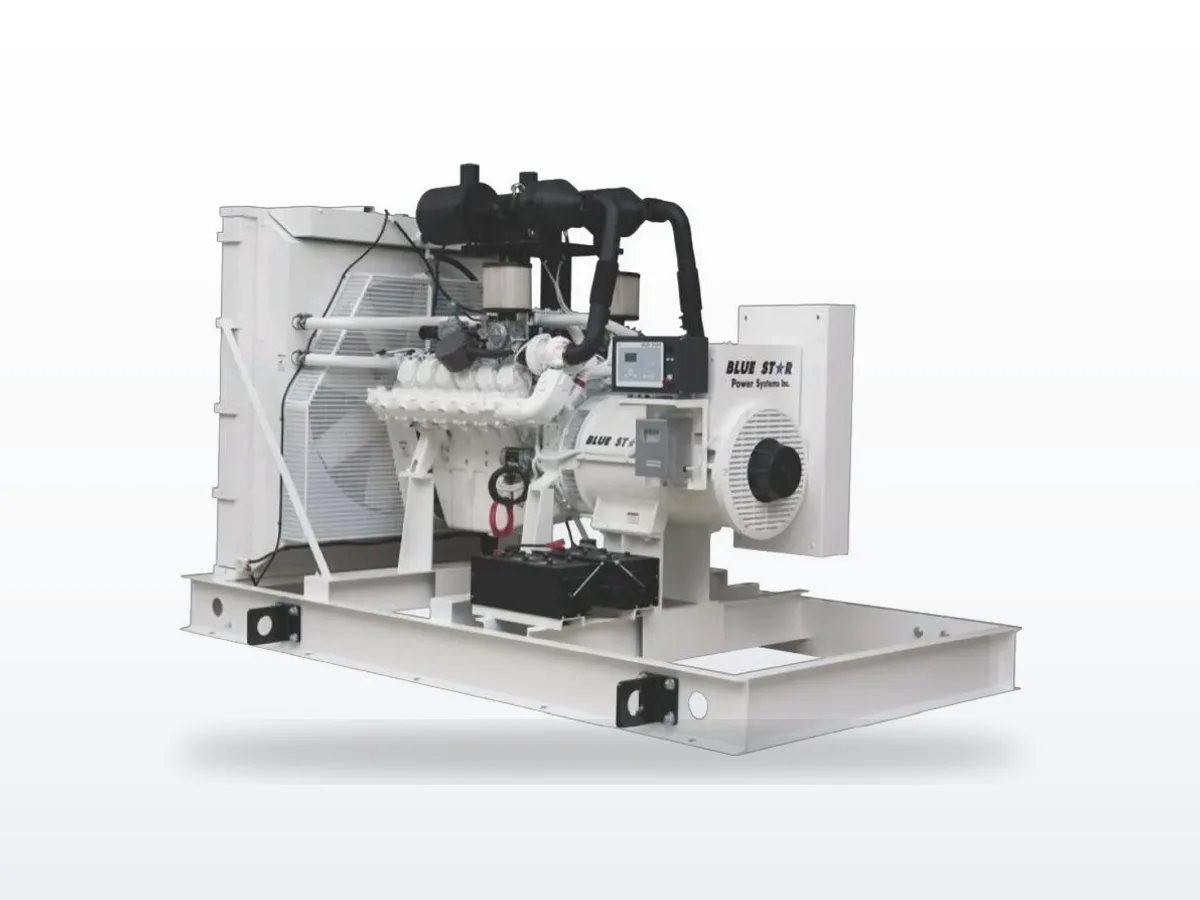
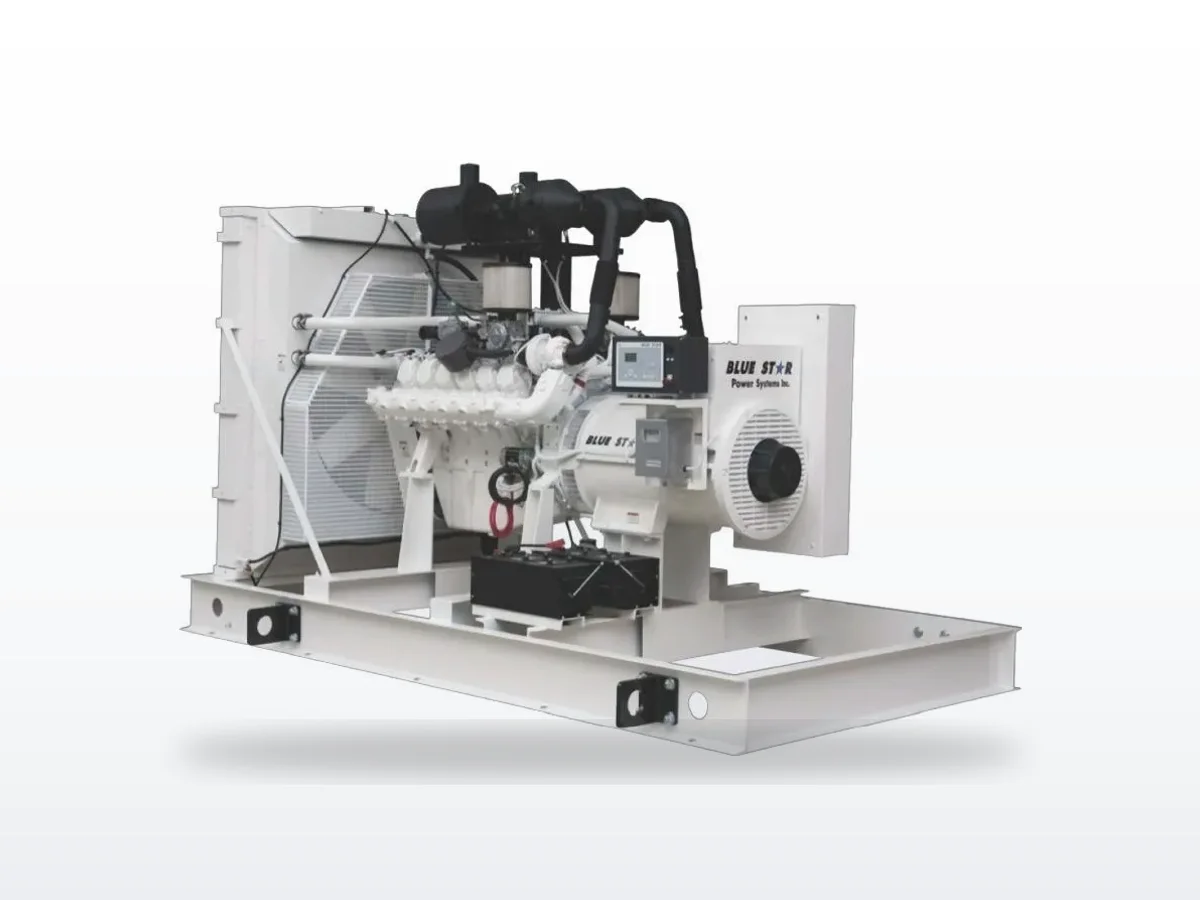
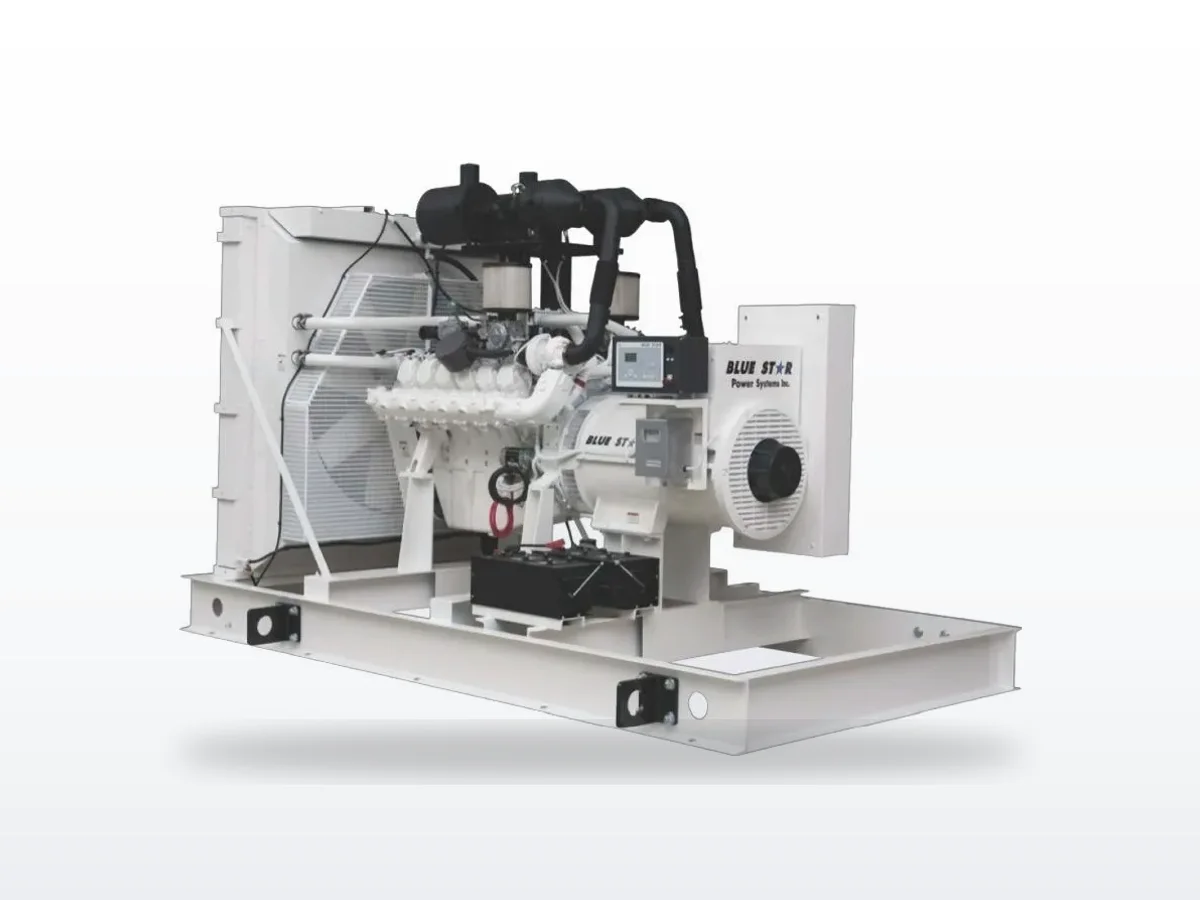
The Blue Star GM100-03 is a 100-kilowatt natural gas standby generator (80 kWe on LP) powered by the PSI 5.7LTCAC — the turbocharged, charge-air-cooled version of the 5.70-liter V8 engine platform used in the naturally aspirated GM50-03 and GM60-02. The addition of a turbocharger and charge air cooler nearly doubles the output of the same displacement block, reaching 164 hp (122 kWm) vs. 113 hp in the NA configuration.
Blue Star Power Systems pairs the 5.7LTCAC with a Stamford UCI274C alternator and DSE DCP7310 controller on a formed steel base. The OPU footprint grows to 96 × 54 × 62 in at 2,925 lbs — a full platform step up from the 80 × 38 in smaller GM models. Level 1, 2, and 3 enclosures are available, with sound levels from 83 dBA (OPU full load) down to 69 dBA (Level 3).
LP Deration: A Critical Specification Point#
Unlike the GM50-03 and GM60-02, which produce equal output on natural gas and LP, the GM100-03 is rated at 100 kWe on NG and only 80 kWe on LP — a 20% reduction. This derating is a function of the turbocharged engine's fuel-air calibration for natural gas; LP operation at the same boost pressure does not produce equivalent electrical output.
For any project where LP is the primary or backup fuel and 100 kWe is the load requirement, the GM100-03 does not meet that requirement under LP operation. Specify accordingly, or move up to the PS130-01 which rates 125 kWe on LP vs. 130 kWe on NG — a much smaller spread.
Turbocharged Platform: Maintenance Additions#
The turbocharger and charge air cooler on the 5.7LTCAC add service requirements beyond the naturally aspirated GM50/GM60 platform. Turbocharger bearing condition, intercooler condition, charge air plumbing integrity, and the additional heat exchanger circuit are all PM items. The CAC circuit rejects heat independently of the jacket water circuit — confirm that installation heat load calculations account for both the jacket water (246,000 BTU/hr) and CAC contributions.
Deration Profile#
The GM100-03 derates at 1.5% per 10°F above 77°F inlet air (more aggressive than the smaller GM models' 1% rate) and 2.5% per 1,000 ft above 1,200 ft altitude (less aggressive than the smaller models' 3% rate). The net effect is that temperature is a more significant derating factor at this output class than at 50–60 kWe, while altitude derating is somewhat more favorable per 1,000 ft of elevation.
When to specify the GM100-03#
- 90–100 kW natural gas standby power at commercial, medium commercial, school, multi-family, or light industrial sites
- Sites where LP is a fallback only and 80 kWe on LP satisfies the minimum standby load requirement
- Applications requiring a step up from the 60 kWe GM60-02 class to the UCI274 alternator platform
- Installations where the 96 × 54 in OPU footprint is available
Our service experience#
The PSI 5.7LTCAC at 100 kWe is more demanding than the naturally aspirated GM series. Fuel supply at 1,360 ft³/hr NG must be verified under full load — the 1.5-inch NPT inlet is larger than smaller GM models and the supply infrastructure must match. Turbocharger inspection at each annual PM is required. Annual full-load testing is mandatory: at 100 kWe, the GM100-03 is working near its rated capacity and carbon buildup at low-load standby intervals is more damaging to the turbocharged system than on naturally aspirated engines. If the site has LP available as backup, confirm the 80 kWe LP output covers the minimum essential load before commissioning.