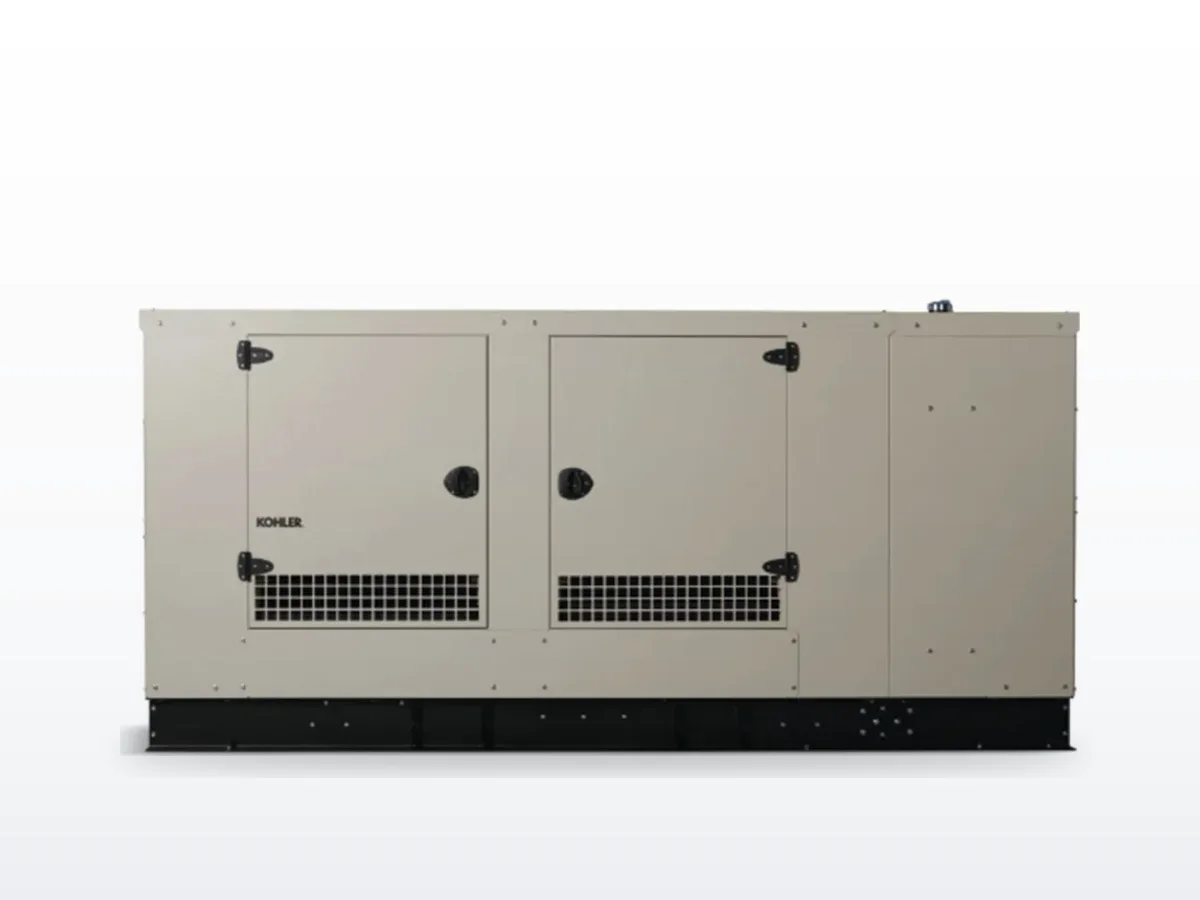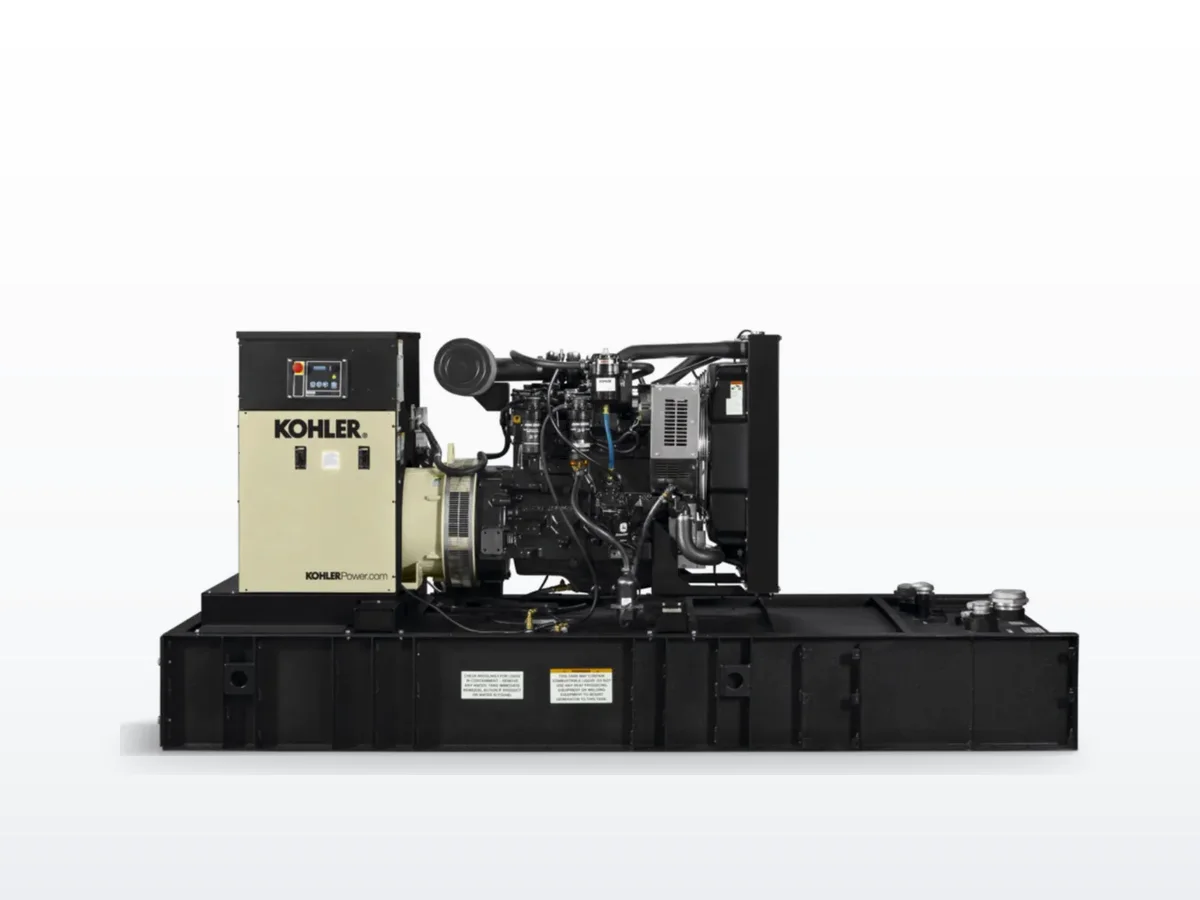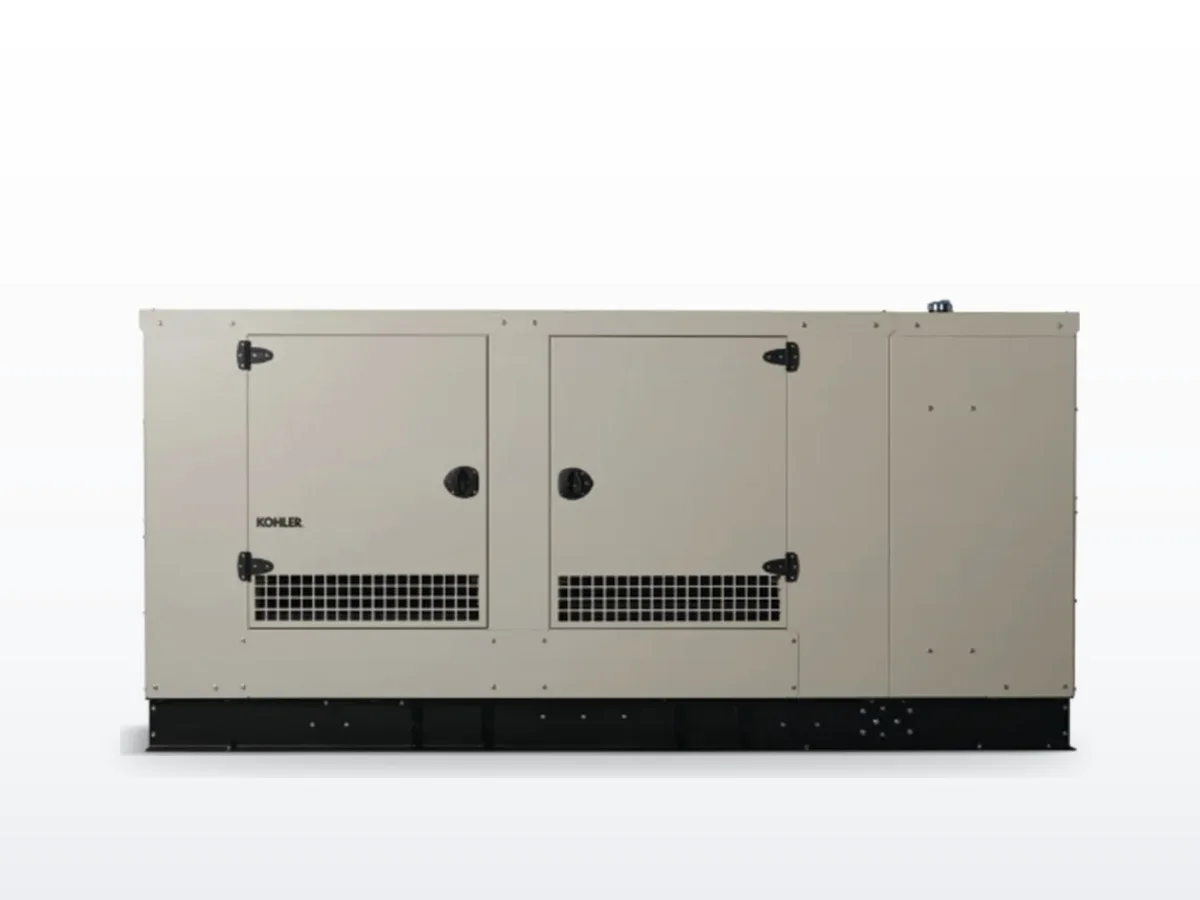
The Kohler KG80 is an 80-kilowatt commercial standby generator in the middle of Kohler's industrial gaseous lineup. It bridges the gap between the light-commercial KG60 and the larger KG100/KG125 units, serving medium commercial buildings where loads sit in the 50-70 kW range and on-site diesel storage is impractical or unwanted.
Common deployments: multi-tenant retail strips, boutique hotels, assisted living facilities, schools, houses of worship, and medium cold-storage operations. The 80 kW nameplate gives meaningful headroom over a 60 kW unit for motor-starting events and future load growth.
64 kW continuous at 80% loading (recommended standby maximum)
Motor starting up to 10 HP without soft-start
Step up to KG100 if your load study shows peak demand above 64 kW or you anticipate 20%+ load growth
The KG80 is the most popular choice when a KG60 is undersized by just enough to matter — typically because of a large HVAC compressor or elevator that the KG60 would struggle to start.
The KG80 is one of our most-serviced gaseous units. It hits the sweet spot for urban hotels and multi-tenant retail where gas service is reliable and the building owner wants to avoid diesel tanks. Service patterns are identical to the KG60 — same ignition system, same intervals — but the larger V8 means slightly more oil capacity and higher parts-per-service cost.
The most common issue we resolve on KG80 platforms: ignition misfire that only manifests under load (not during no-load exercise). A standard-tier load bank test catches this before it matters during a real outage.
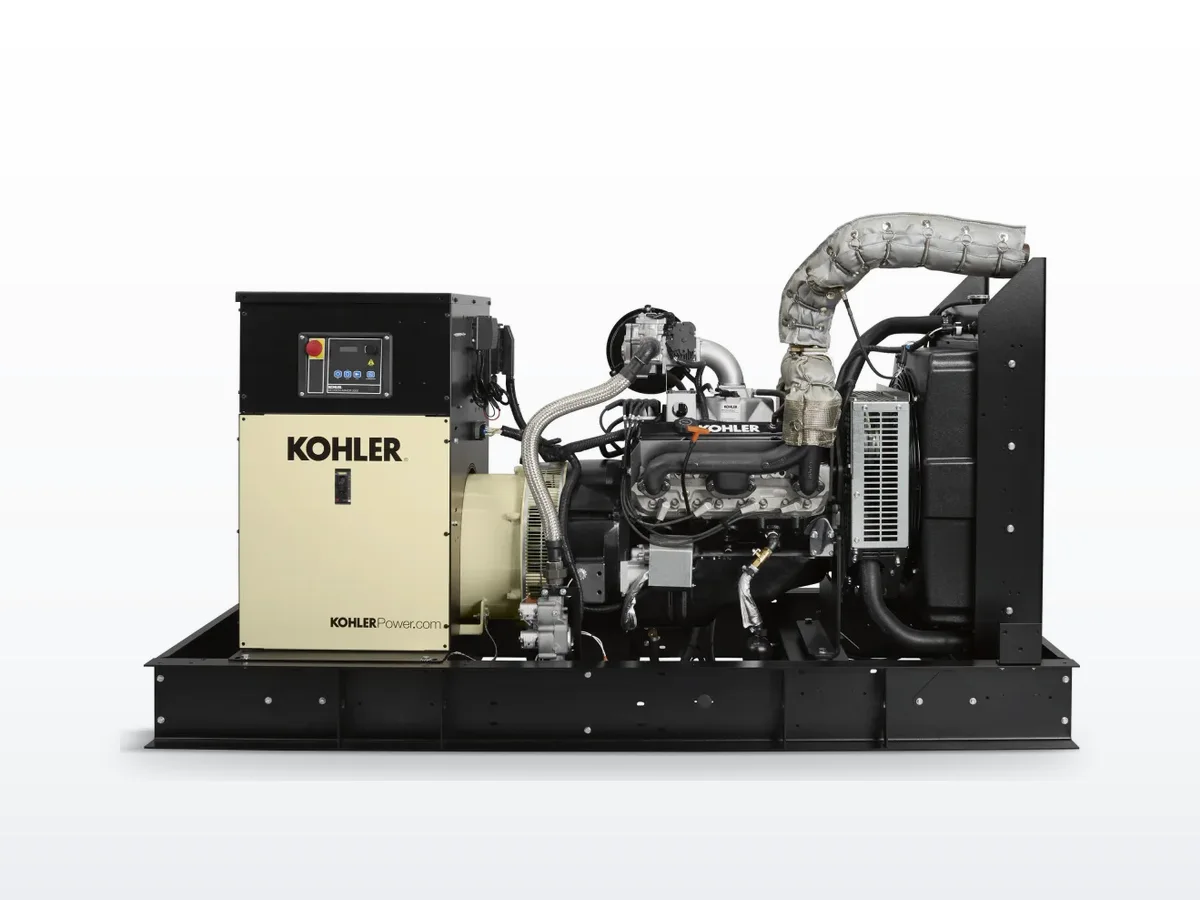
Service intervals
Manufacturer-recommended intervals for the Kohler KG80 under standby duty. Field intervals may differ based on load profile, ambient conditions, and fuel quality.
Oil & filter
Every 250 hours or 12 months
Coolant change
Every 4000 hours
Air filter
Every 1000 hours
Spark plugs
Every 1500 hours
Major overhaul
≈ 18,000 hours
Load bank test
Every 12 months
Common failure modes
What we've seen fail on this platform. Use as a service-planning reference, not a diagnostic — actual failure modes depend heavily on duty cycle and maintenance history.
Component
Symptom
Typical hours
Severity
Spark plugs / ignition coils
Misfire under load, hard starting, cylinder dropout codes
1,500+
minor
Crankcase ventilation system
Oil consumption, smoke at startup, breather oil drip
4,000+
moderate
Exhaust manifold gaskets
Exhaust leak at runtime, ticking sound, soot at flange
6,000+
moderate
Coolant hoses
Slow coolant loss, soft hose, weeping clamps
5,000+
minor
Battery (starting)
Slow crank, low voltage during exercise
8,760+
minor
Parts cross-reference
oil Filter
Kohler GM30378
air Filter
Kohler GM89860
spark Plug
NGK LTR6IX-11, AC Delco 41-110
starting Battery
Group 31 (recommended), Deka 9A31
Frequently Asked Questions
What is the standby power rating of the Kohler KG80?
The KG80 is rated 80 kW standby (72 kW prime) at 60 Hz. It's the mid-range workhorse of the KG line, sized for medium commercial buildings, multi-tenant retail, and assisted living facilities.
Does the KG80 run on natural gas or propane?
Both. The KG80 is dual-fuel NG/LPG with field-selectable switching, like all KG-series units.
What engine is in the Kohler KG80?
The KG80 uses a Kohler-branded 8.8L naturally-aspirated V8, rated at approximately 130 HP at 1800 RPM. EPA-certified to Subpart JJJJ for stationary emergency spark-ignition engines.
What ATS pairs with the KG80?
At 80 kW / 480V three-phase, a 150-200A ATS is typical. Common pairings: Kohler KCS Series, ASCO 300 Series, or Eaton ATC-300+. At 208V three-phase, plan for 300A.
How does the KG80 compare to the Generac SG100?
Both serve the 80-100 kW gaseous bracket. The KG80 uses Kohler's integrated platform with PMG alternator excitation (better for nonlinear loads). The Generac SG100 offers 20 kW more headroom at slightly higher cost. Decision often comes down to local dealer support and BMS integration preferences.