Overview#
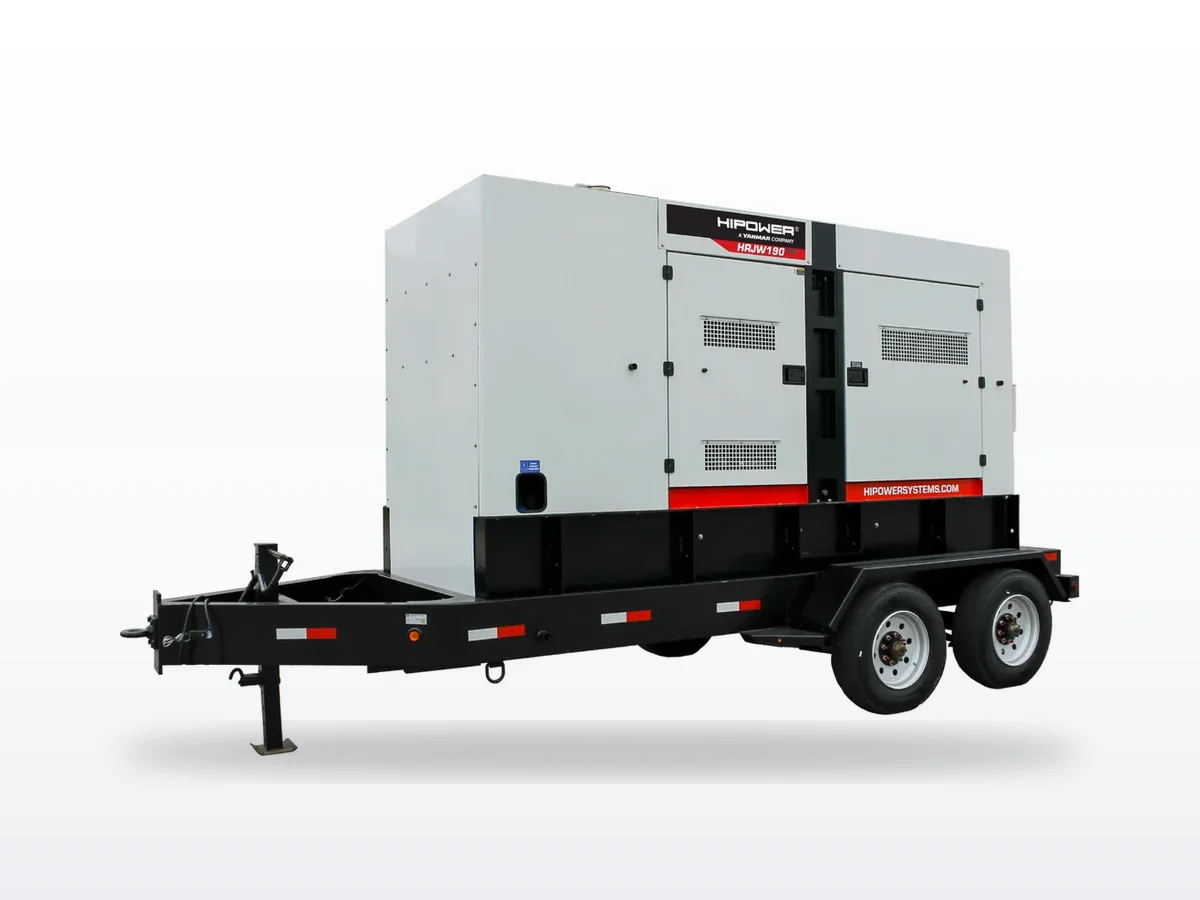
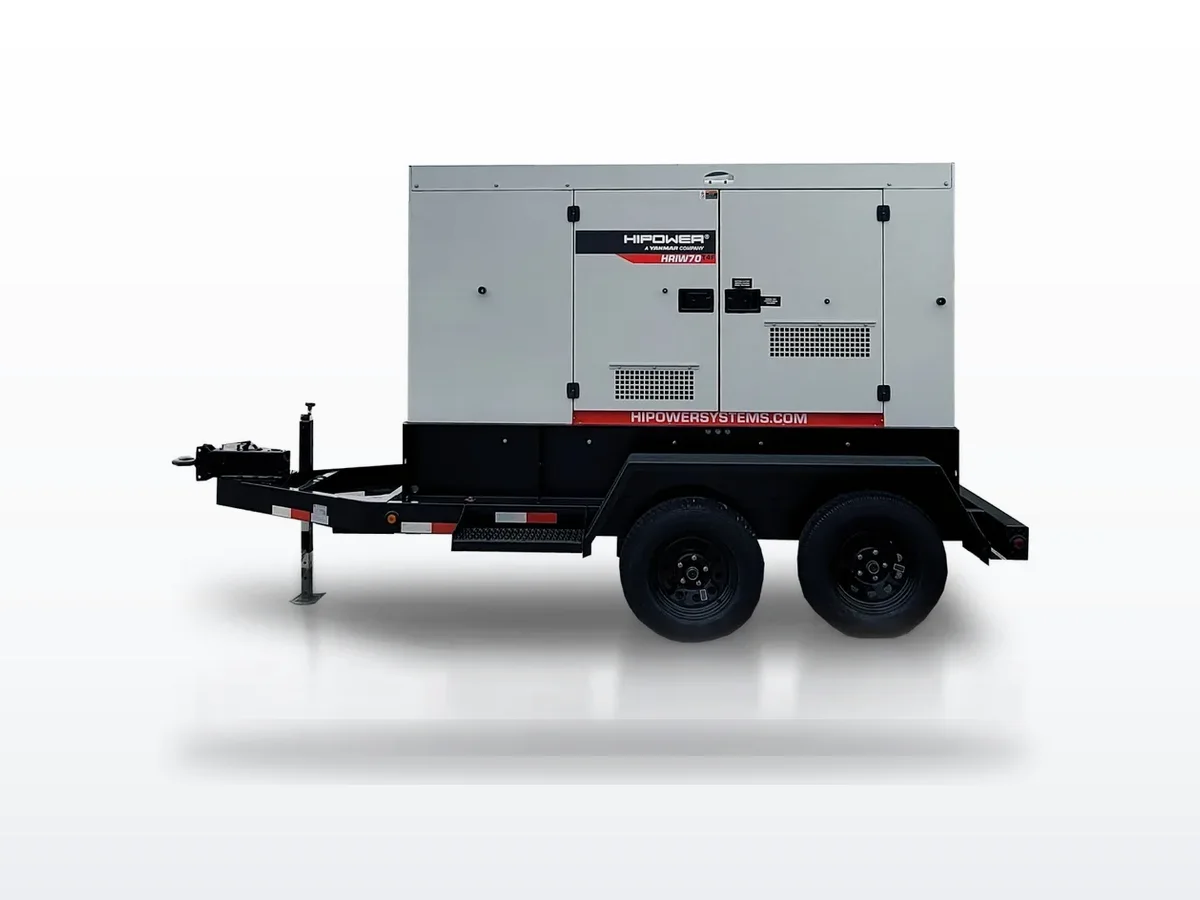
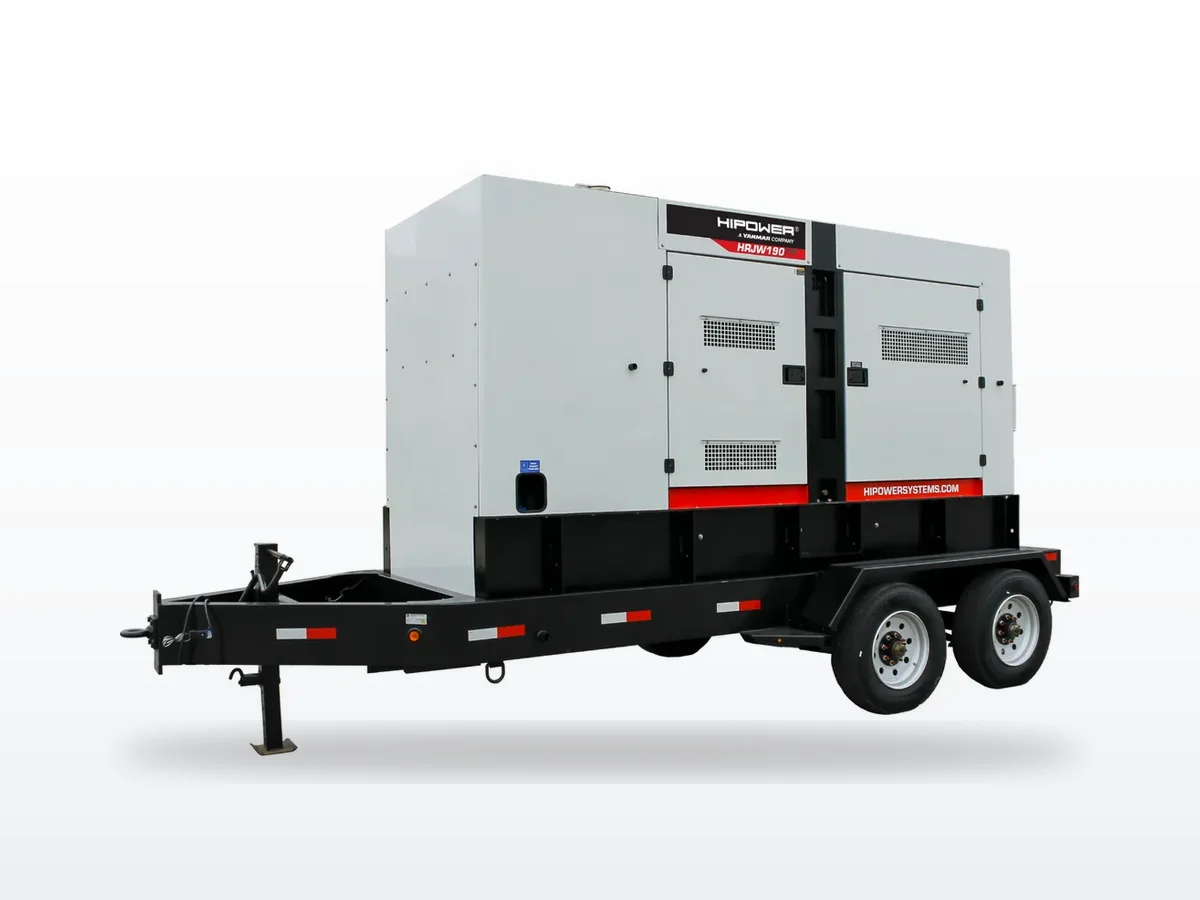
The Hipower HRJW-75 is a 60 kW rental-ready trailer-mounted diesel generator built in Olathe, Kansas by Hipower Systems. Powered by a John Deere 4.5L inline-4 turbocharged diesel engine from the 4045HF285 family and paired with a Stamford alternator, this unit is the compact end of the HRJW mobile lineup. EPA Tier 3 certified, the HRJW-75 is a proven workhorse for construction site temporary power, event power, and emergency rental deployment where a towable unit is required.
Built for Job Site Deployment#
The HRJW-75 rides on a single-axle trailer frame with DOT-compliant road and tail lights, safety chains, and a front jack stand for stability when disconnected from the tow vehicle. The lockable sound-attenuated enclosure keeps the machine secure between deployments and reduces noise impact on nearby workers. An integrated diesel fuel tank eliminates the need for a separate external tank for short deployments, while the onboard hours meter gives rental operators accurate utilization data. Remote start provisions allow the unit to be pre-started from a safe distance, which is useful on active construction sites.
The trailer configuration makes the HRJW-75 easy to position on tight urban job sites and commercial properties where a skid-mounted unit would require a crane or forklift. Standard pintle hitch or ball hitch hookup means any crew truck can tow it without special equipment.
John Deere Engine Reliability#
The 4.5L inline-4 turbocharged John Deere engine in the HRJW-75 is one of the most widely used powerplants in the industrial generator market. John Deere's distribution network in Northern California is among the most comprehensive of any diesel OEM — parts are stocked at multiple dealers in the Bay Area, Sacramento, and the Central Valley, which keeps downtime short when service is needed on a job site.
At 75% load — the standard reference point for fuel consumption calculations — expect approximately 4.2 gallons per hour from the HRJW-75. This estimate is based on the 0.07 gal/hr/kW rule of thumb for Tier 3 John Deere engines in this displacement class. Verify fuel consumption against the OEM spec sheet for your specific unit.
Any qualified diesel shop familiar with John Deere industrial engines can perform routine maintenance, which is a significant advantage over proprietary-engine competitors. This open service ecosystem keeps rental fleets running without dependence on a single OEM dealer network.
Service and Maintenance#
Rental applications demand more frequent service than standby installations. Where a standby generator might run oil changes every 500 hours, a rental unit in continuous deployment should be serviced every 250 hours. Fuel quality is the primary reliability risk on construction sites — portable dispensing from tanker trucks and jerry cans introduces more water and particulate contamination than a fixed fuel supply, so fuel filter changes should match the 250-hour oil change interval rather than the 500-hour standby schedule.
Before each new deployment, inspect the trailer lighting circuit for corrosion, check the battery with a load tester, and verify the fuel tank is clean and at an appropriate level. A battery maintainer should be connected during any storage period exceeding two weeks to prevent deep discharge, which is the most common cause of no-start issues in rental generators.
Our Rental Fleet Experience#
OnPoint deploys HRJW units across Bay Area construction projects and commercial events. The John Deere service network means that when a unit needs attention between scheduled maintenance intervals, our team can source parts and get service from local shops without waiting on factory lead times. For customers comparing Tier 3 HRJW units against newer Tier 4 Final equivalents, the HRJW-75 offers attractive pricing with equivalent runtime reliability — the John Deere 4045 engine family has an established field track record measured in millions of operating hours. Contact us to discuss availability and deployment logistics for your project.