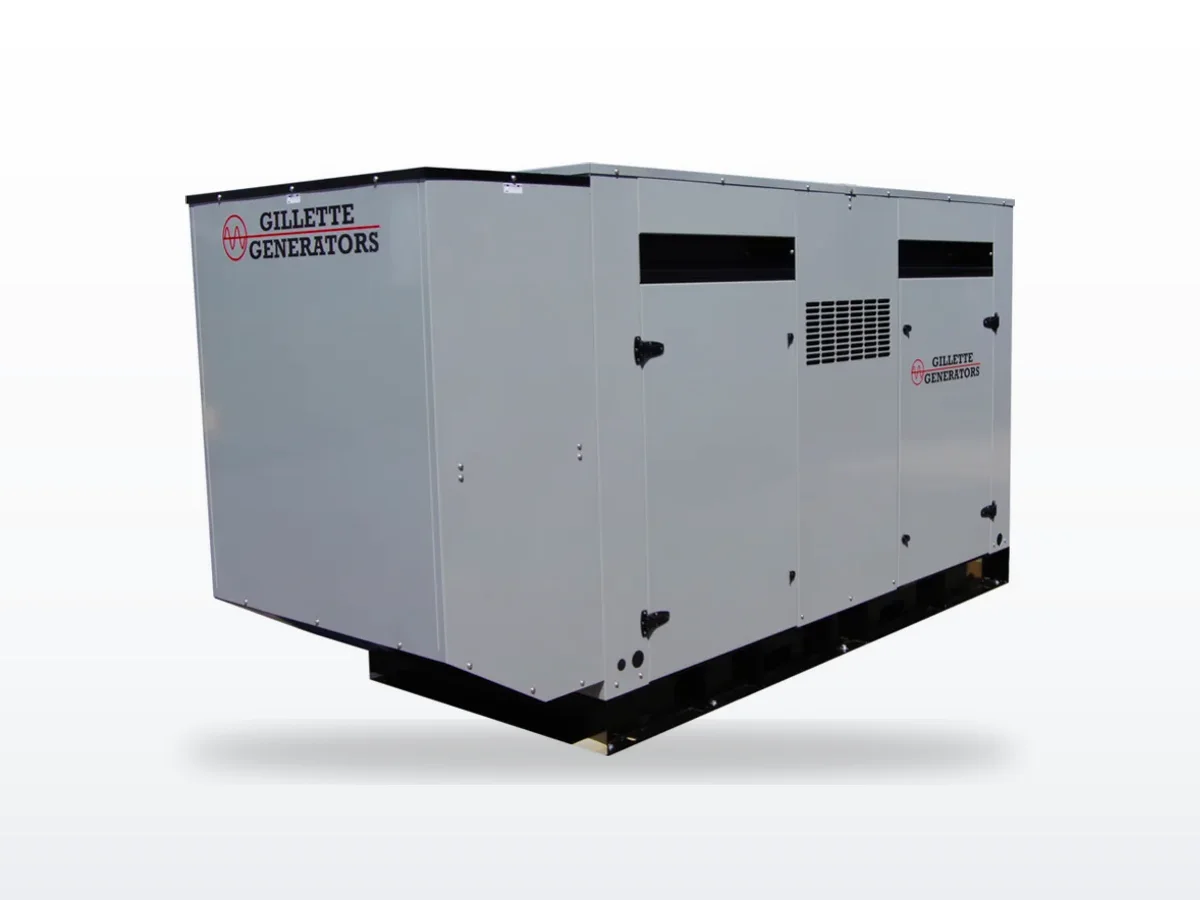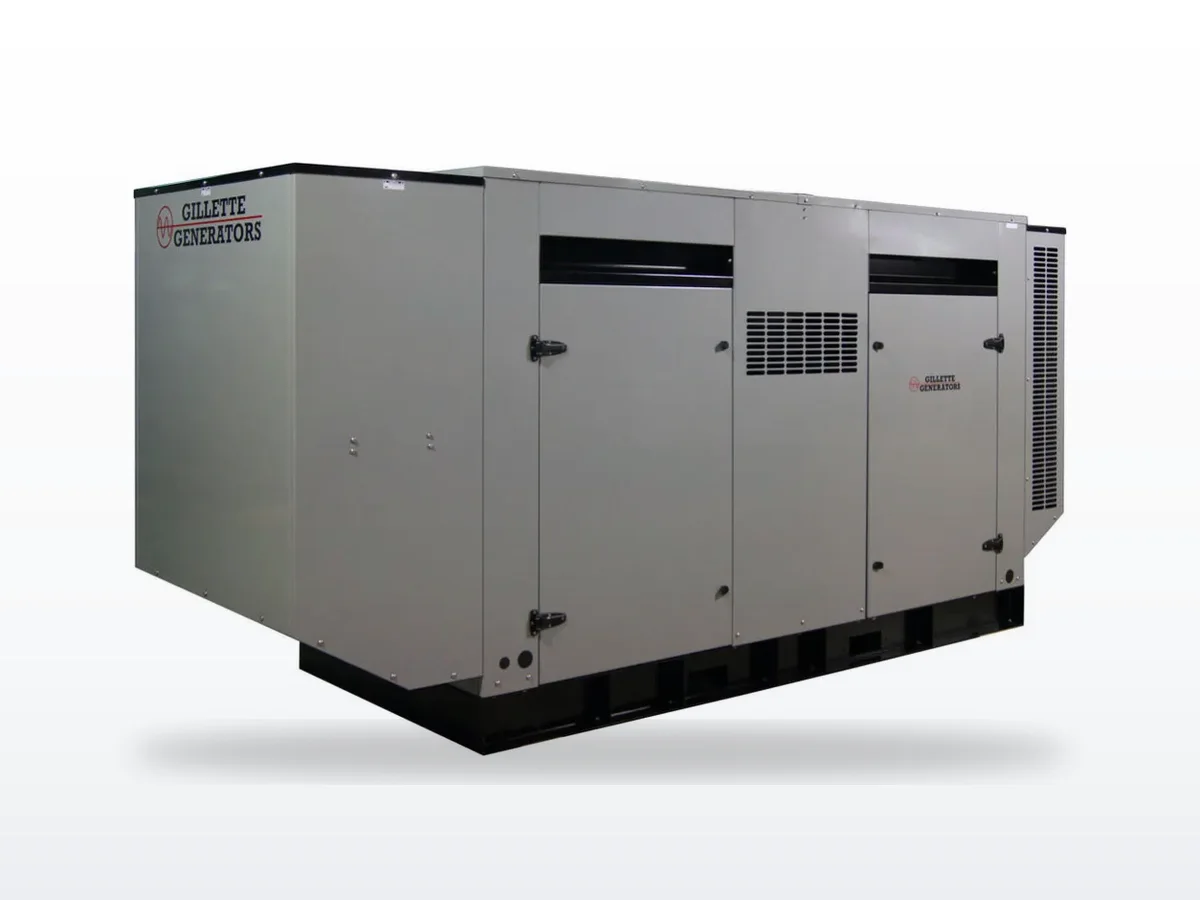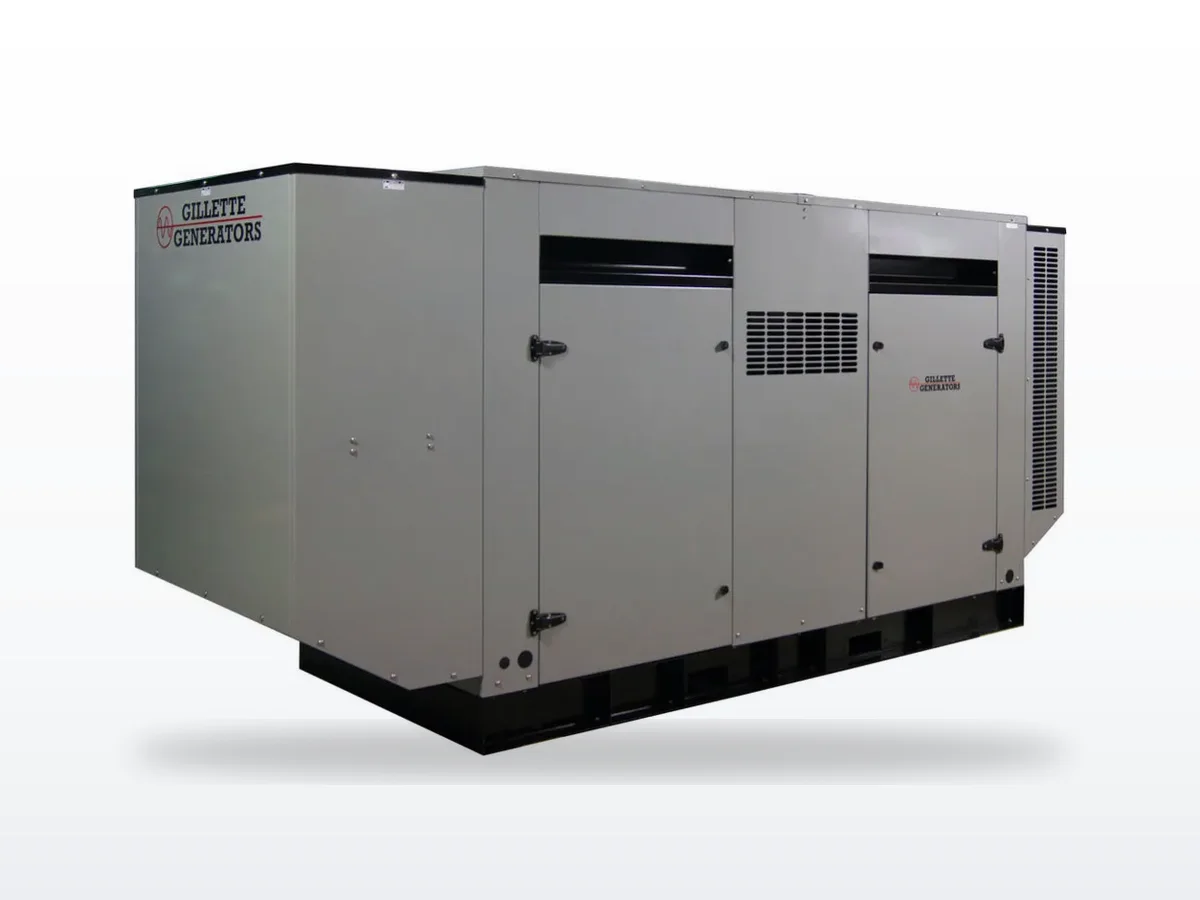
The Gillette PR-800 is an 80-kilowatt prime-rated natural gas and LPG generator — designed for continuous-duty operation as the primary power source, not standby backup. It uses the same PSI 8.8L V8 as the SP-960 standby model, but rated at 80 kW prime (vs 96 kW standby) for sustained continuous operation. DSE 7420 MKII controller, Stamford UCI274D alternator.
Prime-rated generators serve sites without reliable grid power: remote facilities, agricultural operations, mining sites, off-grid residences, and construction projects requiring continuous on-site generation.
Prime vs. standby — the same engine, different duty#
The PSI 8.8L V8 in the PR-800 is mechanically identical to the SP-960. The difference is the operating duty:
Standby (SP-960): 96 kW, limited to 500 hours/year, designed for emergency backup
Prime (PR-800): 80 kW, unlimited hours, designed as the sole power source
The 17% lower prime rating ensures the engine operates within thermal limits for sustained 24/7 duty — lower cylinder pressures, lower exhaust temperatures, and longer service life under continuous load.
We provide prime-power maintenance programs for commercial and agricultural sites in our territory where grid power is unreliable or unavailable. The PSI 8.8L is a proven continuous-duty platform — but it demands rigorous adherence to shortened service intervals. The most common issue we see: operators extending oil change intervals beyond 250 hours, leading to accelerated valve train wear.
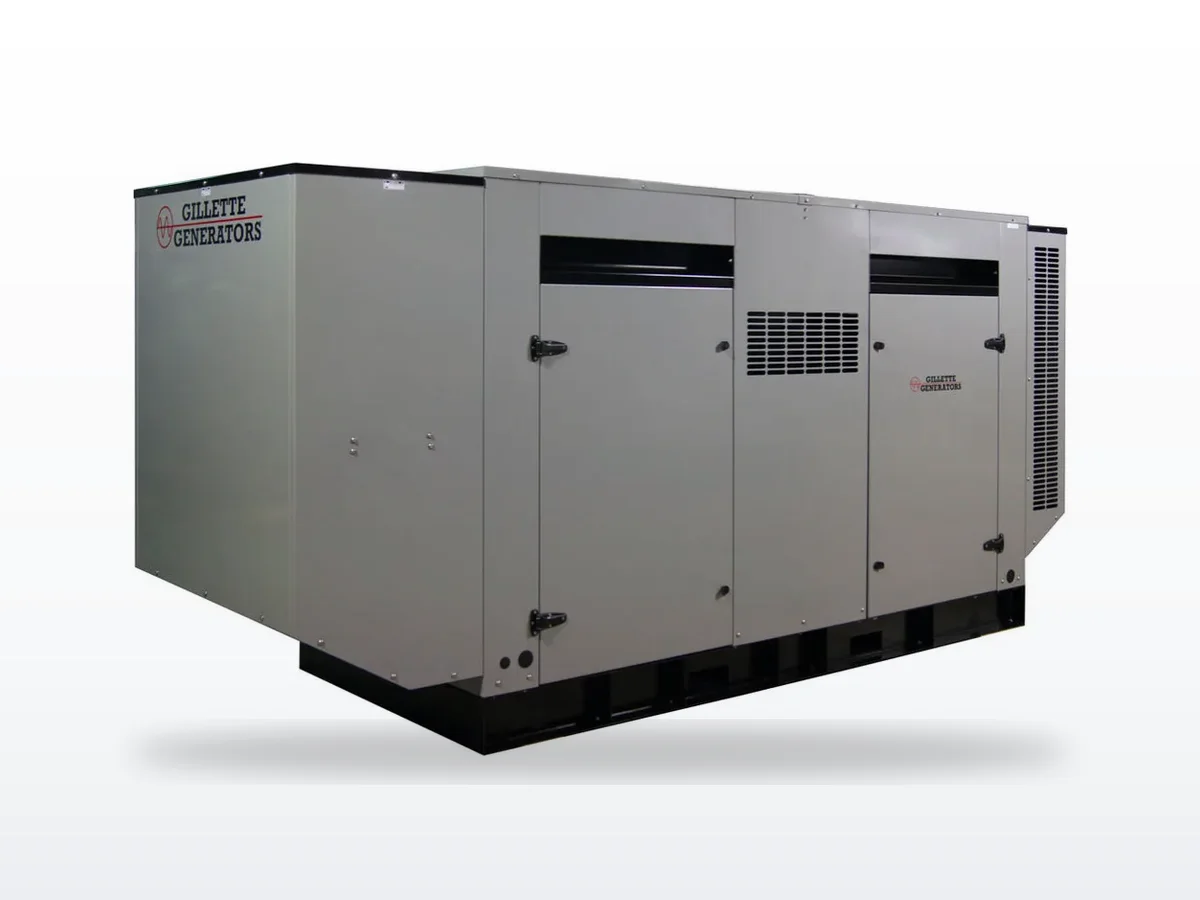
Tell us about the application — kW, voltage, application, install timeline — and we'll respond within one business day with budgetary pricing, lead time, and any sizing notes.
Adjust load percent and tank size to estimate runtime. Pre-filled with this model's spec where available.
Estimate runtime on this tank
Fuel demand at 75% load
840,000 BTU/hr≈ 840.0 cf/min @ 1,000 BTU/cf
On utility natural gas the runtime is generally unlimited provided the supply line and meter can deliver this BTU/hr at the engine's required inlet pressure (typically 5–14" WC residential, up to 5 psi commercial). Confirm against the OEM's published fuel-pressure spec.
Service intervals
Manufacturer-recommended intervals for the Gillette PR-800 under standby duty. Field intervals may differ based on load profile, ambient conditions, and fuel quality.
Oil & filter
Every 250 hours or 6 months
Coolant change
Every 4000 hours
Air filter
Every 500 hours
Spark plugs
Every 1000 hours
Major overhaul
≈ 15,000 hours
Load bank test
Every 12 months
Common failure modes
What we've seen fail on this platform. Use as a service-planning reference, not a diagnostic — actual failure modes depend heavily on duty cycle and maintenance history.
Component
Symptom
Typical hours
Severity
Spark plugs / ignition
Misfire, rough running, output drop
1,000+
moderate
Oil system
Oil degradation from continuous duty
250+
minor
Coolant system
Overtemp from sustained high load
4,000+
moderate
Frequently Asked Questions
What is the difference between prime and standby ratings?
The PR series is prime-rated — designed for continuous-duty operation as the sole power source. Standby-rated generators (SP series) are designed for backup duty with limited annual run hours. The PR-800 at 80 kW prime uses the same PSI 8.8L V8 as the SP-960 at 96 kW standby — the prime rating is lower because the engine operates continuously at reduced thermal stress.
Does the PR-800 support both NG and LPG?
Yes — the PR-800 is rated at 80 kW prime on both natural gas and LPG. This is the naturally aspirated 8.8L V8 — at this displacement without turbocharging, both fuels deliver similar output. The PR-800 is one of few prime-rated models with dual-fuel capability.
Why doesn't the PR series carry UL 2200?
The PR series carries UL 1446 and UL 508 but not UL 2200. UL 2200 is a standby generator listing; prime-rated units serving as the primary power source have different certification requirements. For installations requiring UL 2200, use the SP standby series.
What service intervals differ for continuous duty?
Oil change intervals tighten from every 12 months (standby) to every 6 months or 250 hours (whichever comes first) under continuous operation. Air filter service moves to 500 hours (vs 1000 on standby). Spark plugs at 1000 hours (vs 1500 standby). Continuous-duty operation puts the engine under sustained thermal load.