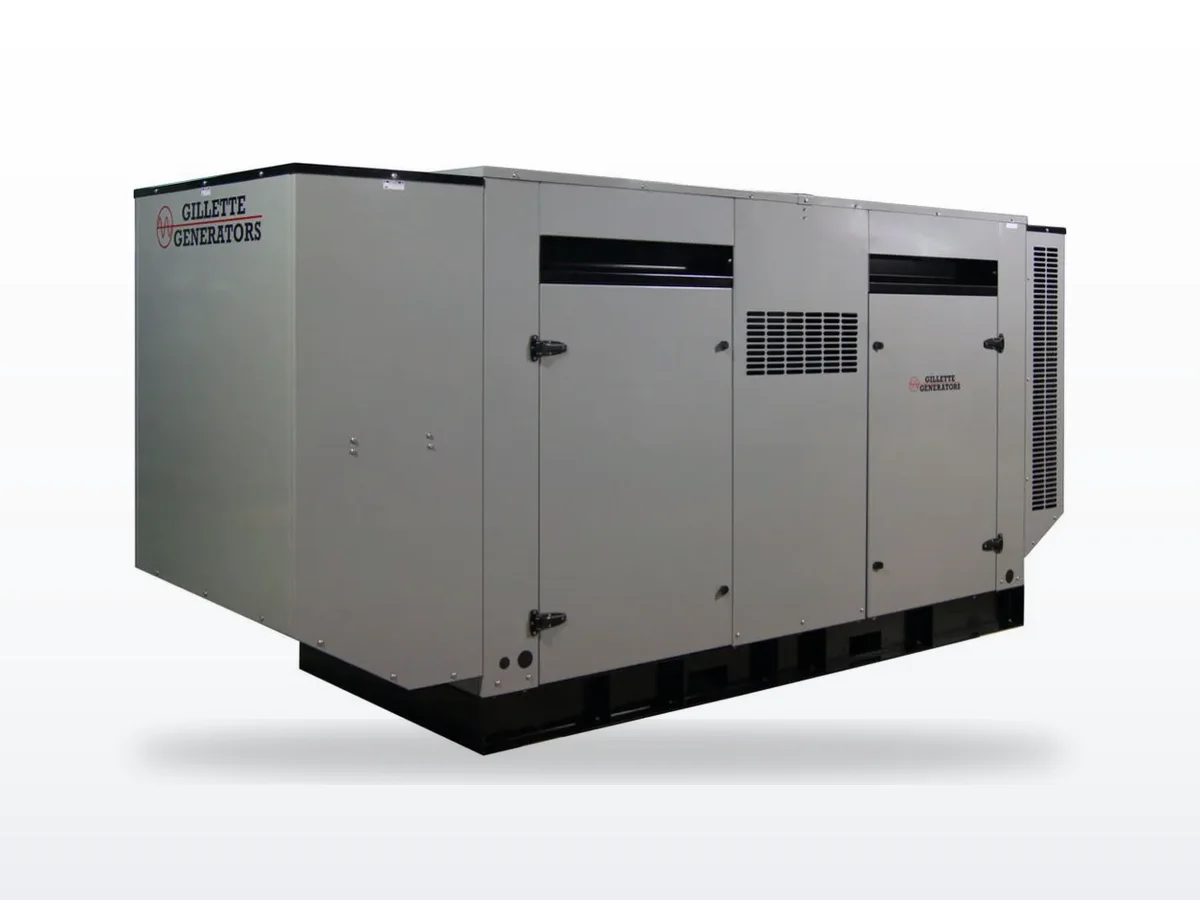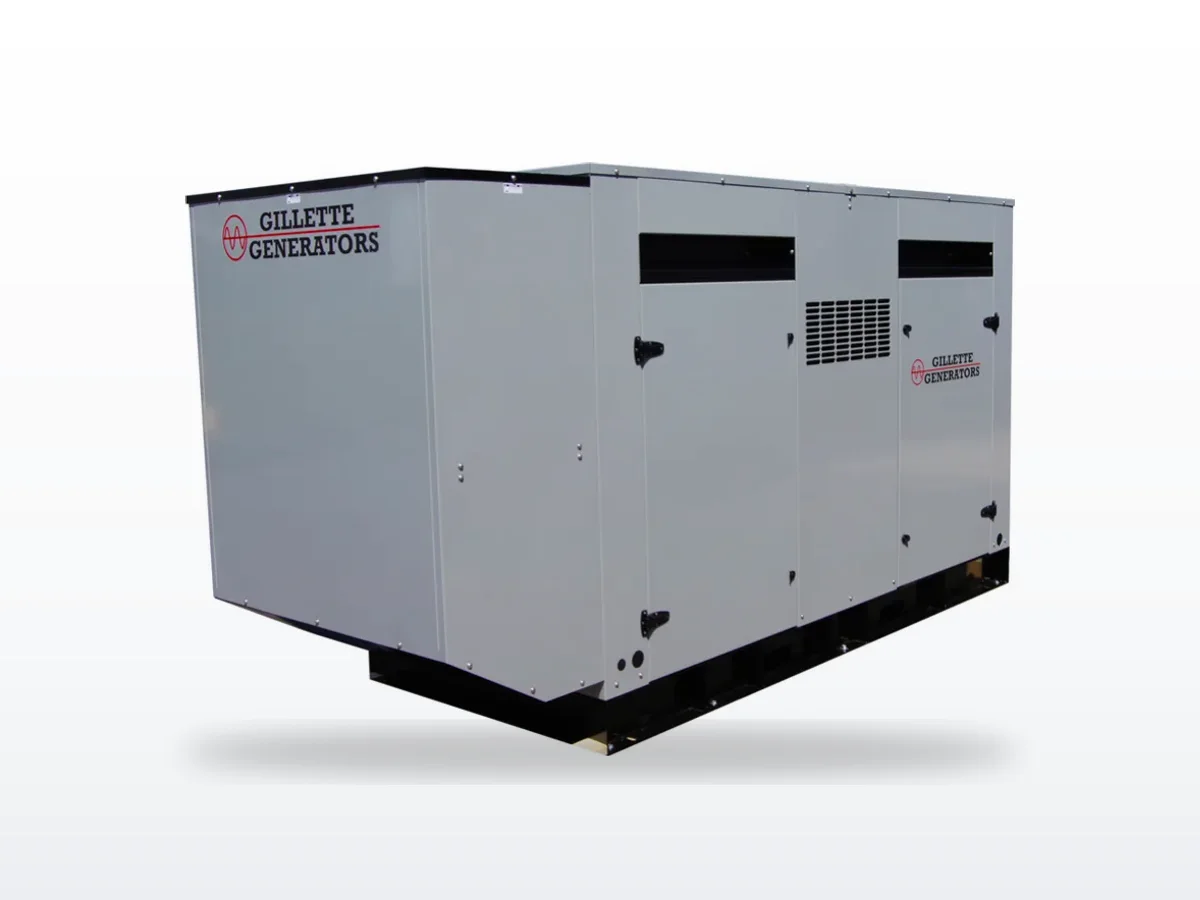
The Gillette PR-1000 is a 100-kilowatt prime-rated natural gas generator on PSI's 8.1L turbocharged inline-6 — a displacement unique to the PR prime series. At 100 kW continuous duty, this serves remote and off-grid facilities requiring reliable prime power where utility grid is unavailable or unreliable.
Unlike the SP standby series which uses the 8.8L V8, the PR-1000 and PR-1300 use PSI's 8.1L inline-6 with turbocharging and charge air cooling. The inline-6 architecture is preferred for continuous duty due to inherent mechanical balance and smooth operation at sustained loads.
The PSI 8.1L prime gas engine requires disciplined maintenance at shortened intervals: 250-hour oil changes, 1000-hour spark plug replacement, and 500-hour air filter service. Under continuous operation, these intervals come quickly — monthly oil changes at 24/7 duty. We recommend structured maintenance contracts for prime-power installations.
Tell us about the application — kW, voltage, application, install timeline — and we'll respond within one business day with budgetary pricing, lead time, and any sizing notes.
Adjust load percent and tank size to estimate runtime. Pre-filled with this model's spec where available.
Estimate runtime on this tank
Fuel demand at 75% load
1,050,000 BTU/hr≈ 1050.0 cf/min @ 1,000 BTU/cf
On utility natural gas the runtime is generally unlimited provided the supply line and meter can deliver this BTU/hr at the engine's required inlet pressure (typically 5–14" WC residential, up to 5 psi commercial). Confirm against the OEM's published fuel-pressure spec.
Service intervals
Manufacturer-recommended intervals for the Gillette PR-1000 under standby duty. Field intervals may differ based on load profile, ambient conditions, and fuel quality.
Oil & filter
Every 250 hours or 6 months
Coolant change
Every 4000 hours
Air filter
Every 500 hours
Spark plugs
Every 1000 hours
Major overhaul
≈ 15,000 hours
Load bank test
Every 12 months
Common failure modes
What we've seen fail on this platform. Use as a service-planning reference, not a diagnostic — actual failure modes depend heavily on duty cycle and maintenance history.
Component
Symptom
Typical hours
Severity
Turbocharger
Power loss from continuous duty wear
10,000+
moderate
Spark plugs / ignition
Misfire, rough running
1,000+
moderate
Oil degradation
Accelerated valve train wear
250+
minor
Frequently Asked Questions
What engine does the PR-1000 use?
PSI 8.1L turbocharged and charge air cooled inline-6 — a displacement unique to the PR prime series (not used in the SP standby series). This engine is calibrated for continuous-duty at 199 bhp (100 kW prime). The inline-6 architecture provides smooth power delivery for sustained operation.
Why is this NG-only when the PR-800 supports both NG and LPG?
The PR-1000's turbocharged 8.1L I6 is calibrated specifically for natural gas at 100 kW continuous. The turbocharger and fuel system are optimized for NG properties under boost. The naturally aspirated PR-800 has less fuel-specific calibration dependency, allowing dual-fuel operation.
The PR-1000 and PR-1300 share the same 8.1L engine — how do they differ?
Both use the PSI 8.1L I6 TCAC but at different calibrations: PR-1000 at 199 bhp (100 kW) and PR-1300 at 200 bhp (130 kW). The PR-1300 runs at higher BMEP for 30% more output from the same displacement.
200 kW natural gas stationary standby generator. Made-in-USA commercial unit with PSI 8.8L high-output turbocharged V8, Stamford alternator, and DSE 7420 MKII controller. NG only.