Overview#
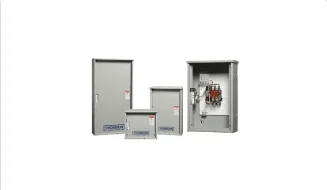
The Thomson TS910 is a residential and light-commercial automatic transfer switch available in 100A, 200A, and 400A configurations. Despite its residential positioning, the TS910 is available in both single-phase (2-pole, 120/240V) and three-phase (3-pole, 120/208V or 120/240V) configurations. A service-entrance rated variant (TS910SE) is also available. It uses contactor-based switching with in-phase transfer detection for clean, open-transition transfers that minimize disruption to sensitive electronics.
The TSC 9 controller handles all automatic transfer functions including engine start signaling, voltage and frequency monitoring, and programmable exercise scheduling. The compact NEMA 1 enclosure (27.1" x 18.9" x 8.3" at 200A 1Ph, 30 lbs) fits standard residential installations, with an optional NEMA 3R outdoor enclosure and enclosure heater kit available for outdoor deployments.
Important UL listing distinction: The TS910 is UL 1008 listed for optional standby systems (NEC Article 702). For legally required emergency or standby systems (NEC Articles 700/701), specify the Thomson TS920 instead.
TS910 vs TS920: which to specify#
The TS910 and TS920 share the TSC 9 controller and contactor switching mechanism, but serve different markets:
- TS910 (Residential): Single and three-phase (120/240V, 120/208V). UL 1008 listed for optional standby systems (NEC 702). 100-400A. Withstand: 10,000-50,000A at 240V depending on frame and phase config.
- TS920 (Commercial): Single and three-phase (120/240V, 120/208V). UL 1008 listed for legally required emergency systems (NEC 700/701). 100-400A. Withstand: 22,000-50,000A at 240V.
The critical difference is the UL listing scope: if the AHJ requires the ATS to be listed for emergency or legally required standby, you must specify the TS920. For residential whole-house generators (optional standby), the TS910 is the correct and more cost-effective choice.
Our service experience#
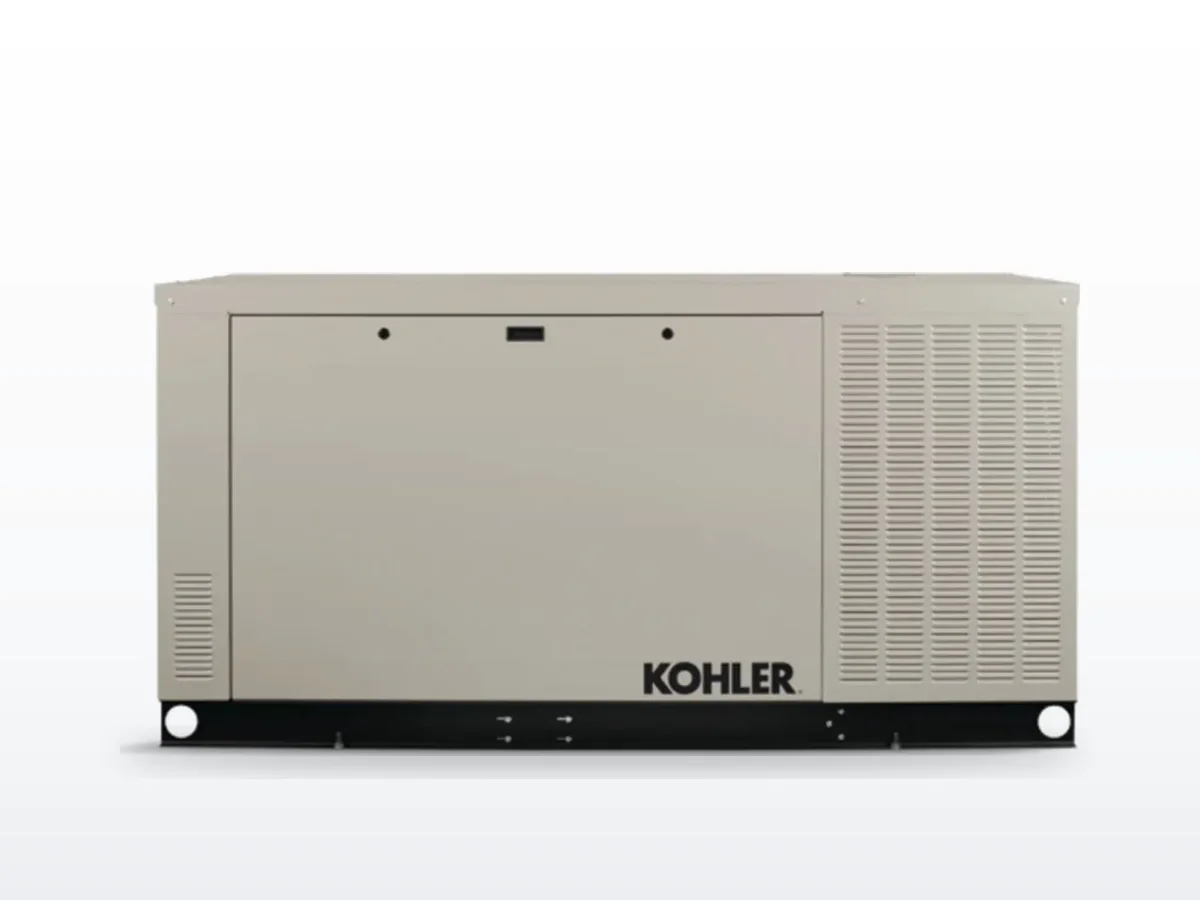
We install and service Thomson TS910 units on residential whole-house generator installations across the Bay Area and Central Coast, primarily in the 200A rating paired with 20-48 kW home standby generators. The compact size and straightforward TSC 9 programming make it a reliable residential ATS.
The most common service call is programming adjustments — homeowners or electricians who set the time delays incorrectly during initial installation. The engine start delay, warm-up timer, and utility return delay all need to be tuned to the specific generator model. The TSC 9's front-panel interface makes field adjustments straightforward without special software.