MTU

MTU 10V1600 DS500

500 kW standby / 450 kW prime · Diesel · Liquid-cooled

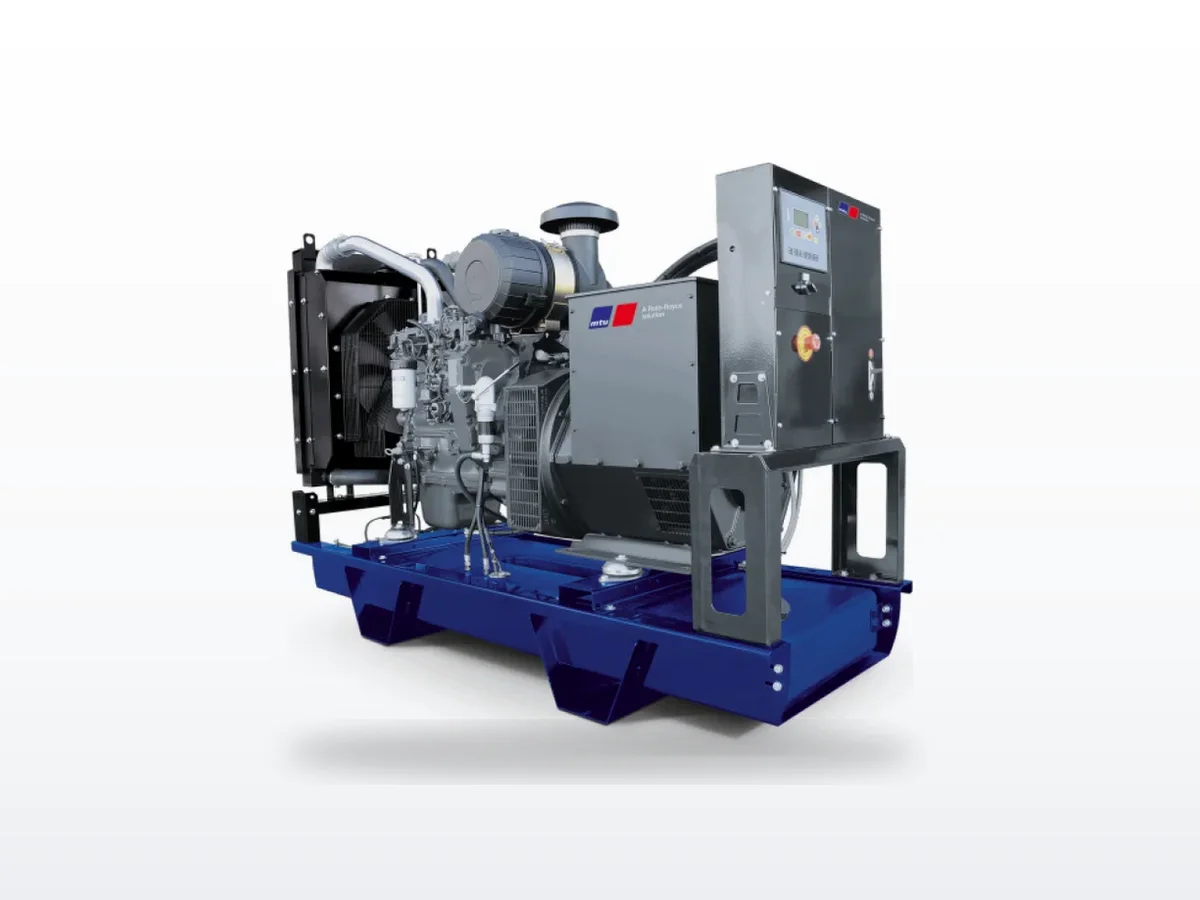
500 kW diesel standby generator with MTU 10V1600G80S 17.5L common-rail V10 engine, EPA Tier 2, 208–600V three-phase, PMG alternator, ADEC isochronous governor. 3416 x 1873 x 2032 mm.

Standby power
500 kW / 450 kW prime
Voltage options
120/208V, 120/240V, 277/480V, 347/600V
Frequency / Phase
60 Hz · 3-phase
Engine
MTU 10V1600G80S · 17.5L
EPA / Emissions
Tier 2

Overview#

The MTU 10V1600 DS500 is a 500 kW diesel standby generator set powered by the MTU 10V1600G80S — a 17.5-liter, 10-cylinder V-configuration turbocharged and charge-air-cooled diesel engine producing up to 561 kWm (752 bhp) gross at 1,800 rpm. The engine uses common rail fuel injection and MTU's ADEC (Advanced Diesel Engine Control) electronic isochronous governor delivering ±0.25% speed regulation.

The DS500 carries EPA Tier 2 certification and is available in all standard North American voltages from 208V to 600V three-phase. The prime rating is 450 kW, making this unit appropriate for prime or continuous duty as well as standby applications. PMG (Permanent Magnet Generator) excitation is standard on the 570-frame alternators used at this power level, providing motor starting capability of up to 300% short circuit current.

Standard equipment includes a unit-mounted radiator rated for 50°C ambient, 24V electric start (1,050 CCA), UL 2200 listing and CSA certification as options, and the MTU digital control panel with CANBus ECU communications, NFPA 110 compatibility, and IP 54 front panel protection. IBC seismic certification and OSHPD pre-approval are available as factory options.

Technical Specifications#

Power Ratings (60 Hz, 1800 rpm, 0.8 PF)

RatingkWkVA
Standby500625
Prime450563

Engine — MTU 10V1600G80S

ParameterValue
Displacement17.5 L (1,068 in³)
Configuration10-cylinder V
AspirationTurbocharged and charge-air-cooled
Fuel injectionCommon rail
Rated speed1800 rpm
GovernorADEC electronic isochronous, ±0.25%
Max gross power561 kWm (752 bhp)
EmissionsEPA Tier 2
Starting24V electric, 1,050 CCA

Fuel Consumption (Diesel #2)

LoadConsumption
100% load33.1 gph (125 L/hr)
75% load25.6 gph (97 L/hr)
50% load19.5 gph (74 L/hr)

Physical (Open Power Unit)

DimensionValue
Length3,416 mm (134.5 in)
Width1,873 mm (73.75 in)
Height2,032 mm (80 in)
Dry weight4,175–5,129 kg (9,205–11,308 lb)

Cooling System

ParameterValue
Radiator ambient rating50°C (122°F)
Water pump capacity466 L/min (123 gpm)
Heat rejection to coolant235 kW
Heat rejection to aftercooler118 kW
Heat radiated to ambient58.6 kW

Our Service Experience#

The MTU 10V1600G80S is a high-output proprietary engine that steps up from the 8V1600's V8 to a V10 configuration — adding two cylinders while maintaining the same 122mm bore and 150mm stroke. At 500 kW from 17.5 liters, this engine is operating at higher specific output than the smaller V8 variant and will reward meticulous fuel quality management.

For data center and critical facility applications, the DS500's PMG alternator and 300% short circuit capability make it well suited to motor-starting loads and redundant UPS transfer switching. The 50°C radiator rating allows for warmer machine room designs, though California and desert-climate installations should verify ambient clearances around the radiator.

Fuel consumption at 500 kW is 33.1 gph at full load — a 1,000-gallon base tank provides approximately 30 hours at full load. Most data center installations specify 72-hour fuel storage (approximately 2,400 gallons for this unit at full standby).

Frequently Asked Questions#

What is the difference between the DS500 and the DS350? The DS500 uses the 10V1600G80S (17.5L, V10, EPA Tier 2) versus the DS350's 8V1600G70S (14.0L, V8, EPA Tier 3). The Tier 2 vs Tier 3 difference reflects the introduction timing of each model within the 1600-series product line. The DS500 is also physically larger: 134.5 inches long versus 118 inches for the DS350.

What EPA tier is the DS500? EPA Tier 2 certified. The 10V1600 was released before the Tier 3 certification window for this displacement class, and carries the Tier 2 rating from the original product introduction.

What voltages are available? 208V, 240V, 480V, and 600V three-phase (380V and 440V also listed). UL 2200 listing and CSA certification available as options on the 208V, 240V, 480V, and 600V configurations.

What is the fuel tank requirement for 24-hour standby? At 33.1 gph full load, 24 hours requires approximately 800 gallons. For 24-hour standby at typical 80% average load factor, plan for approximately 640 gallons. Sub-base tanks from 150 to 1,000 gallons are available; larger installations typically use above-ground bulk storage with day tank.
What warranty does the DS500 carry? 2-year standard limited warranty through MTU Onsite Energy authorized distributors, per the spec sheet.#

Engineering specifications

Physical

Length
135 in
Width
74 in
Height
80 in
Dry weight
9,205 lb

Fuel system & runtime

Fuel use @ full load
33.1 GPH
Fuel use @ 75% load
25.6 GPH
Fuel use @ 50% load
19.5 GPH

Documents & downloads

Spec sheets & manuals

Ready to order this model?

Configure your MTU 10V1600 DS500

Lock the enclosure, fuel system, transfer switch, and add-ons — we'll confirm pricing, availability, and lead time within one business day. Prefer a free-form quote? That option is still here.

Estimate runtime for the MTU 10V1600 DS500

Adjust load percent and tank size to estimate runtime. Pre-filled with this model's spec where available.

Estimate runtime on this tank

Estimated runtime

7.8 hours(0.3 days)

Fuel consumption ≈ 25.53 GPH at 75% load. Estimate based on industry-typical 1800 RPM standby curves (≈0.07 GPH/kW at full load). Actual consumption varies by engine, ambient temperature, fuel quality, and tuning.

Service intervals

Manufacturer-recommended intervals for the MTU 10V1600 DS500 under standby duty. Field intervals may differ based on load profile, ambient conditions, and fuel quality.

Oil & filter
Every 500 hours
Major overhaul
20,000 hours

Common failure modes

What we've seen fail on this platform. Use as a service-planning reference, not a diagnostic — actual failure modes depend heavily on duty cycle and maintenance history.

ComponentSymptomTypical hoursSeverity
Common rail fuel injectorsInjector failure causes power loss and increased fuel consumption — use only OEM-specified Diesel #2 with low sulfur content; check injector return flow at each major servicemoderate
ADEC engine controllerECU fault codes from connector corrosion or voltage spikes during cranking — inspect and dielectric-grease all ECU harness connectors annuallymoderate
TurbochargerOil contamination from crankcase ventilation system or bearing wear causes blue smoke and power loss — monitor oil consumption and turbo shaft playmoderate

Frequently Asked Questions

What is the difference between the DS500 and the DS350?
The DS500 uses the 10V1600G80S (17.5L, V10, EPA Tier 2) versus the DS350's 8V1600G70S (14.0L, V8, EPA Tier 3). The Tier 2 vs Tier 3 difference reflects the introduction timing of each model within the 1600-series product line. The DS500 is also physically larger: 134.5 inches long versus 118 inches for the DS350.
What EPA tier is the DS500?
EPA Tier 2 certified. The 10V1600 was released before the Tier 3 certification window for this displacement class and carries the Tier 2 rating from the original product introduction.
What voltages are available on the DS500?
208V, 240V, 480V, and 600V three-phase (380V and 440V also listed). UL 2200 listing and CSA certification available as options on the 208V, 240V, 480V, and 600V configurations.
What is the fuel tank requirement for 24-hour standby on the DS500?
At 33.1 gph full load, 24 hours requires approximately 800 gallons. For 24-hour standby at typical 80% average load factor, plan for approximately 640 gallons. Most data center installations specify 72-hour fuel storage — approximately 2,400 gallons for this unit at full standby.
What warranty does the DS500 carry?
2-year standard limited warranty through MTU Onsite Energy authorized distributors.
Why is PMG excitation standard on the DS500?
PMG (Permanent Magnet Generator) excitation is standard on the 570-frame alternators used at this power level, providing up to 300% short-circuit current capability — critical for motor-starting loads and UPS transfer switching in data center applications.

Compatible equipment

Similar models

MTU

MTU 6R0225 DS400

400 kW diesel standby on JD 6135HFG84 13.5L inline-6. JD dealer parts availability, no aftertreatment (Tier 3), 29 gph, SCAQMD.

400 kW standby · Diesel · Liquid-cooled

400 kW Tier 3 diesel standby generator. John Deere 6135HFG84 engine, 13.5L inline-6 with turbocharging and aftercooling, 433CSL6220 alternator.

Tier 33-phasecommercial-standbyindustrial

MTU

MTU 12V1600 DS600

600 kW diesel standby — MTU 12V1600 V12, 21.0L, ADEC ±0.25%, PMG 300% short-circuit. 40 gph, 20K-hr overhaul interval.

600 kW standby · Diesel · Liquid-cooled

600 kW diesel standby generator with MTU 12V1600G80S 21.0L common-rail V12 engine, EPA Tier 2, 208–600V three-phase, PMG alternator, ADEC isochronous governor. 3737 x 1899 x 2137 mm.

Tier 23-phasecommercial-standbyindustrial-standby
Caterpillar Cat C15 500 kW liquid-cooled standby generator

Caterpillar

Cat C15

500 kW diesel with CAT C15 ACERT inline-6. Best resale value in class. ~200 US dealers with deep parts inventory.

500 kW standby · Diesel · Liquid-cooled

500 kW diesel standby generator with Cat C15 ACERT engine. Large commercial standby for hospitals, high-rises, and municipal infrastructure.

Tier 23-phasehospitalhigh-rise

Need service or parts for the MTU 10V1600 DS500?

We service every major OEM and stock genuine parts for the most common models.