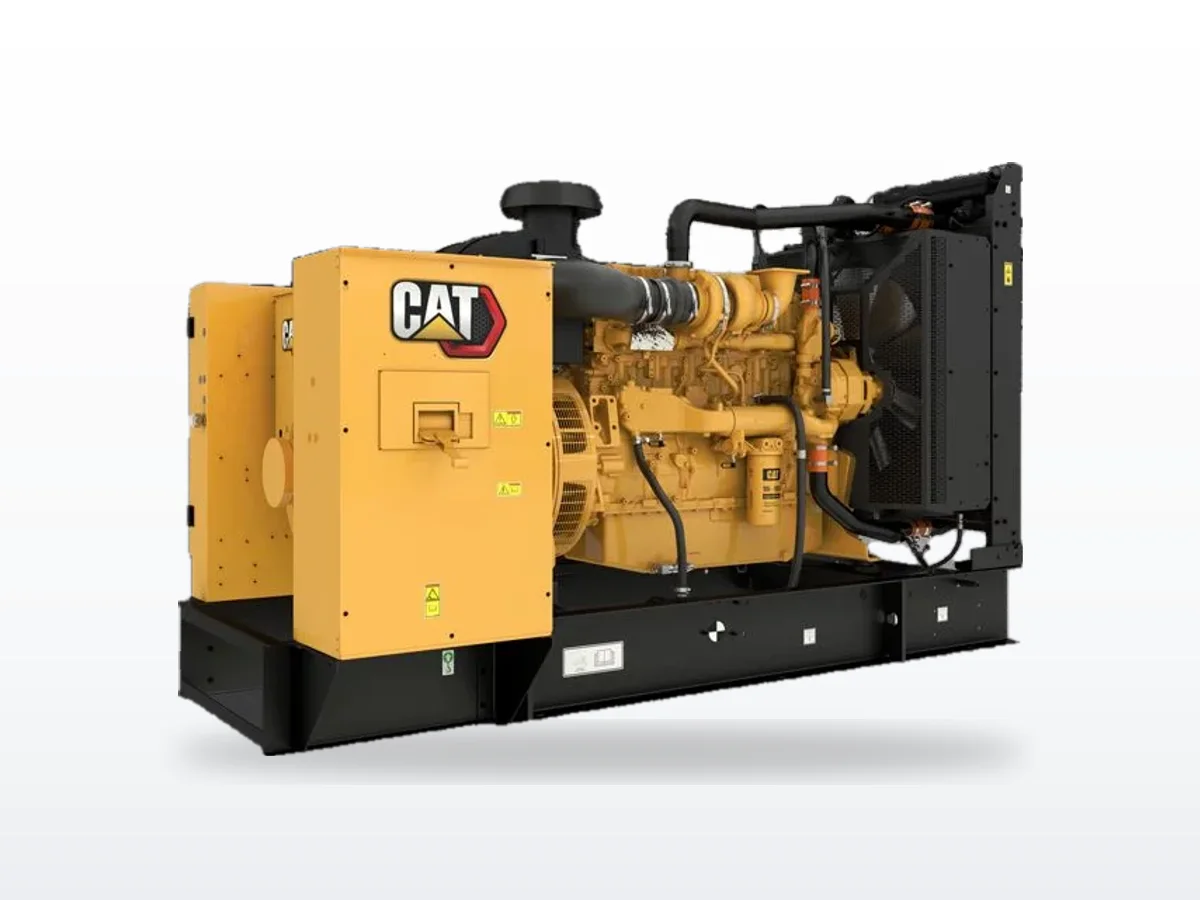
The Cat C15 is a 500-kilowatt diesel standby generator built on Caterpillar's proven 15.2-liter ACERT inline-6 platform. It occupies the large-commercial bracket: big enough for hospitals and high-rises, compact enough for standard mechanical rooms. The C15 platform has decades of field history across trucking, marine, and industrial applications — bringing unmatched institutional knowledge to the standby power market.
EMCP controller: proprietary, integrated, requires Cat dealer for deep configuration
Cat dealer network: local dealers stock parts and provide 24/7 emergency service
Product Link / VisionLink: Cat's remote monitoring platform (telematics)
S·O·S fluid analysis: Cat's proprietary oil/coolant sampling program
Cat Financial: equipment financing through the OEM
This ecosystem provides comprehensive support but creates vendor lock-in. Unlike DSE/ComAp-based generators (Kohler, Gillette, etc.), you're committed to Cat's service channel.
The C15 ACERT is a proven platform. Cat's dealer network in Northern California (Peterson Cat, Holt Cat) provides excellent emergency parts availability. We service C15 units at hospitals and large commercial accounts. The MEUI fuel injection system is Cat-specific — requires Cat Electronic Technician (Cat ET) software for diagnostics. This is the main lock-in consideration: you need either Cat-trained technicians or a Cat dealer relationship for anything beyond basic PM.
Lock the enclosure, fuel system, transfer switch, and add-ons — we'll confirm pricing, availability, and lead time within one business day. Prefer a free-form quote? That option is still here.
Adjust load percent and tank size to estimate runtime. Pre-filled with this model's spec where available.
Estimate runtime on this tank
Estimated runtime
18.9 hours(0.8 days)
Fuel consumption ≈ 21.14 GPH at 75% load. Estimate based on industry-typical 1800 RPM standby curves (≈0.07 GPH/kW at full load). Actual consumption varies by engine, ambient temperature, fuel quality, and tuning.
Service intervals
Manufacturer-recommended intervals for the Cat C15 under standby duty. Field intervals may differ based on load profile, ambient conditions, and fuel quality.
Oil & filter
Every 500 hours or 12 months
Coolant change
Every 6000 hours
Air filter
Every 1000 hours
Fuel filter
Every 500 hours
Major overhaul
≈ 20,000 hours
Load bank test
Every 12 months
Common failure modes
What we've seen fail on this platform. Use as a service-planning reference, not a diagnostic — actual failure modes depend heavily on duty cycle and maintenance history.
Component
Symptom
Typical hours
Severity
Fuel quality
Injector fouling, filter clogging, hard starting
4,380+
moderate
MEUI injectors
Rough running, smoke, power imbalance
15,000+
moderate
Turbocharger
Reduced power, oil in intake
18,000+
moderate
Battery banks (24V)
Slow crank, failed 10-second start
8,760+
minor
Frequently Asked Questions
What is the Cat C15 ACERT?
A 15.2-liter turbocharged-aftercooled inline-6 diesel engine — one of Cat's core power platforms. ACERT (Advanced Combustion Emissions Reduction Technology) is Cat's proprietary combustion approach that achieves Tier 2 emissions without aftertreatment systems.
How does the C15 compare to the Cummins QSK19?
Both are ~500-650 kW inline-6 diesel platforms. The C15 (15.2L) is slightly smaller displacement than the QSK19 (19.0L). Cat's advantage: ACERT combustion technology and deep integration with EMCP controller. Cummins' advantage: larger displacement for better load acceptance and broader dealer network.
What controller does the C15 use?
EMCP 4 (Electronic Modular Control Panel) — Cat's integrated controller with digital metering, protective relaying, and paralleling capability. Unlike open-platform controllers (DSE, ComAp), EMCP is Cat-proprietary and requires Cat dealer tools for deep configuration.
Is the C15 Tier 4 Final?
No — the C15 in standby configuration is EPA Tier 2, which is the applicable standard for stationary emergency engines above 560 kW. No aftertreatment required. Tier 4 Final applies to smaller engines and prime-power applications.
350 kW diesel with legendary CAT 3406 engine. Best resale -- retains 15-25% more than Cummins/MTU. Parts back to 1995.
350 kW standby · Diesel · Liquid-cooled
350 kW diesel standby for industrial plants, water treatment, and large commercial with fleet standardization.
The Caterpillar 3406C is a 275-400 kW diesel generator built on the legendary 14.64L inline-6. Legacy platform with one of the broadest parts ecosystems in the diesel industry. Specs from OEM data sheet.
3-phasecommercial-standbyindustrial
Caterpillar
Caterpillar C18
600 kW diesel with CAT C18 ACERT inline-6. Best resale -- retains 15-25% more than Cummins/MTU. ~200 US dealers.
600 kW standby · Diesel · Liquid-cooled
600 kW diesel standby for large data centers, hospitals, and industrial plants with CAT fleet.
The Caterpillar C18 ACERT is a 600 kW standby diesel generator with EPA Tier 2 certification. 18.1L inline-6 with MEUI injection. Fuel: 42.7 gal/hr at full load. Supports 4160V medium-voltage for hospital and campus applications.
Tier 23-phasehospital-mediumcampus
Cummins
Cummins QSX15
500 kW diesel with QSX15 engine. Full Cummins vertical integration. Power Command controller. 10-15% below CAT.
500 kW standby · Diesel · Liquid-cooled
500 kW diesel standby for major hospitals, Tier III data centers, and large industrial facilities.
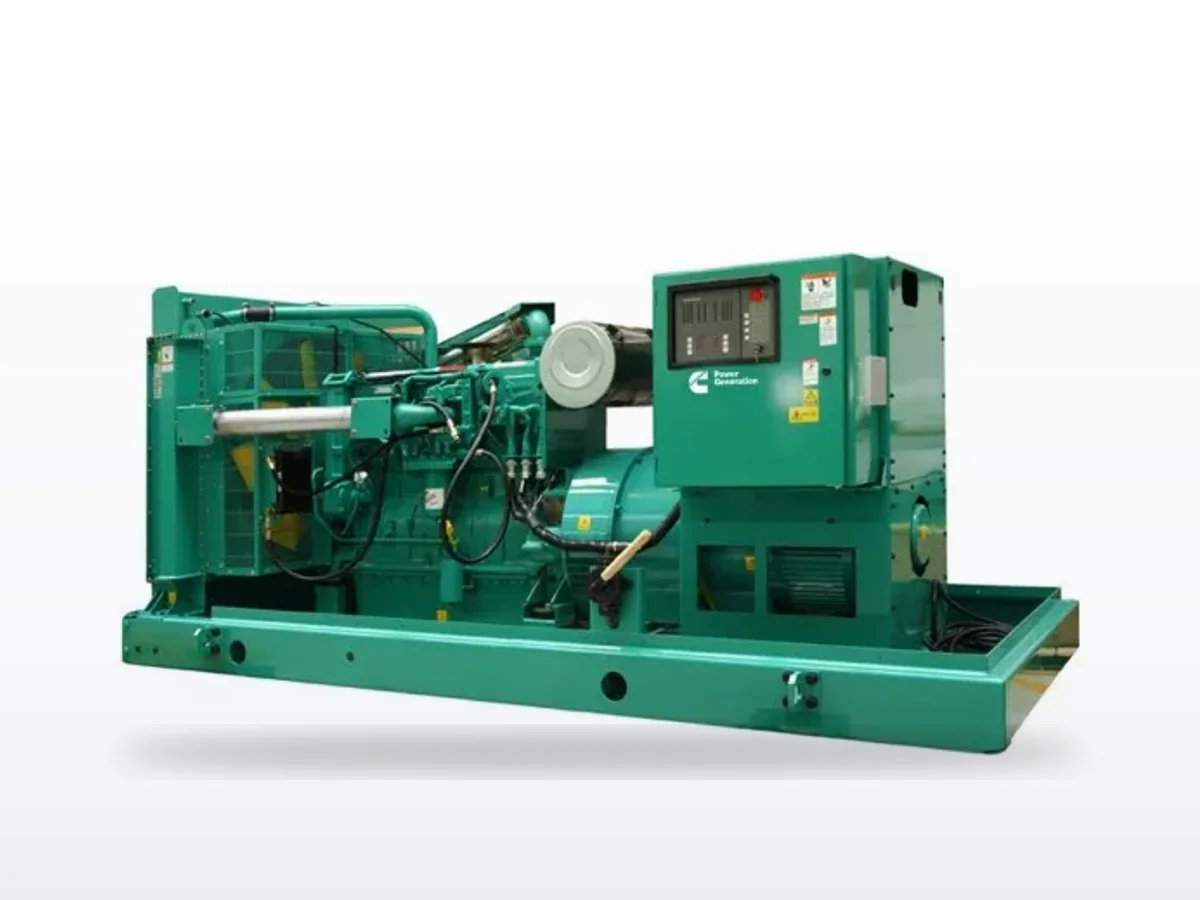
500 kW standby / 450 kW prime diesel generator with QSX15-G9 engine. 24-valve DOHC, 15-liter inline-6, EPA NSPS certified for commercial and industrial power.