Series Overview#
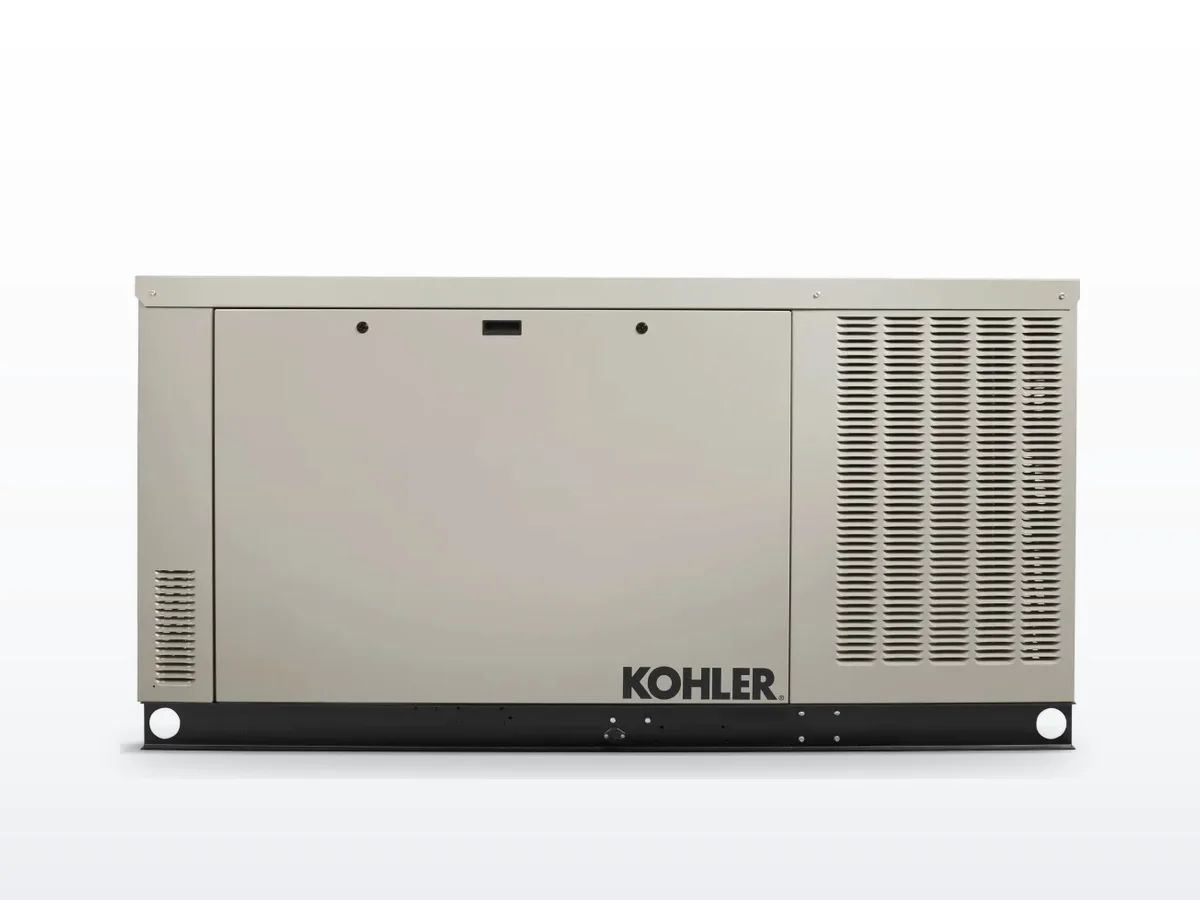
The Kohler CCL Series is a three-model liquid-cooled gaseous generator line spanning 25 to 36 kW standby. All models use the Kohler KG2204T turbocharged 2.2L 4-cylinder engine, run on natural gas, LPG, or dual-fuel (NG/LPG), and output 120/240V single-phase. The series covers the residential and small commercial standby market where liquid cooling is preferred over air-cooled alternatives for lower noise levels and more consistent thermal management.
The CCL designation positions these units at the intersection of residential and light commercial applications — the same power range as a large whole-house residential generator or a small commercial property backup. At 25–36 kW, the CCL competes with air-cooled residential standby generators in the same class while offering the operational advantages of liquid cooling: quieter enclosure acoustics, consistent output regardless of ambient temperature variation, and a longer engine service life expectation under sustained load.
All three models use the Brushless Wound-Field alternator with PowerBoost excitation, providing sustained short-circuit capability up to 300% of rated current for 10 seconds. This is important for motor-starting applications — HVAC compressors, well pumps, and refrigeration compressors — where inrush current can be two to five times the running load. The CCL's excitation architecture handles these transient demands without voltage collapse.
The 25CCL, 30CCL, and 36CCL share an identical enclosure and dimensional footprint. This simplifies installation planning: the same pad, transfer switch wiring, and natural gas or LP supply infrastructure can accommodate any of the three models, making an upgrade straightforward if load requirements increase after initial installation.
How to Choose#
25 kW: 25CCL. The entry point of the CCL Series. Appropriate for residential applications where calculated whole-house standby demand is in the 18–22 kW range, or small commercial properties with similar load profiles. The 25CCL is the cost-optimized choice when the 30 kW headroom is not needed.
30 kW: 30CCL. The mid-range option for homes or small businesses with loads in the 22–27 kW range. This is often the right specification for a medium-sized single-family home with central HVAC, a home office, and standard appliances. It shares an enclosure with the 25CCL and 36CCL, so the physical installation is identical across all three.
36 kW: 36CCL. The top of the CCL Series. At 36 kW standby, this unit handles larger whole-house loads — dual-zone HVAC, pool pump, home office, and high-draw kitchen appliances simultaneously. It uses the same KG2204T engine as the 25CCL and 30CCL; the higher output is achieved through alternator sizing. Note that rated output varies from 30 to 36 kW depending on fuel type and voltage configuration — confirm with your dealer for the specific output on your intended fuel.
CCL vs RCL at similar power levels. At 30 kW, the 30CCL and 30RCL use the same KG2204T engine and output 120/240V single-phase. The product line distinction is primarily commercial — review spec sheets for the specific variants to identify any differences in enclosure design, warranty terms, or available options that matter for your installation.
Common Applications#
-
Whole-house residential standby. The primary application for all three CCL models is whole-house backup for medium-to-large single-family homes. The liquid-cooled platform provides quieter operation than comparable air-cooled units, which matters for enclosures installed near bedrooms, neighbor property lines, or HOA-regulated neighborhoods.
-
Small commercial properties. Small retail storefronts, professional offices, small restaurants, and service businesses with standby loads in the 20–32 kW range use CCL generators as a cost-effective liquid-cooled alternative to diesel or larger gaseous units.
Service & Maintenance#
The CCL Series uses a 200-hour or 12-month oil change interval — more frequent than the RCL Series' 24-month schedule. For a generator that exercises weekly and runs occasional outages, the 12-month calendar trigger will typically be the binding constraint. Coolant replacement is scheduled at 2,000 hours; at the low runtime of a typical standby generator, this works out to roughly every 10–20 years of normal use, though physical aging of coolant over calendar years should also be considered.
Spark plug replacement every 500 hours is the most operationally critical maintenance item — this is universal across all three CCL models. Spark plug deterioration is the primary cause of misfire codes, rough running, and cylinder dropout faults in this series. Defer spark plug service and you risk a misfire event during the next actual outage.
The fuel pressure regulator is the next priority failure mode — hard starting, unstable idle, and gas pressure fault codes typically appear around 6,000 hours. Starting battery condition is the leading cause of failed exercise tests: proactive replacement every two to three years is recommended. Battery failures are the dominant no-start mode across all three models, regardless of apparent battery state under float charge.
Application Guidance#
The Kohler CCL Series is purpose-built for the 25–36 kW liquid-cooled gaseous standby market — the tier above air-cooled residential units and below commercial three-phase generators. It is the right specification for medium-to-large single-family homes where liquid cooling is preferred for quieter operation in HOA-regulated neighborhoods or close-quarters installations, and for small commercial properties (professional offices, small restaurants, small retail) with standby loads in the 20–32 kW range on natural gas, LPG, or dual-fuel. The shared enclosure footprint across all three models simplifies installation and future upgrades: pad size, transfer switch, and fuel supply infrastructure do not change between the 25CCL and 36CCL. The liquid-cooled platform delivers more consistent output at elevated ambient temperatures than air-cooled alternatives, which is relevant for hot-climate installations.
This series is not appropriate when three-phase output is required — all CCL models are 120/240V single-phase only. For three-phase requirements at similar power levels, the Kohler KG Series starts at 40 kW with commercial three-phase capability and Kohler-built industrial engines. For buyers evaluating the CCL against air-cooled alternatives, the Kohler RCA Series covers 14–26 kW at lower installed cost where liquid cooling's thermal and acoustic advantages are not needed. When the load requirement grows beyond 36 kW or multi-phase output becomes necessary, the appropriate step-up path is the KG Series gaseous commercial line or the Kohler REOZ diesel commercial standby series.