
Series Overview#
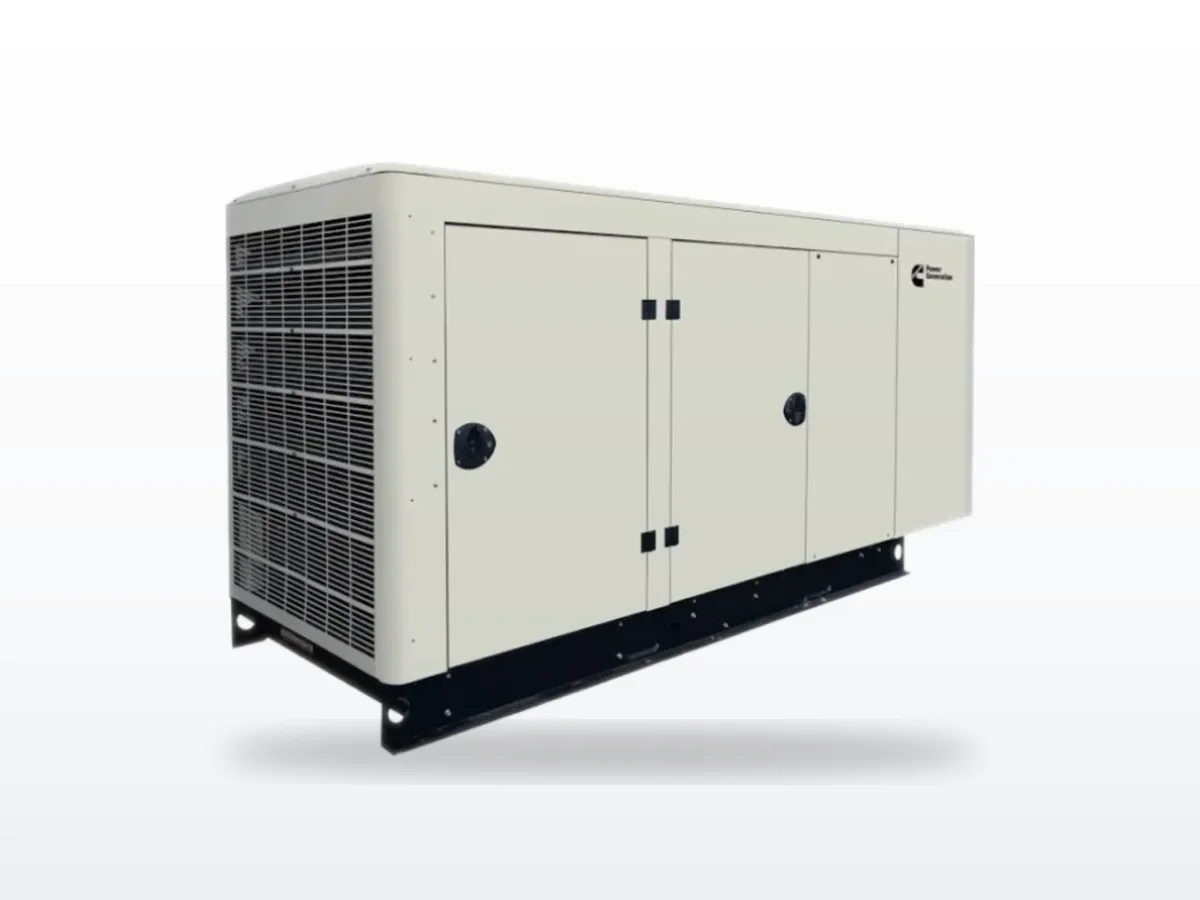
The Cummins C-Series commercial gaseous lineup covers 60 to 400 kW across five models — C60 N6, C150 N6, C200 N6, C250 N6, and C400 N6 — all EPA Stationary Spark Ignition certified and designed for standby, prime, and limited-use non-emergency applications on natural gas and LPG. This series sits between the smaller residential and light commercial gas generators and the large gas series (C750 N6 and above), targeting the commercial and light industrial standby market where EPA SI certification, single-source Cummins integration, and natural gas fuel supply are the governing specifications.
The engine platforms span the QSJ5.9G (C60 N6), QSJ8.9G (C150 N6, C200 N6), GTA855E (C250 N6), and GTA28E (C400 N6 — a 28-liter V-12). This engine progression mirrors the N6 Commercial Gas series structure, with the key distinction that all models in this grouping carry EPA Stationary Spark Ignition certification — enabling permit compliance documentation required for NSPS and state air district applications. The C200 N6B represents Cummins' latest platform generation, standardizing the 8.9-liter engine across the 100–200 kW gas range.
All five models use Cummins' vertically integrated system — engine, alternator, and controls from one manufacturer — with the PowerCommand control family providing consistent alarming, remote monitoring, and parallel control interfaces across the series. For facility managers who operate multiple gas and diesel generators, this control consistency simplifies training, monitoring infrastructure, and spare parts management.
How to Choose#
Output by segment: The C60 N6 (60 kW) covers small commercial — retail storefronts, restaurants, small offices. The C150 N6 and C200 N6 serve mid-range commercial applications — hotels, multi-family large buildings, hospital non-critical branches, and schools. The C250 N6 addresses large commercial and campus standby at 250 kW. The C400 N6 at 400 kW is the highest-output model in the series, appropriate for large hospitals, mission-critical commercial facilities, and industrial applications requiring substantial natural gas standby capacity.
EPA SI certification need: The EPA Stationary Spark Ignition certification on all five models is the defining characteristic of this series. If your project requires NSPS compliance documentation, air district permit compliance, or certification for non-emergency operation hours (demand response, peak shaving), the EPA SI certification on these models is a prerequisite. Verify that your specific model and configuration carries the appropriate certification for your jurisdiction's permit requirements.
LPG capability: The C60 N6 and C150 N6 are documented for LPG operation. For sites without access to pipeline natural gas, LPG provides an alternative gaseous fuel that avoids diesel storage permitting. The cost differential between LPG and diesel — and the availability of LPG bulk storage — must be evaluated against diesel as part of the fuel selection analysis.
Engine platform transitions within the series: The QSJ8.9G platform used across C150 and C200 N6 models provides output flexibility without changing the engine size — a practical advantage for facilities that may need to adjust load capacity at the same physical footprint. The shift to the GTA855E at C250 N6 introduces a larger-displacement engine with higher maintenance cost, higher heat rejection, and different service requirements. Plan for this transition in your maintenance budget.
Paralleling (C250 and C400): For campus and large commercial applications needing 500+ kW of natural gas backup, paralleling two C250 or C400 N6 units is an alternative to specifying a single large gas generator. Evaluate paralleling switchgear cost against the premium of a single larger unit.
Common Applications#
-
Campus and university standby: Four of five C-Series gaseous models are documented for campus applications. Campus environments with centralized standby power and pipeline natural gas infrastructure specify C-Series generators for individual building backup or centralized standby arrays.
-
Hotel and hospitality standby: Two C-Series models are documented for hotel applications. Hotels specify natural gas generators to align with their primary energy source, eliminate diesel storage logistics, and reduce fuel management overhead for facility operations teams.
-
Industrial standby: Three models are documented for industrial applications. Light manufacturing, warehousing, and industrial facilities with natural gas utility connections specify C-Series gas generators when natural gas is preferred over diesel.
-
Large commercial standby: Large office buildings, retail centers, and mixed-use developments specify C250 N6 or C400 N6 for building-wide essential load backup, particularly in jurisdictions where diesel storage is restricted or where natural gas is specified for sustainability reasons.
-
Hospital non-critical branches: Hospital facilities specify natural gas generators for non-critical branch standby applications where NFPA 99 permits gaseous fuel, avoiding the fuel management complexity of separate diesel systems for lower-priority circuits.
Service & Maintenance#
The C-Series commercial gaseous lineup requires oil changes every 250 hours (documented on 4 of 5 models) or 12 months, coolant changes every 4,000 hours, air filter service every 1,000 hours, and spark plug replacement every 1,500 hours. The 250-hour oil change interval is more demanding than Cummins' diesel platforms — high-runtime installations will require quarterly oil changes, which must be factored into maintenance contracts and budgets.
Five failure modes are documented across the series. Spark plug and ignition system misfire at load (1,500-hour interval) is the most common maintenance trigger — across 3 of 5 models. Charge air cooler degradation at approximately 10,000 hours (documented on 3 models) reduces power output and elevates intake temperatures; inspect and clean the charge air cooler at major service intervals. Turbocharger wear at approximately 12,000 hours (documented on 3 models) produces power loss and excessive smoke. Battery failure causes failed starts during actual outages — test and replace on a scheduled cycle rather than waiting for a failure event. Fuel regulator and air-fuel mixer wear causes rich/lean running and unstable speed at light loads, appearing at approximately 6,000 hours on documented models.
The C400 N6 uses the GTA28E with a 36-qt lube oil capacity and requires attention to oil temperature during extended peak-load operation. Confirm that your site's ventilation and heat rejection infrastructure can manage the heat output of a 400 kW continuous natural gas generator if the unit will operate for extended hours.
Application Guidance#
The Cummins C-Series commercial gaseous line is the right choice for commercial and institutional standby from 60 to 400 kW on natural gas where EPA Stationary Spark Ignition certification is a hard project requirement — hospitals, campuses, and large commercial facilities in jurisdictions with NSPS permits, state air district submittals, or non-emergency operation hours (demand response, peak shaving). The C250 N6 and C400 N6's documented paralleling capability also makes this series the correct path for campus and large commercial applications needing 500+ kW of natural gas backup from a scalable array rather than a single large-frame unit. For facilities with established Cummins diesel infrastructure, the PowerCommand control consistency across the C-Series and the diesel lineup simplifies monitoring, training, and spare parts management.
Do not specify the C-Series for applications where LPG is the primary fuel above 150 kW — only the C60 N6 and C150 N6 are documented for LPG, and LPG derating factors must be confirmed with your dealer even for those models. If LPG capability above 150 kW is required, the Gillette SP Series (natural gas and LPG up to 500 kW) is the better-fit alternative. For natural gas standby in the same 80–500 kW band without an EPA SI certification requirement, the Cummins N6 Commercial Gas series covers similar applications at potentially lower cost, and the Kohler KG Series covers 40–200 kW with single-phase output options not available in this series.