Overview#
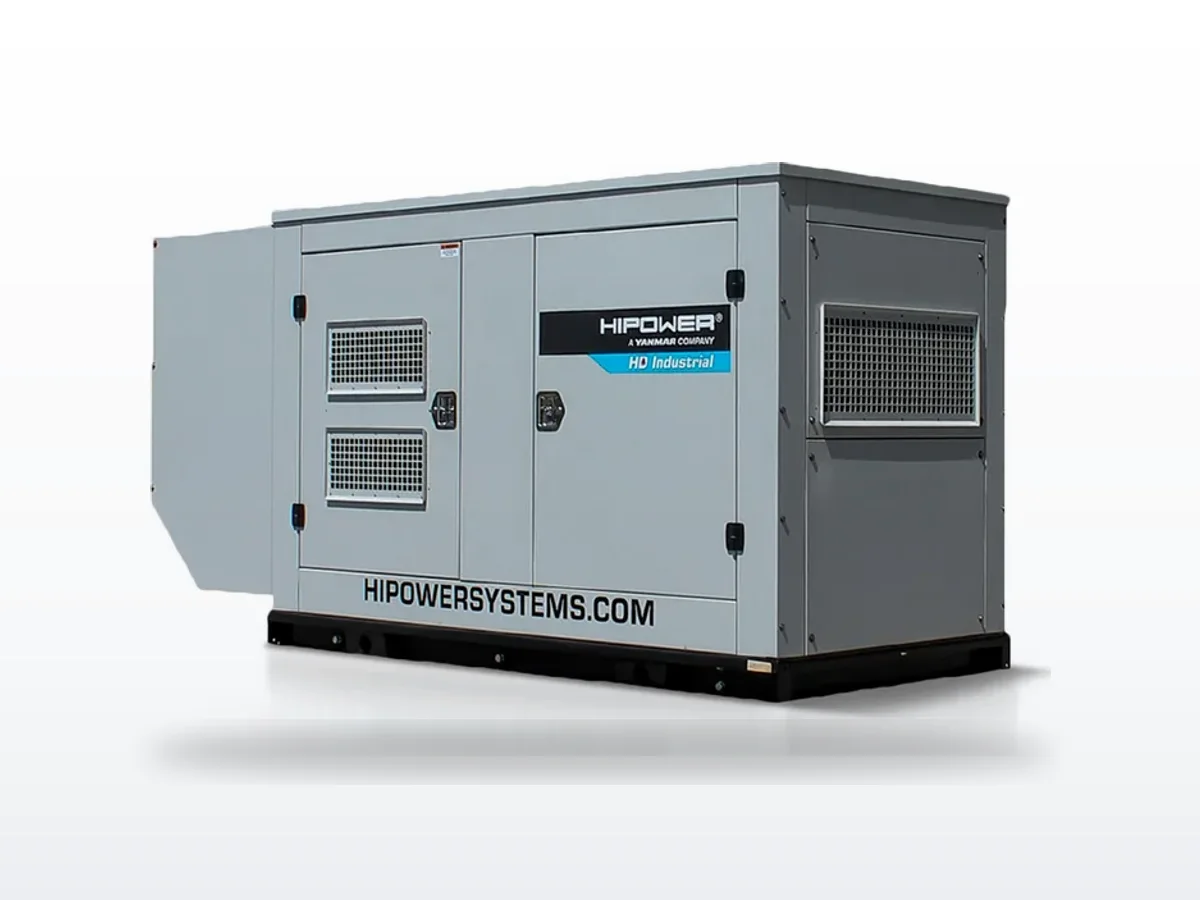
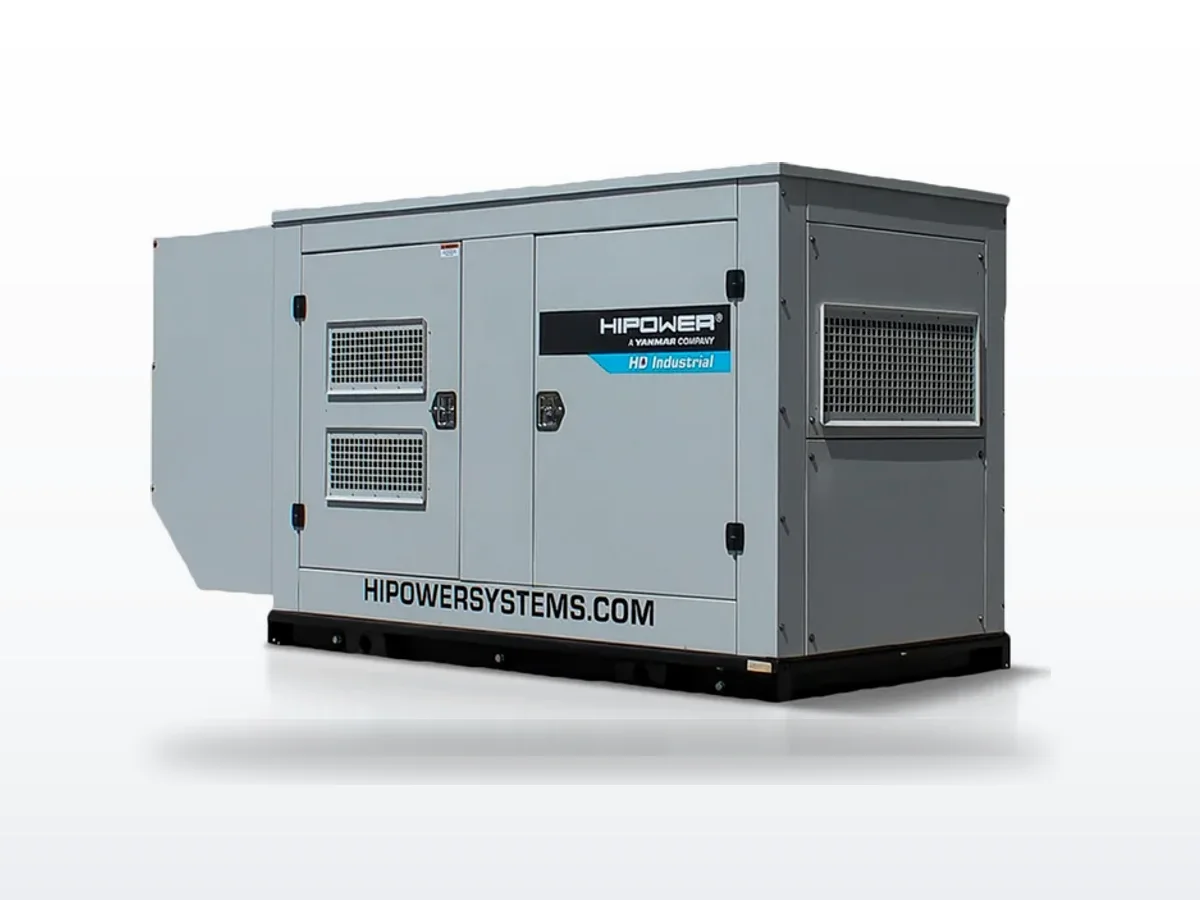
The Hipower HNI-200 is a 200 kW standby natural gas generator powered by a PSI 8.8L V8 (537 CID) turbocharged aftercooled high-output engine. The "HO" designation reflects a higher output calibration of the 8.8L platform, optimized to deliver 200 kW at 1800 RPM while remaining within CARB-certified emissions limits.
At 200 kW, this unit serves a broad range of applications: mid-size commercial buildings, edge data centers, medical office buildings with life-safety requirements, and industrial facilities with existing gas infrastructure. Natural gas supply from the utility eliminates diesel storage compliance and fuel management overhead.
Engine Platform#
PSI's 8.8L V8 TCAC HO is engineered for stationary standby duty at 1800 RPM. The aftercooled turbocharger configuration provides dense intake charge, maximizing output from the 8.8L displacement while controlling combustion temperatures. PSI has an established service network and parts supply chain throughout North America.
Maintenance is simpler than diesel Tier 4 alternatives: no DPF, no SCR, no DEF. Key service items are spark plugs (1000 hours), oil and filter (1000 hours or 12 months), and annual gas line inspection.
CARB-Certified for California#
Part of the CARB-certified HNI series (30–1000 kW). California permit-by-rule applies — standard air district approval without source test or variance. The 200 kW class has limited CARB-certified natural gas options outside the Big 4, making the HNI-200 a competitive choice for California projects.
Service and Maintenance#
- Oil and filter: 1000 hours or 12 months
- Spark plugs (8 total): 1000 hours
- Air filter: 500 hours
- Gas line and regulator: Annual inspection
- Turbocharger: Annual inspection
- Major overhaul: 30,000 hours
Our Service Experience#
OnPoint Generators services natural gas generators in the 200 kW range throughout the Bay Area and Northern California. Facilities with existing gas service — office buildings, medical buildings, and smaller data centers — find that gas standby eliminates the fuel logistics and compliance burden of diesel while delivering equivalent standby protection.