Overview#
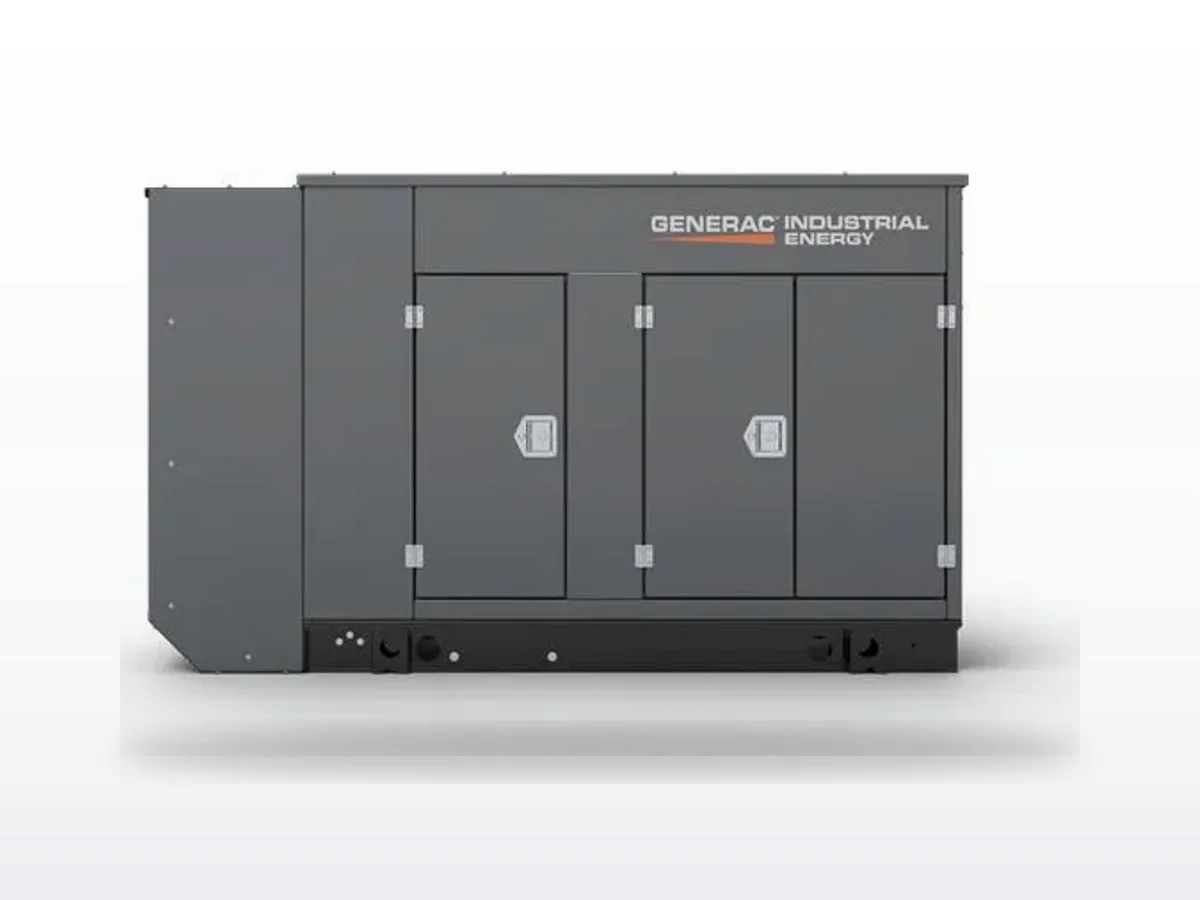
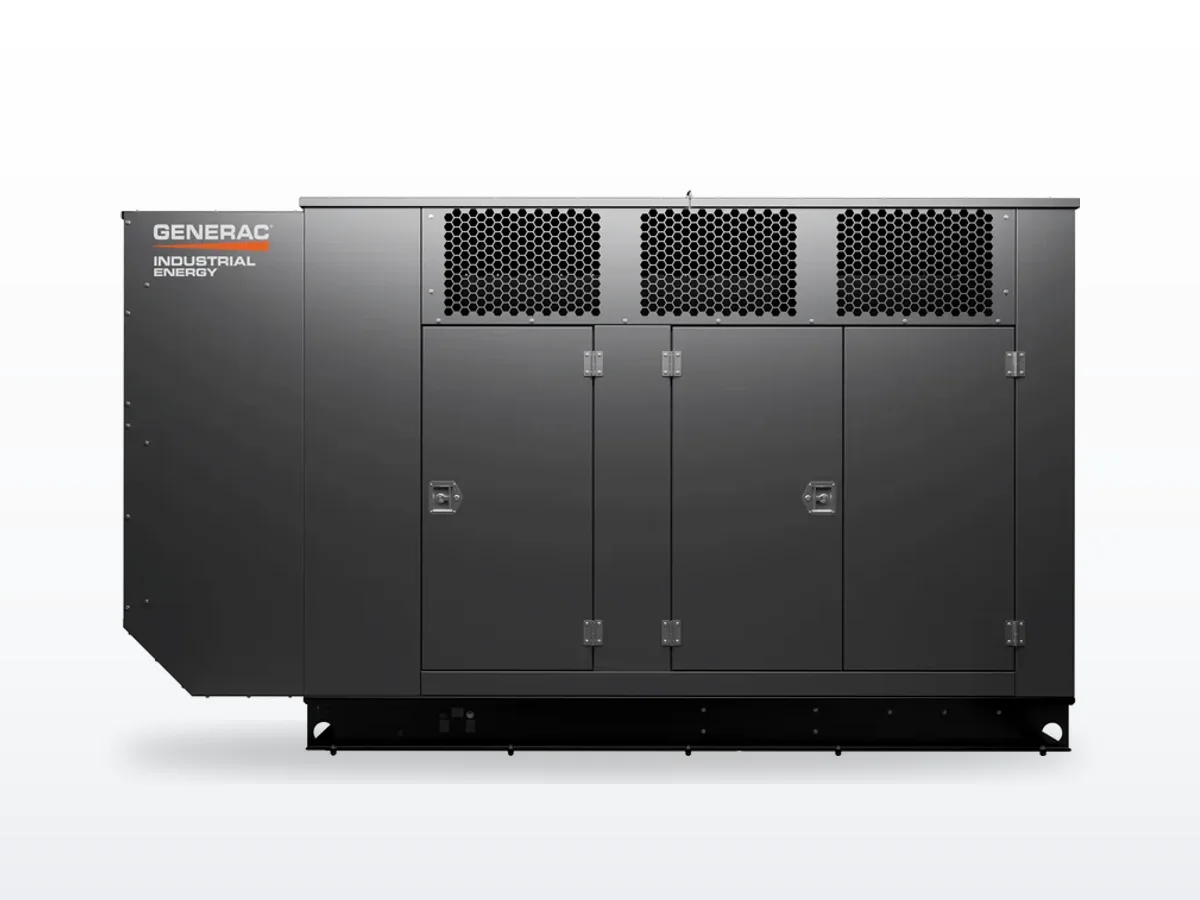
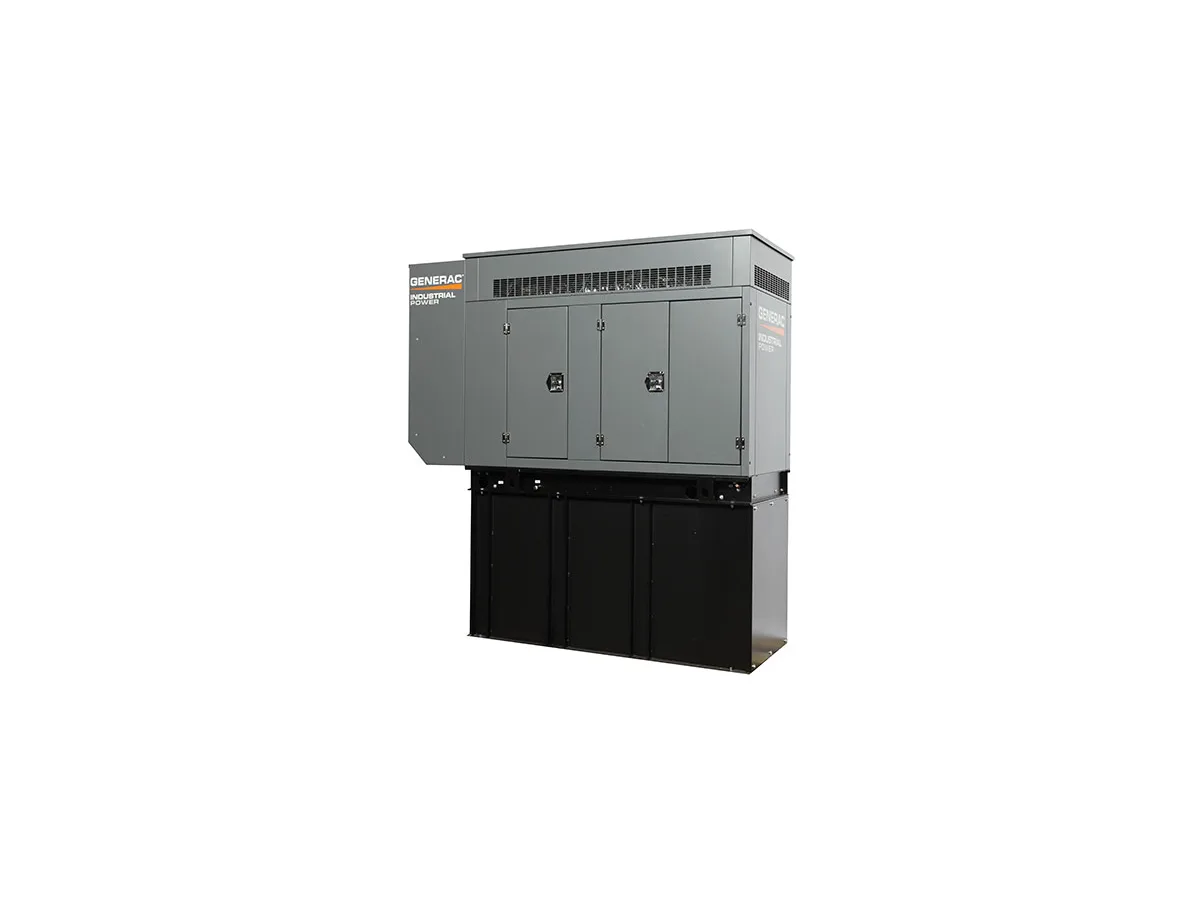
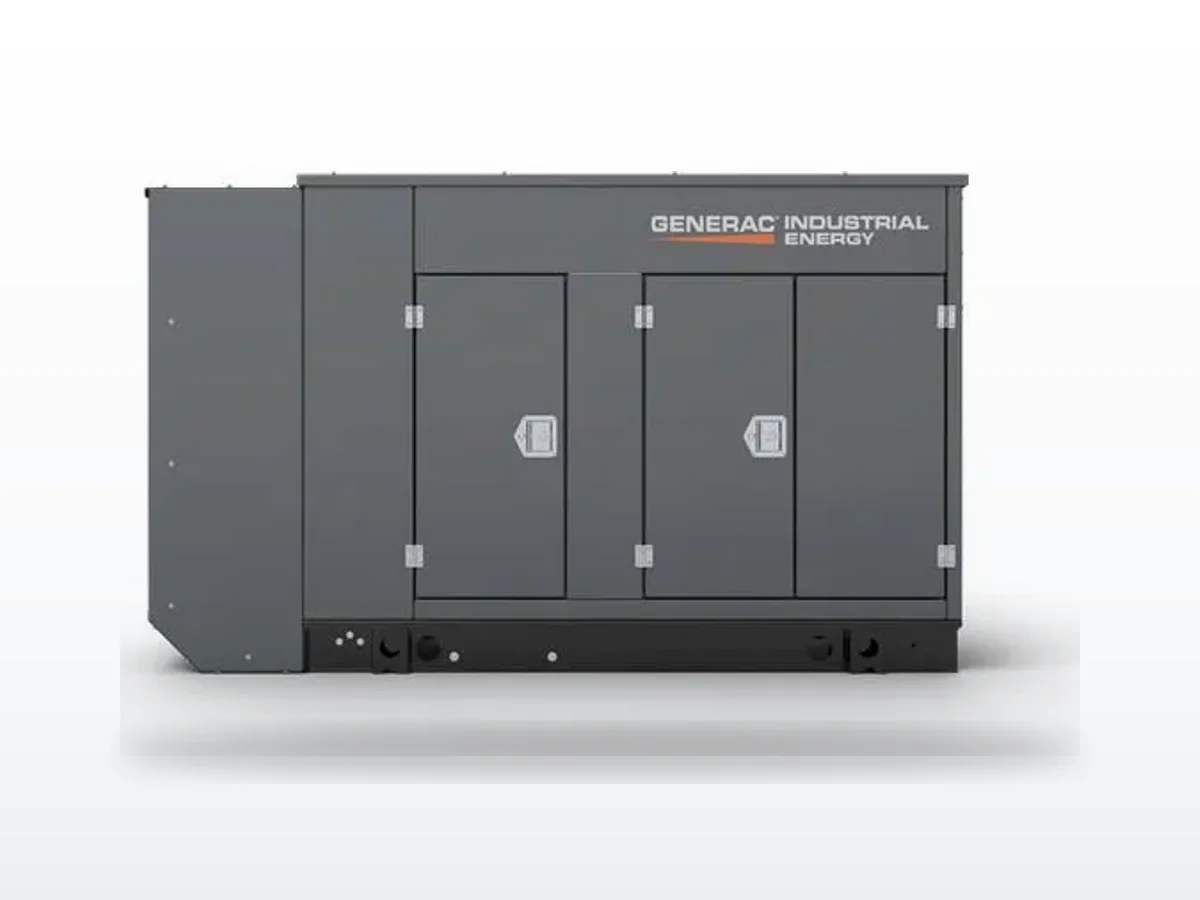
The Generac SG080 is an 80 kW standby (72 kW prime) demand response ready industrial natural gas generator set powered by Generac's 9.0L naturally aspirated V8 spark-ignited engine. Rated at 100 kVA standby and 90 kVA prime at 60 Hz, it is EPA certified for stationary emergency applications. Available in single-phase and three-phase configurations, it features the Generac Digital H controller with dual 4x20 display, Modbus protocol, and isochronous governor control.
Engine and alternator#
The Generac 9.0L (543 cubic inch) V8 is a naturally aspirated spark-ignited engine. Key specifications include a 9.9:1 compression ratio, 4.49-inch bore, 4.25-inch stroke, high energy ignition, 5 main bearings, cast iron cylinder head, forged steel connecting rods and crankshaft, and hydraulic roller lifters. The lubrication system uses a gear-driven oil pump with full-flow spin-on cartridge filtration and a 10-quart (9.5L) crankcase capacity.
The standard alternator is the Generac K0080124Y21, a 4-pole revolving-field design with Class H insulation on both rotor and stator. It features synchronous brushless excitation, full digital voltage regulation with plus or minus 0.25% steady-state accuracy, and total harmonic distortion below 5%.
Power ratings and fuel consumption#
At 277/480V three-phase and 0.8 power factor, the SG080 delivers 80 kW standby/demand response (120 A) / 72 kW prime. Single-phase 120/240V at 1.0 pf produces 80 kW at 333 A.
Natural gas consumption at standby/demand response ratings: 1,247 scfh at 100% load, 989 scfh at 75%, 720 scfh at 50%, and 415 scfh at 25% load.
Physical dimensions#
The open set measures 94.2 x 40.0 x 47.6 inches (2,394 x 1,016 x 1,208 mm), weighing 2,543 lbs (1,153 kg). The weather protected enclosure measures 111.8 x 40.5 x 56.2 inches. Level 1 sound attenuated enclosure: 129.4 x 40.5 x 56.2 inches. Level 2 sound attenuated enclosure: 111.8 x 40.5 x 68.6 inches.
Our service experience#
The jump from the 4.5L inline-4 (SG045–SG070) to the 9.0L V8 brings a significantly larger displacement and lower BMEP (99.9 psi vs. 162–188 psi for the turbocharged 4.5L). This translates to lower thermal stress per cylinder, which generally means better valve train longevity. Exhaust temperature at 1,288 degrees F is lower than the highly-tuned 4.5L models. Spark plug replacement across all 8 cylinders at 1,000-hour intervals is the primary maintenance item — budget for twice the plug count of a 4-cylinder model.