Caterpillar · Cat CG Series (Gas)

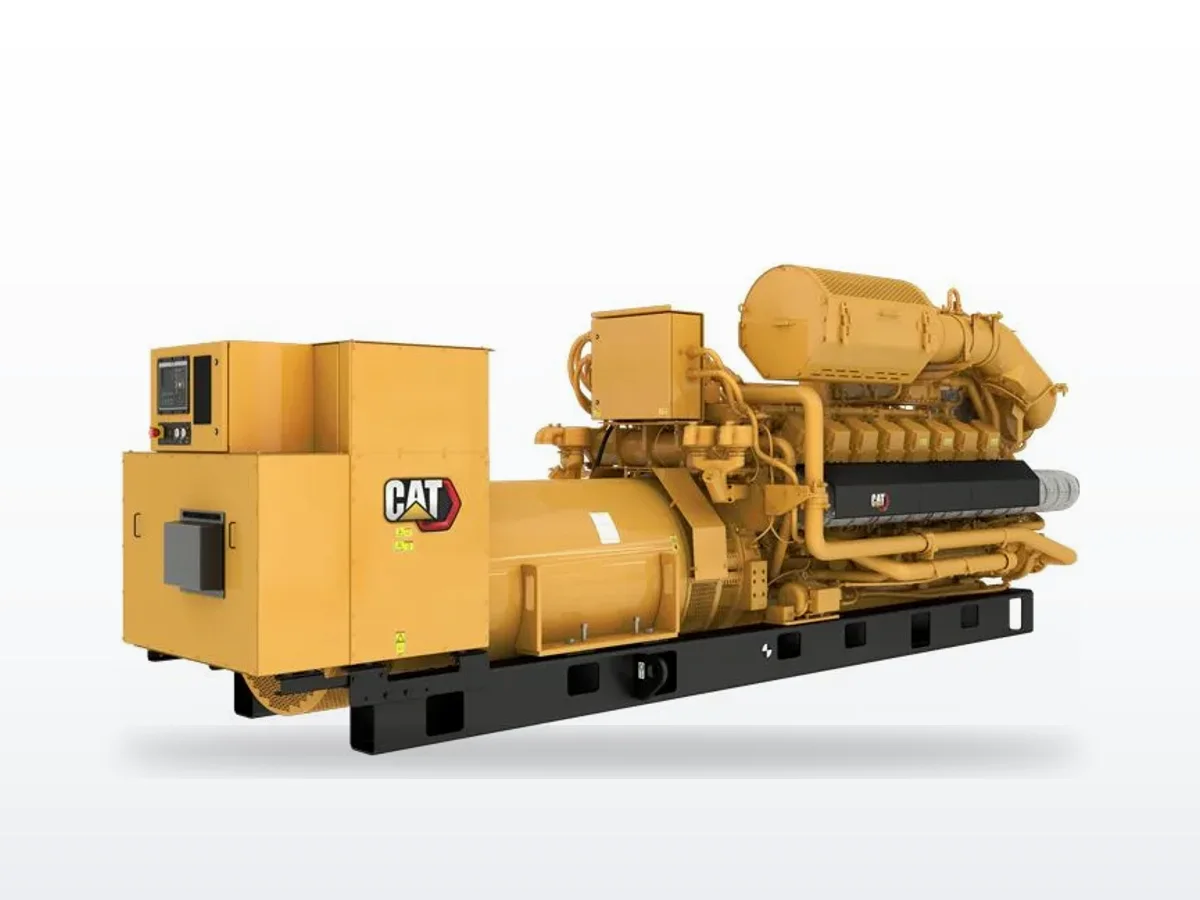
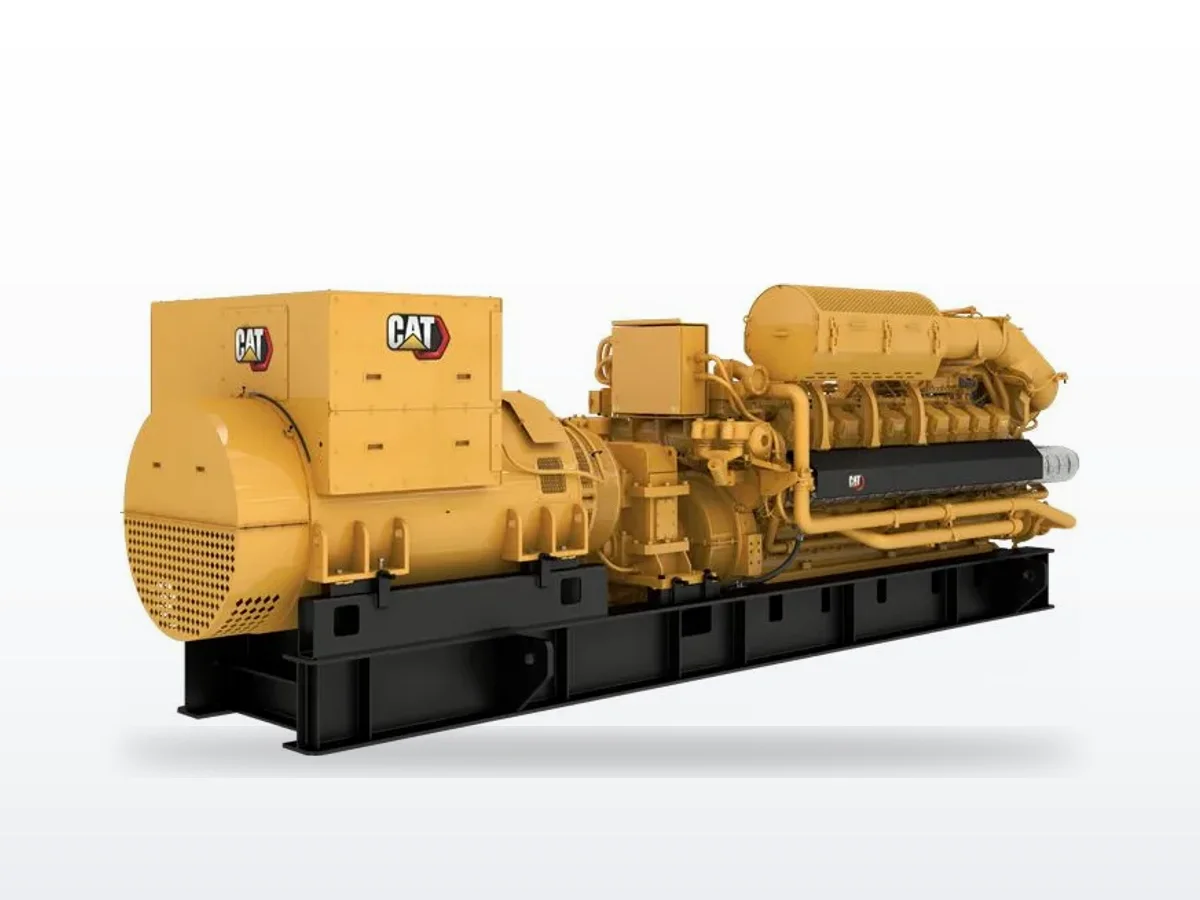
Cat CG260-16

4000 kW standby · Natural Gas · Liquid-cooled

4000 kW (4 MW) continuous-duty natural gas generator set. CG260 16-cylinder engine for utility peaking, district energy, and large-scale cogeneration.

Standby power
4000 kW / 4000 kW prime
Voltage options
4160V, 13800V
Frequency / Phase
60 Hz · 3-phase
Engine
Caterpillar CG260-16 · 339.2L
EPA / Emissions
EPA Stationary Spark Ignition
utility-peakingcogenerationcombined-heat-powercontinuousdistrict-energyManufacturing
Configure & QuoteDownload spec sheet

Overview#

The Cat CG260-16 is a 4 MW (4000 kW) continuous-duty natural gas generator set -- the top output variant of the CG260 engine family. Using 16 cylinders with 21.2L displacement each, the CG260-16 achieves 339.2 liters of total displacement and 4 MW of continuous electrical output from a single machine.

At this scale, the CG260-16 is a power plant asset, not a building system. It serves utility peaking facilities, major district energy central plants, and large industrial cogeneration installations where single-machine simplicity at 4 MW justifies the capital investment over installing multiple smaller units.

4 MW in one machine: the case for the CG260-16#

For utility and district energy operators, consolidating 4 MW in a single generator set rather than two 2 MW machines has real advantages:

  • Footprint -- one engine room, one exhaust system, one cooling system
  • O&M cost -- one major overhaul scope every 60,000 hours instead of two concurrent scopes
  • Controls simplicity -- single-unit dispatch vs parallel switchgear for two machines
  • Interconnect -- single utility interconnect agreement and protection relay package

The trade-off is that a single large unit creates a larger single point of failure. For critical district energy installations, N+1 redundancy often means installing two CG260-16 units rather than operating at single-machine risk.

Utility peaking#

The CG260-16's 4 MW output makes it relevant for utility peaking contracts where the generator is dispatched during grid stress periods. Natural gas fuel, EPA Stationary Spark Ignition certification, and the absence of on-site fuel storage logistics make natural gas peakers operationally simpler than diesel peaking plants of comparable output.

Gas peaking at 4 MW pairs well with utility-scale demand response programs and capacity market participation in ISO/RTO regions.

District energy and CHP#

A single CG260-16 in a CHP configuration produces both:

  • 4 MW of electrical output for on-site consumption or export
  • Recoverable thermal energy from jacket water and exhaust heat recovery systems sufficient to supply significant district heating or absorption cooling loads

Total fuel utilization in well-designed CHP systems at this scale can exceed 75%. For district energy networks in cold climates with high heating loads, a 4 MW CHP central plant can anchor the entire thermal distribution network while also offsetting the site's grid electricity purchase.

Engine scale: 339.2L V16#

The CG260-16's 339.2-liter displacement across 16 cylinders represents an engine designed from the ground up for continuous stationary service. The 21.2L per cylinder bore-stroke combination was chosen for continuous-duty torque and bearing load characteristics rather than the power density that higher-speed engines optimize for.

The 60,000-hour major overhaul interval -- running 8,000 hours per year, that is over 7 years between major overhauls -- is the defining operational advantage of the CG260 platform over smaller, higher-speed engines.

Installation requirements#

The CG260-16 is a major infrastructure project:

  • Civil engineering -- heavy foundation with vibration isolation engineering; machine weight and dynamic loading must be calculated
  • Gas supply infrastructure -- high-volume gas delivery, pressure regulation, and emergency shutoff engineering
  • Medium-voltage electrical -- 4160V or 13800V switchgear, protective relaying, metering, and utility interconnect agreement
  • Cooling infrastructure -- cooling tower or remote radiator system sized for full engine thermal rejection
  • Air quality permitting -- Title V or state minor source air permit required; permitting timeline typically 6-18 months depending on jurisdiction

Begin permitting parallel with equipment procurement -- permit lead times often exceed engine delivery lead times at this output level.

Our service experience#

4 MW natural gas engines are central plant infrastructure assets. Service at this scale requires factory-trained technicians with access to Cat's specialized tooling and parts supply chain. We recommend establishing a formal operating and maintenance agreement with a Cat certified dealer before commissioning. Oil analysis, cylinder performance monitoring, vibration analysis, and coolant chemistry management should all be on structured intervals from day one.
Engineering specifications

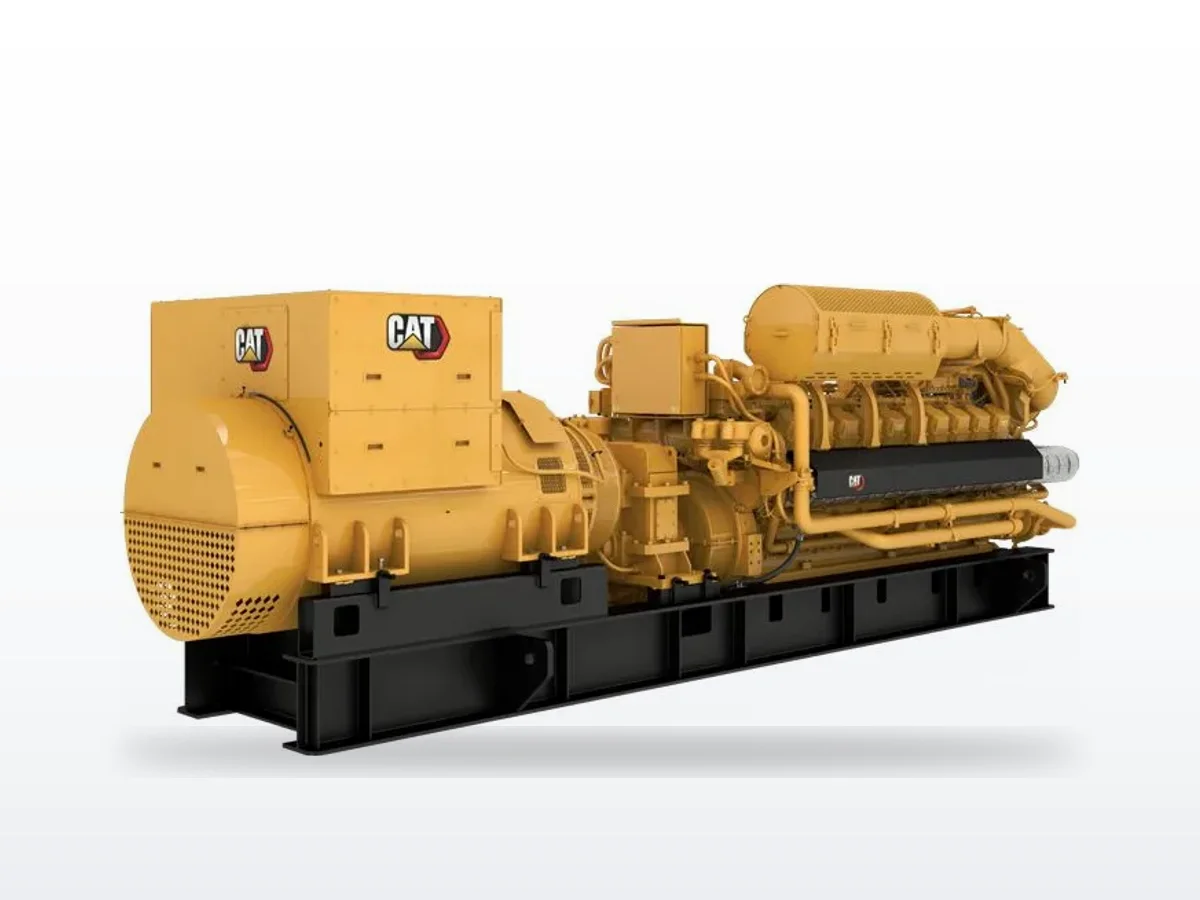
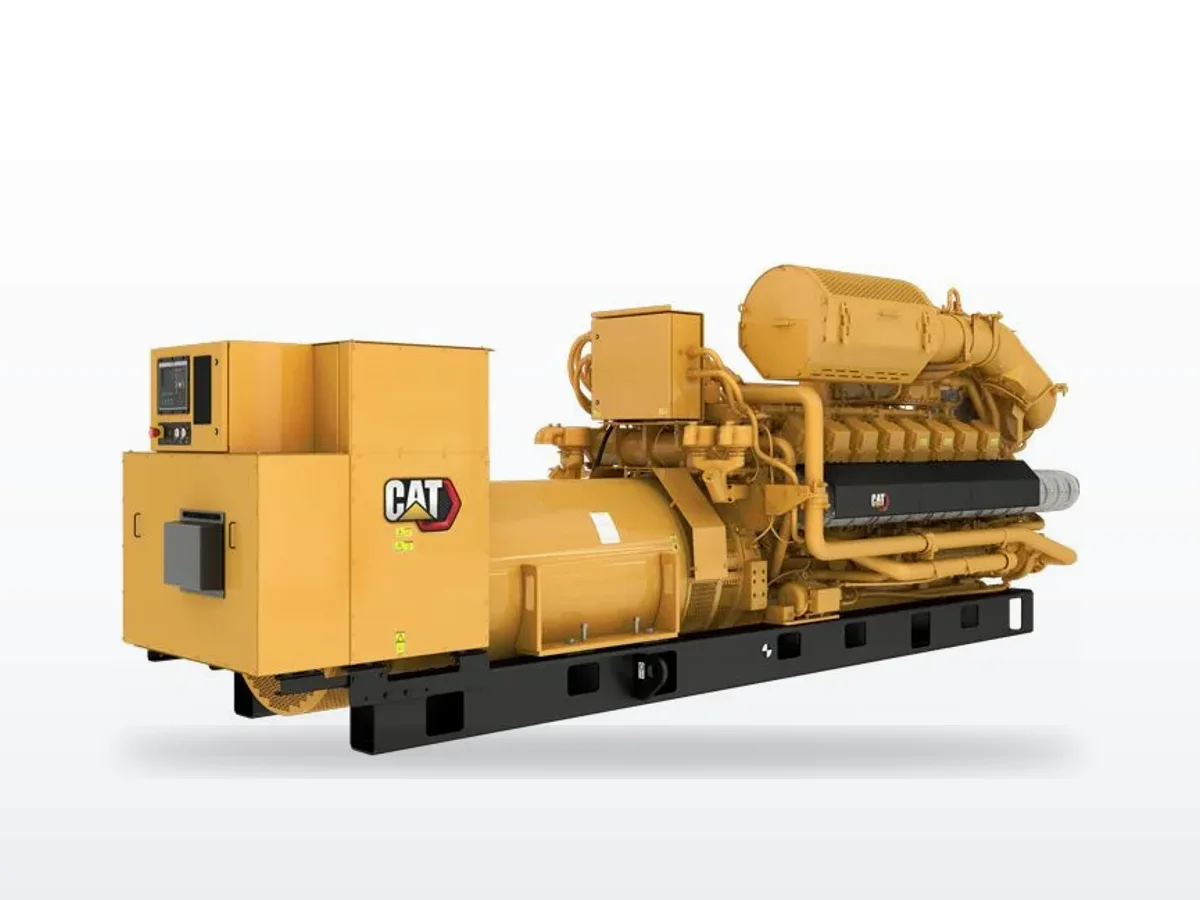
Physical

Length
384 in
Width
108 in
Height
132 in
Wet weight
72,000 lb

Ready to order this model?

Configure your Cat CG260-16

Lock the enclosure, fuel system, transfer switch, and add-ons — we'll confirm pricing, availability, and lead time within one business day. Prefer a free-form quote? That option is still here.

Estimate runtime for the Cat CG260-16

Adjust load percent and tank size to estimate runtime. Pre-filled with this model's spec where available.

Estimate runtime on this tank

Fuel demand at 75% load

42,000,000 BTU/hr42000.0 cf/min @ 1,000 BTU/cf

On utility natural gas the runtime is generally unlimited provided the supply line and meter can deliver this BTU/hr at the engine's required inlet pressure (typically 5–14" WC residential, up to 5 psi commercial). Confirm against the OEM's published fuel-pressure spec.

Service intervals

Manufacturer-recommended intervals for the Cat CG260-16 under standby duty. Field intervals may differ based on load profile, ambient conditions, and fuel quality.

Oil & filter
Every 2000 hours or 6 months
Coolant change
Every 8000 hours
Air filter
Every 2000 hours
Major overhaul
64,000 hours

Common failure modes

What we've seen fail on this platform. Use as a service-planning reference, not a diagnostic — actual failure modes depend heavily on duty cycle and maintenance history.

ComponentSymptomTypical hoursSeverity
Spark plugsMisfiring, derating, increased emissions4,000+moderate
PrechamberCombustion instability, detonation16,000+moderate
TurbochargerReduced power, bearing wear30,000+moderate
Ignition coilsCylinder misfiring8,000+minor

Frequently Asked Questions

What is the power rating of the Cat CG260-16?
The Cat CG260-16 is rated at 4000 kW (4 MW) on natural gas at 60 Hz, 3-phase, for both standby and prime applications. It uses the CG260 engine platform in a 16-cylinder V16 configuration with 339.2 liters of total displacement -- 16 cylinders of 21.2L each. This is one of the largest single-unit natural gas generator sets in the Cat lineup.
What voltage output options does the CG260-16 support?
The CG260-16 is available in 4160V (4.16 kV) and 13800V (13.8 kV) medium-voltage output configurations. At 4 MW, medium-voltage output is the only practical choice for power distribution. The 13.8 kV option allows direct connection to utility distribution circuits and eliminates the need for an intermediate step-up transformer, reducing both capital cost and transformer losses in the power delivery chain.
How does the CG260-16 compare to the CG260-12?
The CG260-16 uses 4 additional cylinders in a V16 vs the V12 of the CG260-12, delivering 4 MW vs 3 MW -- a 33% power increase from the same engine family. Both share the 21.2L per cylinder displacement, the same maintenance intervals, and the same medium-voltage output options. For projects where load growth is anticipated or where a single 4 MW unit can replace two smaller machines, the CG260-16 is the top-of-range choice.

Similar models

Caterpillar Cat G3520H 2.5 MW liquid-cooled standby generator

Caterpillar

Cat G3520H

2519 kW natural gas with CAT G3520H V-20. Medium-voltage capable. Hydrogen-blend ready. Best resale in class.

2.5 MW standby · Natural Gas · Liquid-cooled

Up to 2519 kW natural gas generator with Cat G3520H V-20 engine. 97.5L displacement, continuous duty, hydrogen-blend capable for cogeneration and distributed generation.

3-phasecontinuous-dutycogeneration

Caterpillar

Cat CG260-12

3 MW continuous-duty natural gas. CG260-12 with 254.4L V12 engine. 4160V and 13.8 kV output. Utility peaking, district energy, large-scale CHP.

3 MW standby · Natural Gas · Liquid-cooled

3000 kW (3 MW) continuous-duty natural gas generator set. CG260 12-cylinder engine for utility peaking, district energy, and large-scale cogeneration.

EPA Stationary Spark Ignition3-phaseutility-peakingcogeneration
Caterpillar Cat G3516H 2.0 MW liquid-cooled standby generator

Caterpillar

Cat G3516H

2027 kW natural gas with CAT G3516H V-16. Medium-voltage capable. Cogeneration-ready. Best resale in class.

2.0 MW standby · Natural Gas · Liquid-cooled

Up to 2027 kW natural gas generator with Cat G3516H V-16 engine. Continuous duty, low-emission gas power for cogeneration, distributed generation, and industrial applications.

EPA Stationary Spark Ignition3-phasecontinuous-dutycogeneration

Need service or parts for the Cat CG260-16?

We service every major OEM and stock genuine parts for the most common models.