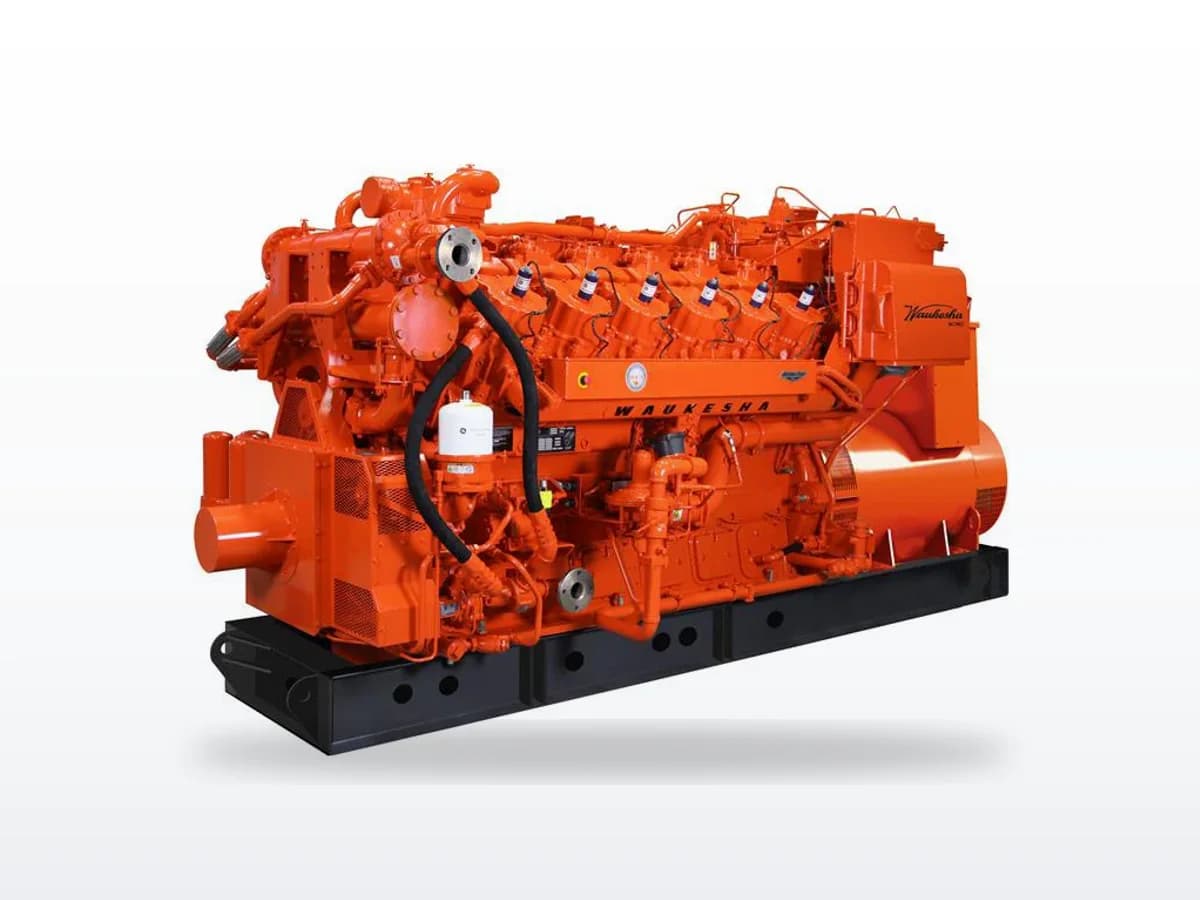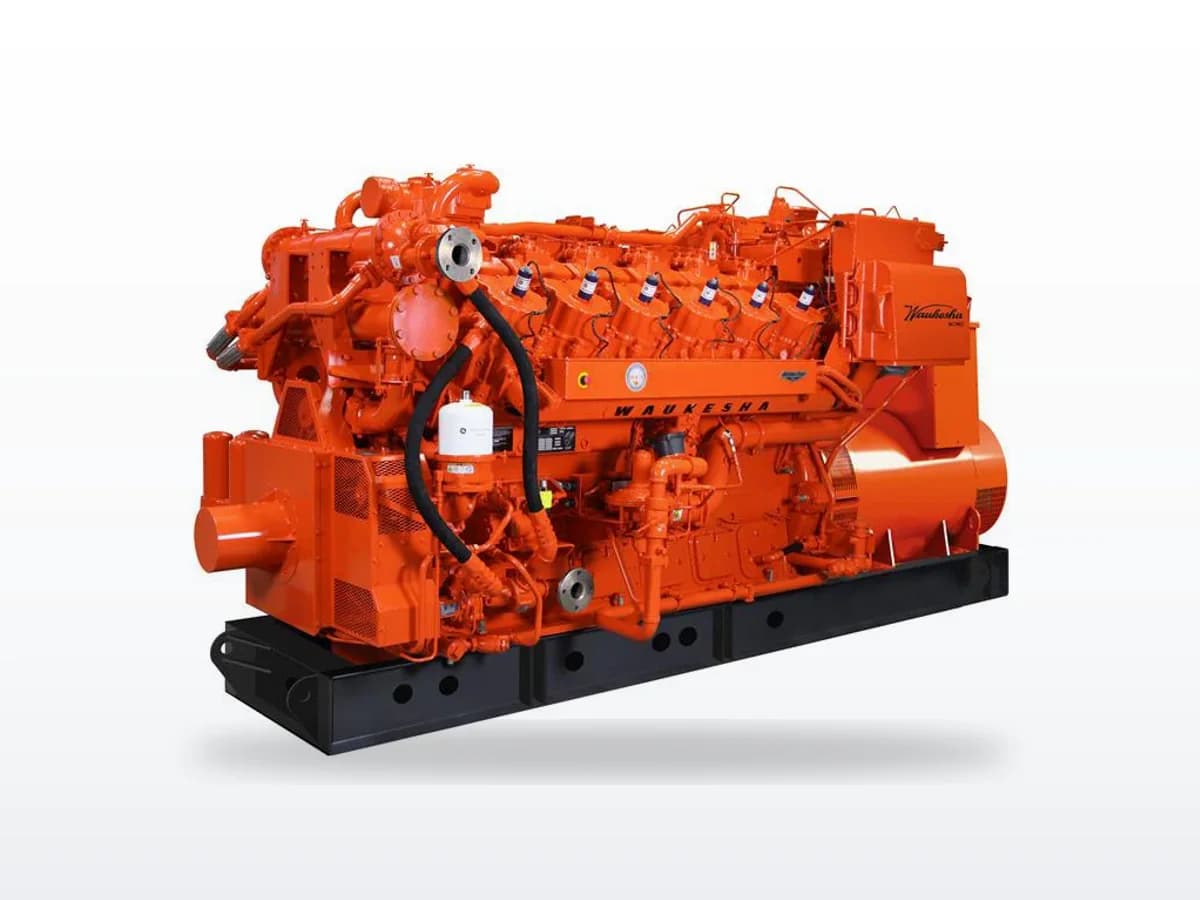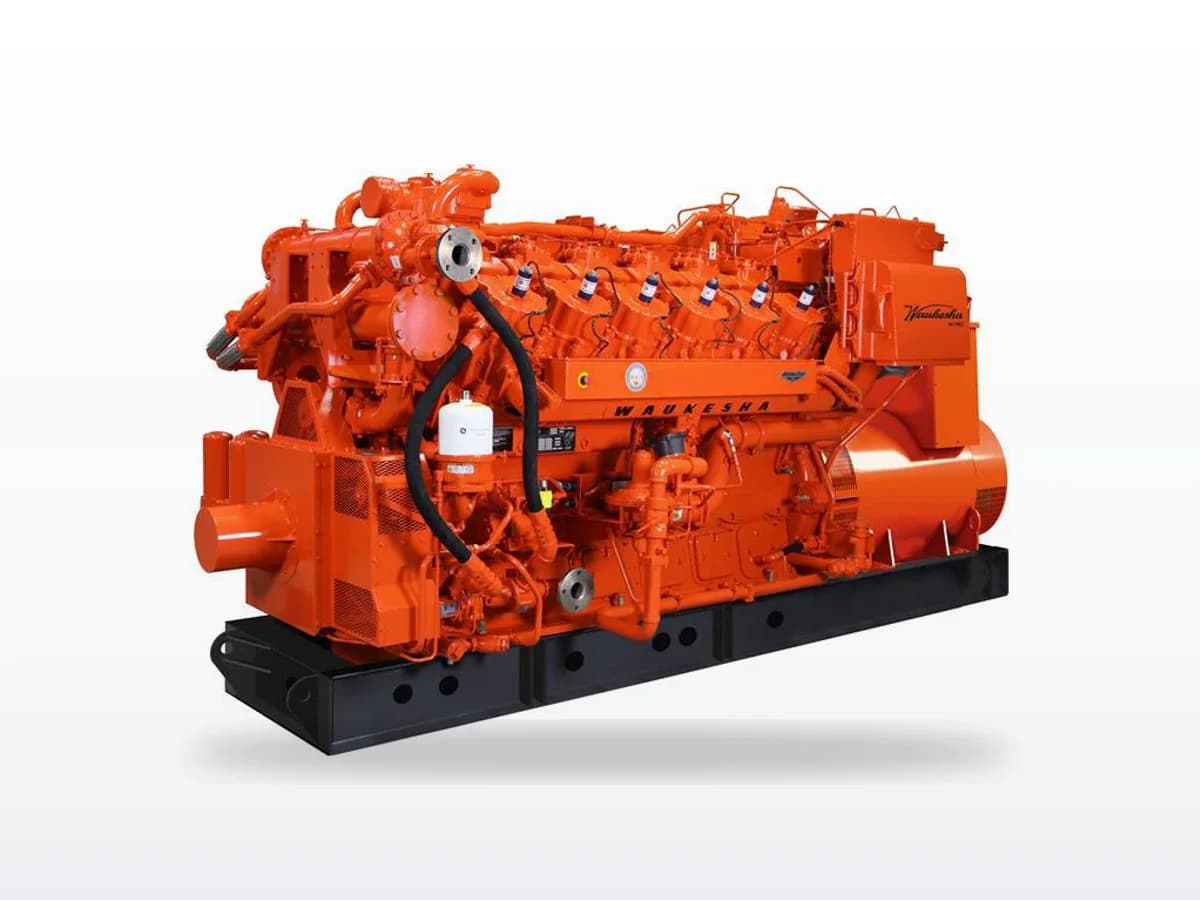
Waukesha (INNIO) Generators
Natural gas prime power and CHP specialist — VHP Series engines for industrial continuous-duty applications since the 1960s
Why buyers choose Waukesha
- VHP Series flagship — in continuous production since 1960s, the standard for gas engine prime power
- Natural gas specialist — rich-burn gas engines for CHP, landfill gas, biogas, wellhead compression
- INNIO Group backing — global service network for Waukesha and Jenbacher gas engines
- 20,000-30,000 hour overhaul intervals — designed for continuous-duty prime power
Who Waukesha is for
Industrial prime power, combined heat & power (CHP), landfill gas-to-energy, biogas, and distributed power. NOT backup/standby — these are continuous-duty machines.
What to consider before specifying Waukesha
- No diesel models — natural gas/biogas only
- Not a standby product — designed for continuous prime power applications
- High capital cost — justified only by continuous-duty economics
- Limited US dealer network outside major industrial centers
Waukesha is the name in natural gas power generation, with a lineage stretching back to 1906 in Waukesha, Wisconsin. Unlike the diesel-focused brands that dominate backup power, Waukesha engines are purpose-built for continuous and prime-duty operation on gaseous fuels — natural gas, biogas, landfill gas, and field gas. The VHP (Vee High Performance) series, in production since the 1960s, is the most widely installed rich-burn gas engine platform in North America. The broader Waukesha product range spans from 30 kW to 4,350 kW, covering everything from small wellhead compression to multi-megawatt utility-scale distributed generation.
INNIO Group acquired the Waukesha brand in 2018 when Advent International purchased GE's Distributed Power division. INNIO also owns Jenbacher, another leading gas engine manufacturer — giving the group the two most recognized names in gas-fueled power generation worldwide. Despite the corporate changes, Waukesha engines continue to be manufactured in Waukesha, Wisconsin, and the engineering DNA that made the VHP platform an industry standard remains intact. The current product line includes the VHP series (the high-output flagship) and the APG (Advanced Power Generation) series for continuous and prime power applications, with the VHP models spanning from the F3524GSI (6-cylinder, 418-626 kW) through the L7044GSI (12-cylinder, 835-1,253 kW) to the flagship P9394GSI (16-cylinder, up to 2,500 HP / 1,865 kW).
These engines are not packaged in typical standby generator enclosures — they are installed in dedicated powerhouses, containerized CHP systems, and landfill gas-to-energy plants. A typical Waukesha installation runs 8,000+ hours per year, generating both electricity and usable heat for district heating, industrial processes, or greenhouse operations. The target markets are distinct from traditional standby power: natural gas compression, combined heat and power (CHP) for carbon reduction, landfill gas and biogas-to-energy development, and industrial distributed generation. Facility engineers, sustainability teams, and energy project developers are the primary specifiers.
For these applications, Waukesha's combination of fuel flexibility, high electrical efficiency (up to 41%), and 60,000+ hour overhaul intervals makes it the reference platform. The trade-off is upfront cost — a Waukesha CHP installation typically costs 2-3x a comparable diesel standby system, justified by the continuous revenue from power and heat production. The gas compression market is another core strength where Waukesha has dominated for decades, with engines powering compressor stations along natural gas pipelines across North America.
Frequently asked questions
- Are Waukesha generators used for backup power?
- Rarely. Waukesha engines are designed for prime and continuous-duty applications — combined heat and power (CHP), distributed generation, landfill gas, natural gas compression, and wellhead power. They run on natural gas and alternative gaseous fuels, not diesel, and are optimized for thousands of hours per year of continuous operation rather than standby duty.
- What fuel types can Waukesha engines run on?
- Waukesha engines run on virtually any gaseous fuel: natural gas, biogas, landfill gas, digester gas, propane, and field gas (wellhead gas with varying BTU content). The VHP series includes lean-burn and rich-burn configurations optimized for different gas compositions. They do NOT run on diesel fuel.
- Who makes Waukesha engines now?
- INNIO Group, headquartered in Jenbach, Austria, manufactures Waukesha engines. INNIO was formed in 2018 when Advent International acquired GE's Distributed Power business, which included both the Waukesha and Jenbacher gas engine brands. The Waukesha engines are still manufactured in Waukesha, Wisconsin, continuing a lineage dating to 1906.
- What is the difference between the VHP and APG product lines?
- The VHP (Vee High Performance) series is Waukesha's flagship line, covering mid-range to high-output engines from approximately 400 kW to 1,900 kW in V-6, V-12, and V-16 configurations. The APG (Advanced Power Generation) series targets continuous and prime power applications at a range of outputs, with models optimized for high efficiency in steady-state operation. Both lines share Waukesha's core strengths: fuel flexibility, long overhaul intervals, and suitability for CHP installations.
Key specs at a glance
- Power range
- 626–1865 kW standby
- Fuel types
- natural-gas
- Engine OEMs
- INNIO Waukesha
- Alternator OEMs
- Phase options
- 3-phase
- Models in library
- 3
Waukesha (INNIO) Product Families
Waukesha (INNIO) Units For Sale52
View all →Industries & Services
Our Services
Application Engineering
Not sure if Waukesha (INNIO) is right for your project?
Our engineers spec across 19 brands and 600+ models — diesel, gaseous, portable, and prime power — with no single-brand obligation.
Need help with Waukesha?
Our application engineers help size, spec, and source backup power for commercial, industrial, and mission-critical sites.